Category Archives: book review

review of small pieces loosely joined

I’m not sure where to begin with Small Pieces Loosely Joined.

Maybe with my regrets. My biggest regret is that it took me so long pick it up and read it. And I had no excuse, Beltzner had been trying to get me to read it for months. I now understand why.

Small Pieces Loosely Joined

Lawrence Lessig’s Free Culture took me into new territory by introducing me to the dangers and important issues confronting our emerging online world. In contrast, Small Pieces Loosely Joined did the opposite, it was a homecoming, a book that explained to me things I intuitively knew or felt, but in a manner that expanded my understanding and appreciation. It’s as though the author, David Weinberger, took me on a tour of my own home, a place I knew intimately, and explained to me its history, the reason and method of its construction, its impact on my life and its significance to my community. Suddenly, the meaning of a thing I use and live in everyday was expanded in ways that were consistent with what I already knew, but didn’t. Wienberger accomplishes all this, but in talking about the internet.

Weinberger achieves this by outlining how our sense of time, space, knowledge and matter is shaped by the online experience. Initially, the book could be mistaken as a more sophisticated Wikinomics, but as each concept builds on the other, the book becomes an increasingly philosophical and thoughtful treatise. Indeed, unlike Wikinomics, which anyone can scream through like a normal business book, Small Pieces took longer to read than anticipated because I wanted (and needed) to slow down and play with its ideas.

Indeed, you can see how so many ideas connect with this book. From The Naked Corporation (Weinberger’s discusses how our desire for authenticity drives form on the internet), to The Wisdom of Crowds to The Long Tail, this book is essential reading to those interesting in understanding of our emerging new world, one overlaid with an internet. Even I was caught in the vortex. For example, I recently wrote a post on the emerging trust economy (all while pitching in my two cents on Keen). I knew the ideas weren’t completely novel, but there was Weinberger, filling in the holes of my thoughts, outlining why we keep going back to the internet even though it is filled with so much disinformation (unlike FOX, CNN, or CBS or any corporate brochures that preceded the internet). Weinberger recognizes that:

…we don’t process information the way philosophers or computer programmers expect us to. We don’t use a systematic set of steps for evaluating what should be believed. Instead, we do on the web we do in the real world: we listen to the context, allow ourselves to be guided by details that we think embody the whole, and decide how much of what this person says were going to believe.

It’s not perfect. But then, neither are we.

But even without all that perfection, we still managed to create this amazing thing called the internet. This is singularly significant accomplishment and one Weinberger believes we must celebrate. And he’s right. At almost no time in history have we built something that is, and can become still more, broad and representative. And it is important that we remember the values that made it possible. A culture of freedom.

…consider how we would’ve gone about building the Web had we deliberately set out to do so. Generating the billions of pages on the web, all interlinked, would have required a mobilization on the order of world war. Because complexity requires management, we would have planned it, budgeted it, managed it,… and we would have failed miserably… We’d have editors pouring through those pages, authenticating them, vetting them for scandalous and pornographic material, classifying them, and obtaining signoff and permissions to avoid the inevitable lawsuits. Yet we — all of us — have built the global web without a single person with a business card that says “manager, WWW.”

Our biggest joint undertaking as a species is working out splendidly, but not only because we forgot to apply the theory that has guided us ever since determines were built. Whether we’ve thought about it explicitly or not, we all tacitly recognize — it’s part of the Web’s common sense — that what’s on the Web was put there without permission. We know that we can go where we want on the web without permission. The sense of freedom on the web is palpable. The web is profoundly permission free and management free, and we all know it.

More recently, Weinberger has emerged as a champion of the internet, probably most famously for taking on Andrew Keen in a now famous debate whose transcript can be read on the WSJ. His book explains the knowledge and understanding that allows Weinberger to be optimistic in the face of people like Keen. Indeed this book serves as a map to what has become Weinberger’s larger thesis – that the internet is not just a human project, but a humanizing project.

The Web is a social place. It is built page by page by people alone in groups of that other people can read those pages. It is an expression of points of view is diversion as human beings. In almost every case, what’s written is either explicitly or implicitly a view of how the world looks; the Web is a multimillion-part refraction of the world. Most of all, at the center of the web is human passion. We build each page because we care about something, whether we are telling other shoppers that a Maytag wasn’t as reliable as the ads promise, giving tips on how to build a faster racer for a soap box derby, arguing that the 1969 moon landing was a hoax, or even ripping off strangers.

What we see when we look into the internet is ourselves.

Increasingly, understanding humanity will require understanding the internet, and Weinberger’s book is a good departure point for that education.
The Fascinating Phenomenon that is Andrew Keen

So Andrew Keen oozed his way on to the Colbert Report the other night and I just caught the video off the website.

For those unfamiliar with Keen he is the author of “The Cult of the Amateur: How Today’s Internet Is Killing Our Culture” a book in which he describes how the internet is making arts and media unprofitable. As innumerable blogs, and most notable, David Weinberger have documented, there are so many holes in Keen’s thesis it is hard to know where to start.

On the Colbert Report Keen cycled through some of his regulars. He correctly pointed out that certain types of media and arts are unprofitable because of the internet… and ignored how the internet has simultaneously given rise to a multitude of new ways for artist to earn a living. New business models are emerging. On the hilarious side, Keen briefly tried to argue that it was blogs and the internet – not American’s old media institutions such as CNN and FOX – that allowed the American public to be hoodwinked into believing there were weapons of mass destruction in Iraq. My god, blogs were the only place in the US where an honest discussion about Iraqi WMDs took place! I could go on… but why repeat what so many others have said.

What it interesting to me is that a phenomenon like Keen even exists. Why is it that we repeatedly listen to people who take a simple ideas and overextend it in illogical ways. Does anyone else remember the fear mongering 1994 book – The End of Work – about how “worldwide unemployment will increase as new computer-based and communications technologies eliminate tens of millions of jobs in the manufacturing, agricultural and service sectors”? Keen’s book is similar in that it nicely capture our society’s paranoias and fears about change (this time wrought by “web 2.0”).

Interestingly I think Keen is a necessary and positive phenomenon. Indeed, Keen exists, is championed and raised up on a pedestal not because he is right, but because is so glamorously wrong. Societies need Keen so that his arguments can be publicly destroyed in a manner that satisfies even the strongest doubters. In this case, Keen’s book helps advance the larger narrative of how centralized authorities that offer the illusion of certainty are collapsing in the face of probabilistic networks that offer a reality of uncertainty. This narrative is hardly new – books that preceded “The Cult of the Amateur” like “The Long Tail” and “Free Culture” more than aptly dealt with Keen’s arguments, they just didn’t do it publicly enough. The publics’ appetite to understand and hear this debate is merely climaxing and has not yet been sated.

The San Francisco Chronicle is right to say “every good movement needs a contrarian. Web 2.0 has Andrew Keen.” Sometimes being contrarian is about offering a valuable insight and keeping the debate honest. And then, sometime its about encapsulating the worst fears, insecurities, and power dynamics of a dying era so that a society can exorcise it. I guess it’s a role someone has to play, and Keen will be well rewarded for it… as his book is reviewed and sold, online.

(NB: If you are looking for a good book on the internet, skip The Cult of the Amateur and consider David Weinberger’s Small Pieces Loosely Joined or Everything Is Miscellaneous: The Power of the New Digital Disorder they are both excellent).

Small piece from small pieces

After being side tracked by the final Harry Potter book (which was excellent), weddings (congrats to Irfhan and Gen) and work (Chicago is a good a place as any to find oneself)… I’m finally back to reading David Weinberger’s Small Pieces Loosely Joined and it is fantastic.

Favourite line so far:

It is no accident that the web is distracting. It is the Web’s hyperlinked nature to pull our attention here and there. But it is not at all clear that a new distractedness represents a weakening of our culture’s intellectual powers, a lack of focus, a diversion from the important work that needs to be done, a disruption of our very important schedule. Distraction may instead represent our interests finally finding the type of time that suits it best. Maybe when set free in a field of abundance, our hunger moves us from three meals a day to day-long grazing. Our experience of time on the Web, its ungluing and re-gluing of threads, may be less an artifact of the Web than the Web’s enabling our interest to find its own rhythm. Perhaps the Web isn’t shortening our attention span. Perhaps the world is just getting more interesting.

Amen.

Check out Weinberger’s blogs: Everything is Miscellaneous and Joho the Blog

Speaking of hyperlinked… Harley Y., a frequent reader and a fellow open-source affectionado noticed in Monday’s post that I was in Chicago. Being in town himself by chance he dropped me and email and we met up for dinner. Good times and conversation ensued… welcome to the world of the web, it’s not just online anymore.

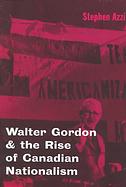
Thoughts on Azzi’s Biography of Walter Gordon

Frankly, no one reads enough Canadian history… so I’m trying to do my part. I just hope Rudyard takes note.

For those who’ve never heard of Walter Gordon, he was Lester Pearson‘s first Finance Minister. Of course, he was also much, much more. For Liberals, Gordon was the man who organized the party back into fighting form while it served in opposition to Diefenbaker and, in doing so, won the Liberals the 1963 election. Perhaps more importantly however, Gordon was one Canada’s first nationalists who, among other things, founded the Committee for an Independent Canada the predecessor (or inspiration of least) for the Council of Canadians.

Azzi%20-%20Walter%20GordonWhat makes Gordon such an interesting study are not only his accomplishments, but the numerous, and often contradictory threads that made up his life. Here is a man who founded several firms, including one of the most successful private sector consulting firms in the history of Canada. As a consultant, he was thus able to keep one foot in the world of public policy and government – advising ministers and deputy ministers – while keeping other foot in the private sector, advising presidents and CEO’s. As head of these firms that he also helped broker the sale of large Canadian firms to American buyers. And yet, here is a man who was a strong Canadian nationalist, who sought to introduce structural limitations on foreign ownership in Canadian industry. He was also, on the one hand, a man with incredible organizational skills and yet, when given strategic control, had a modus operendi that was often problematic. According to Azzi he seemed to always identify problems, solve them hastily, and then apologize for the shortcomings — however dramatic — of his already implemented plan.

Azzi’s biography of Gordon was also illuminating in how it reminds one of the old adage “plus ca change…”

For example, Gordon’s first major postwar appointment was as chair of the Royal Commission on Administrative Classifications in the Public Service. In other words, Public Service Sector Reform. Needless to say this issue is once again a hot topic (one I happen to take great interest in and write on occasionally). Interestingly, this report had negligible impact – a fact Azzi attributes to poor research and analysis – but nonetheless hinting at the fact that public service sector reform may have been as difficult in 1947 as it is in 2007.

Ironically, Gordon inability to effectively draft and garner support for his Royal Commission Report may have contributed to some of the frustration he later experienced as Finance Minister. His frustration with the public service seems straight out of an episode “Yes Minister” or possibly the diary of our current Prime Minister. This passage sums it up beautifully:

When Gordon’s private secretary, Nancy Burpee, ordered a red typewriter, a high official in the treasury Board sent a long memorandum explaining why government issue typewriters had to be grey. Douglas Land summarized Gordon’s attitude: “If you can’t get a damn typewriter, how can you draft a municipal loan fund in a month?” Incidents like this led Gordon to doubt whether the bureaucracy could draft a bold budget… Despite these problems, he still wished to move swiftly to carry out his plans. After a few days in Ottawa, Gordon described the situation to Douglas Land: “I thought I was back at the Royal Commission with everybody explaining why no idea could work and why everything would take ten years to do. I have ordered some dynamite and hope to stir things up.”

The real focus of the book however – mirroring Walter Gordon’s life – is the rise of Canadian nationalism or, more specifically, Canadian economic nationalism. In many ways Gordon is the grandfather of the various forces that in the 1970s, 80s, and 90s would first oppose free trade and then, globalization. It was this topic that both ended Gordon’s political career – after his disastrous 1963 budget – but that also made him a folk hero among particularly left-wing nationalists. Interestingly, based on Azzi’s assessment, it is hard not to feel that Gordon was less of a nationalist then simply anti-American. Today we can see how these roots of Canadian nationalism have shape the tree’s growth. Even 30 and 40 years later many ardent nationalists on both the left and right cannot separate out anti-Americanism from their Canadian nationalism.

Azzi never passes judgment on Walter Gordon the man. However, he is clearly deeply uncomfortable with his essentially protectionist and nationalistic economic policies. And for good reason. Gordon’s construction of the problem was, at best, less than scientific. As he himself stated, his views “cannot be analyzed scientifically or proved absolutely. But the fact that judgment or belief is arrived at in part intuitively or through personal experience does not necessarily make it any less true.” It’s a somewhat shocking statement, analogous to saying “he felt it in his gut,” exactly the type of thing the Left would justly mock President Bush about today.

Azzi spends some time talking about some of Gordon’s true accomplishments, specifically helping transform the Liberal Party into a progressive, thinking institution. Sadly, he spends very little time talking about Gordon’s contribution in the ultimate implemention of this agenda, largely set out in the Kingston conference of 1960. The policies implemented by, or initiated by Pearson and Gordon, such as the Canada Pension Plan, Medicare, Canada Assistance Plan, regional-development programs, unemployment insurance and a government student loan program, along with the foundation Gordon later created, are probably his real accomplishment. Indeed, many these institutions embody, in part, what it means to be Canadian. This alone should prompt one to overlook the book’s dry style and encourage you to get acquainted with a major influencer of Canadian history.

The Boomer Factor

I’m not sure what to make of The Boomer Factor. In some ways it’s a fascinating read, a snapshot of how Canadians view themselves at the beginning of the 21st century. But while reading it you can’t help but feel that all the author has done is list stat after stat and link them together with a few sentences. This assessment may be a little unfair, but it reads more like a play by play of the data than as a thought-provoking analysis. Maybe it’s just that there’s very little prose between the streams of stats that inundate the reader.

I should also warn you that I have no capacity to assess whether or not the methodology used to generate these steps is it all sound. If there are true statisticians reading this I’d love your thoughts. That said I did find some of the presentation of the statistics deeply troubling. A notable example is the graph to your right. It shows two bars – one more than twice as large as the other – suggesting an increase of 100 – 120%. And yet, a closer looks at the numbers indicate there’s only been a 12 point difference between the two data points. This visual representation is thus grossly misleading, visually suggesting the argument is much more dramatic than what the data supports.

But these problems aside the book’s author, Reginald Bibby, keys in on several trends that are of interest. Some chapters, like “From Deference to Discernment” have been well documented by others. Others however, such as “From Tomorrow to Today”, a chapter on our quest for more time and the rising expectations we have of one another, along with Chapter 6 “From Knowing too Little to Knowing too Much” on the implications of the Internet and are increasing access to knowledge, are interesting.

But what’s most intriguing about Bibby’s concluding thoughts in these chapters – and the book overall – is that it departs from the book’s title. Bibby seems sanguine about the baby boomers’ capacity to adapt to our changing world, but is exceedingly optimistic about post-boomers – Gen Y and Gen X. Indeed, he terms these emerging generations “Reflective Post-Boomers” and says this about them:

Perhaps to a greater extent than any previous Canadian generation, they (Post-Boomers) have been able to have the time to assess what kind of lives they want to live...

…As they have been assembling their lives, post-boomers have been able to take a good look at how their grandparents, and her parents, lived. They grew up in homes were dads and moms, frankly, were experimenting with how to combine education, careers, raising kids, and marriages. The Post-Boomers saw how things turned out.

Such a vantage point has provided the emerging adult generation a unique opportunity to learn from the pre-boomers and boomer cohorts and extract the best and delete the worst from both. The preliminary evidence suggests that many younger adults are doing just that. They, like the boomers, have moved away from the racist and sexist tendencies of many older Canadians, to an extent as readily exceeding that of boomers. They also have recovered and restored some valuable pre-boomer “files” the boomers had tended either to use infrequently or delete – what people want most, the importance of family life, stability, and religion.on a

They have drawn on the boomers strong emphasis on education, discernment, and information. But they are determined to do a better job of harmonizing such themes with their desire for relationships, time to focus on their children, social compassion, spiritual fulfillment, and the opportunity to simply enjoy life. And so far, at least, they are reporting levels of happiness and for film and that match those of pre-boomers and exceed those of boomers.

Promising developments indeed!

According to his research Bibby also reports that younger Canadians — post-boomers — are more likely to be politically active than their boomer parents. given all the talk about political apathy this conclusion was counterintuitive and interesting. Sadly there wasn’t much discussion before the next statistic was thrust before the reader and the text moved on.

The two places where I think Bibby falls down is in his assessment of how Canadians are associating with one another. He refers repeatedly to the notion of how we’ve shifted from a we to me, while at the same time many of his stats suggest that people are actually deeply interested and engaged in communities. I’m not sure there we’re shifting from a we to me in an absolute sense. What is true is that people are more selective and have more options about who they associate with. Does this mean that we are more “me” focused? Or is it that we can afford to be more “we” focused in ways that make us comfortable?

The other place where Bibby lost me was in his discussion about religion. He suggests that many baby boomers are returning to religion to fill a growing spiritual void in their lives. I confess I don’t know. But this chapter had more analysis and opinion than any other, and so it felt like the story didn’t flow and it was less clear the data supported his assertions. A religious man himself, and an expert on religious trends I couldn’t help but feel that Bibby was inflating this chapter out of personal and professional interest. This could be a gross misunderstanding on my part, but while the rest of the book resonated with my personal experience from what I’ve seen of the country this chapter felt out of place.

Is The Boomer Factor a must read? Not really. But it was nonetheless an enjoyable read. For those interested, it will give you some compelling statistics to reinforce a number of trends you observe, and live with, on a day-to-day basis.

Sicko – I laughed, I cried, but I didn't think

I saw Sicko on Sunday night. No doubt, Michael Moore makes a fun movie. Clearly the US health insurance system is broken. It is, in all honesty, an embarrassment – a fact Moore ruthlessly exploits to great effect. That said, I nonetheless left the theater vaguely unsatisfied. I think it is because there is virtually no analysis of why the US healthcare system is broken, beyond of course the old stand by of “corporations are evil.”

As the film repeatedly demonstrates, health insurance firms often behave appallingly. But it isn’t because they are staffed entirely by evil people. This is a structural problem. For some reason, these firms are incented to literally turn their clients into their enemies (which is never a sound business strategy).

The best explanation I’ve seen comes from 5 pages in The Undercover Economist (an excellent book) where the author – Tim Harford – talks about the problems created in markets where there are asymmetries in knowledge. It is so good, I’ve reprinted (in an edited and very condensed form) the relevant bits:

“Economists have known for a while that when one participant in a transaction has inside information, markets may not work. It makes intuitive sense. But it wasn’t until an economist named George Akerlof published a revolutionary paper in 1970 that economists realized quite how profound the problem might be.

Using the used car market as an example, Akerlof showed that even if the market is highly competitive, it simply cannot work if sellers know the quality of their cars and buyers do not. For example, let’s say that half the used cars on sale are “peaches,” and half are “lemons.” The peaches are worth more to prospective buyers than to sellers – otherwise the buyers wouldn’t be buyers – say, $5,000 to prospective buyers and $4000 to sellers. The lemons are worthless pieces of junk. Sellers know if the car they’re selling is a lemon or peach. Buyers have to guess.

A buyer who doesn’t mind taking a fair gamble might think that anything between $2000 and $2500 would be a reasonable price for a car that has a 50/50 chance of being a peach. The seller of course don’t have to gamble: they know for certain whether their car is a peach or lemon. The problem is that sellers with lemons would snatch up a $2500 offer while sellers with peaches would find it insulting. Wander around offering $2500 for a car and you’ll discover that only lemons are for sale at that price. Of course, if you offered $4001 you would also see the peaches on the market – but the lemons won’t go away, and $4001 is not an attractive price for a car that only has a 50% chance of running properly.

This isn’t just about a trivial problem around the fringes of the market. In this scenario there is no market. Sellers won’t sell a peach for less than $4000, but buyers won’t offer that much for a car that has a 50% chance of being a lemon. With buyers only offering $2500 the sellers won’t sell their peaches, so in the end the only cars that get traded are worthless lemons, which get passed around for next nothing. Less extreme assumptions about the problem lead to less extreme breakdowns of the market, but the conclusions are similar.

Now let’s look at health insurance in this lens:

Let’s say that people who are likely prone to sickness are “lemons”; people who are likely to stay healthy are “peaches.” If, I suspect myself to be a lemon, I’d be advised to buy all the medical insurance I can. If, on the other hand, you feel fine and all your ancestors lived to be a hundred, then you may only buy medical insurance if it is cheap. After all, you hardly expect to need it.

Thanks to Akerlof’s proof that markets whose players have asymmetrical information are doomed, we can see how the insurance market may disappear. You, whose body is a succulent peach, will not find a typical insurance package a good deal; while I, whose body is a bitter lemon, will embrace a typical insurance package with open arms. The result is that the insurance company only sells insurance to people who are confident they will use it. As a result, the insurer loses clients who are unlikely to make claims and acquires the clients who are likely to make costly claims. As a result the insurer has to cut back on benefits and raise premiums. People of middling health now find the insurance is too expensive and cancel it, eliminating even more marginal “peaches” from the insurance pool and forcing insurance coming to raise premiums even higher to stay in business. More and more people cancel their policies, and in the end only the most sickly of the lemons will buy insurance at a price that will be nearly impossible to afford.”

Admittedly, this hardly covers all the problems facing the US healthcare system, but it does give an assessment of why the market for health insurance creates firms who behave so poorly (and yes, criminally). It is, in my mind, the best explanation for why a single insurer system (like what we have here in Canada) can work more effectively. However, this a single insurer system also creates problematic incentives, but more on that later in the week… (is anyone left reading a post this long?)

Foundations for a Creative Economy

I just finished Max Wyman’s “The Defiant Imagination” and have reviewed it here.

The information age doesn’t give rise to an information economy… when we all have access to vast amounts of information it will be our capacity to use that information that will matter. Those who are creative, you can imagine something new and different, will prosper. Max Wyman articulated that when I met him and it struck me as critically important. His book explains how the arts, and particularly the arts in education, will be essential to equipping us with the skills of imagination we will need to prosper in the creative economy.

Research on the 1960 Kingston Conference… any leads?

I recently read John Beal’s 1964 book “The Pearson Phenomenon” I found this little gem in the library while looking for books that would have something to say about to Kingston conference that the liberal party held the week of September 6, 1960.

The book is interesting for two reasons. The first is that it is written by an American. (and I thought Americans didn’t care about Canadian politics, especially in 1960?) The second is that it was written in 1964, while Pearson was in office and so reflects the optimism and challenges of that time.

What drew me to the book was what it had to say about the Kingston conference – for which it had a reasonable blow-by-blow account, some transcripts and interviews with key player. Not a ton of material, but at least 15-20 pages worth.

I’ve been struck by how little has been written about the Kingston conference. For those who are also looking for accounts of the event, this book has some of the play-by-play but will almost certainly leave you wanting. If you found a good account of the conference, both of its organization and/or a description of the events, please let me know by e-mailing me or posting a comment. Would appreciate any thoughts ot help…

Stephen Clarkson's Big Red Machine

Not sure I’ll ever get around to writing a full review of this book but, I thought I’d share these thoughts.

Stephen Clarkson’s writes from an old school left perspective. At its best, this perspective can have some significant benefits, as it teases out certain types of conflicts that can be profoundly important. However, in this regard it is also a fairly blunt instrument. By focusing on certain data points and trends it can be helpful in analysing the past, but it locks one into the prism that prevents you from seeing the opportunity of future change (the very problem with this book – as it seems to predict an endless future of liberal victories). At its worst however, it is barely even an instrument of analysis. For example, Uncle Sam and Us : Globalization, Neoconservatism, and the Canadian State was very long on opinion and quite short on analysis. Moreover, data was carefully selected that would confirm his thesis, while contradictory data was summarily ignored.

Everyone is entitled to their opinion. But what interests me are perspectives that spark new insights and new debate. With Clarkson, one knows his conclusions before reading the book and as a result, I suspect the readership generally self-selects itself. Those who already agree with Clarkson pick up his books, those who don’t, don’t.

Big Red Machine is in keeping with this approach and so has its own hard to swallow statements, like this one of page 5:

“Surprisingly for a party that ultimately help build and manage the capitalist state, it (the Liberal Party) emerged to express the grievances and demands for social justice and economic freedom of those oppressed by the oligarchic power structure that prevailed in the British North American colonies drain the first half of the 19th century.”

Why are social justice and economic freedom incompatible with a capitalist state? From what I have seen social justice is no more at odds with capitalism then it is with every political economic system, be it authoritarian, communist, socialist, nationalist, etc… The real question is how do we manage our political economy to maximize its benefits and minimize social injustice. This was the goal of the progressive movement for much of the 20th century: applying the minimum rule set necessary to enable capitalism to sustain itself and ensure its compatibility with our democratic and social justice values.

In sum, Big Red Machine is an okay book (mind you, having never written a book myself I still have enourmous respect for those who’ve written one, not to mention five or more). But if you’ve must prioritize your time, I might skip it.

To be fair, I’m also bummed that this book displaced Free Culture on my “recently read” list. Now there’s a book that should be mandatory reading!