Category Archives: free culture

Vancouver enters the age of the open city

A few hours ago, Vancouver’s city government posted the agenda to a council meeting next week in which this motion will be read:

MOTION ON NOTICE

Open Data, Open Standards and Open Source
MOVER: Councillor Andrea Reimer
SECONDER: Councillor

WHEREAS the City of Vancouver is committed to bringing the community into City Hall by engaging citizens, and soliciting their ideas, input and creative energy;

WHEREAS municipalities across Canada have an opportunity to dramatically lower their costs by collectively sharing and supporting software they use and create;

WHEREAS the total value of public data is maximized when provided for free or where necessary only a minimal cost of distribution;

WHEREAS when data is shared freely, citizens are enabled to use and re-purpose it to help create a more economically vibrant and environmentally sustainable city;

WHEREAS Vancouver needs to look for opportunities for creating economic activity and partnership with the creative tech sector;

WHEREAS the adoption of open standards improves transparency, access to city information by citizens and businesses and improved coordination and efficiencies across municipal boundaries and with federal and provincial partners;

WHEREAS the Integrated Cadastral Information Society (ICIS) is a not-for-profit society created as a partnership between local government, provincial government and major utility companies in British Columbia to share and integrate spatial data to which 94% of BC local governments are members but Vancouver is not;

WHEREAS digital innovation can enhance citizen communications, support the brand of the city as creative and innovative, improve service delivery, support citizens to self-organize and solve their own problems, and create a stronger sense of civic engagement, community, and pride;

WHEREAS the City of Vancouver has incredible resources of data and information, and has recently been awarded the Best City Archive of the World.

THEREFORE BE IT RESOLVED THAT the City of Vancouver endorses the principles of:

  • Open and Accessible Data – the City of Vancouver will freely share with citizens, businesses and other jurisdictions the greatest amount of data possible while respecting privacy and security concerns;
  • Open Standards – the City of Vancouver will move as quickly as possible to adopt prevailing open standards for data, documents, maps, and other formats of media;
  • Open Source Software – the City of Vancouver, when replacing existing software or considering new applications, will place open source software on an equal footing with commercial systems during procurement cycles; and

BE IT FURTHER RESOLVED THAT in pursuit of open data the City of Vancouver will:

  • Identify immediate opportunities to distribute more of its data;
  • Index, publish and syndicate its data to the internet using prevailing open standards, interfaces and formats;
  • Develop appropriate agreements to share its data with the Integrated Cadastral Information Society (ICIS) and encourage the ICIS to in turn share its data with the public at large
  • Develop a plan to digitize and freely distribute suitable archival data to the public;
  • Ensure that data supplied to the City by third parties (developers, contractors, consultants) are unlicensed, in a prevailing open standard format, and not copyrighted except if otherwise prevented by legal considerations;
  • License any software applications developed by the City of Vancouver such that they may be used by other municipalities, businesses, and the public without restriction.

BE IT FINALLY RESOLVED THAT the City Manager be tasked with developing an action plan for implementation of the above.

A number of us having been working hard getting this motion into place. While several cities, like Portland, Washington DC, and Toronto, have pursued some of the ideas outlined in this motion, none have codified or been as comprehensive and explicit in their intention.

I certainly see this motion as the cornerstone to transforming Vancouver into a open city, or as my friend Surman puts it, a city that thinks like the web.

At a high level, the goal behind this motion is to enable citizens to create, grow and control the virtual manifestation of their city so that they can in turn better influence the real physical city.

In practice, I believe this motion will foster several outcomes, including:

1. New services and applications: That as data is opened up, shared and has  APIs published for it, our citizen coders will create web based applications that will make their lives – and the lives of other citizens – easier, more efficient, and more pleasant.

2. Tapping into the long tail of public policy analysis: As more and more Vancouverites look over the city’s data, maps and other pieces of information citizens will notice inefficiencies, problems and other issues that could save money, improve services and generally make for a stronger better city.

3. Create new businesses and attract talent: As the city shares more data and uses more open source software new businesses that create services out of this data and that support this software will spring up. More generally, I think this motion, over time could attract talent to Vancouver. Paul Graham once said that great programmers want great tools and interesting challenges. We are giving them both. The challenge of improving the community in which they live and the tools and data to help make it better.

For those interested in appearing before City Council to support this motion, details can be found here. The council meeting is this Tuesday, May 19th at 2pm, PST. You can also watch the proceedings live.

For those interested in writing a letter in support of the motion, send your letter here.

Structure of Scientific Revolutions vs. The Black Swan (Journalism remix)

Structure of Scientific Revolutions CoverI’ve just finished Thomas S. Kuhn’s classic 1962 book “The Structure of Scientific Revolutions.” For those unfamiliar with the title, it is the book that gave us the important and oft over-used term: “paradigm shift.”

I won’t pretend it was an easy to read. Written in a classic academic style, what is a fascinating topic and set of ideas struggles to shine. However, don’t hear me blaming the author for this… it is both that the book comes from another era, and that it springs from a cannon of academic writing that simply doesn’t seek to be as penetrable outside a certain community.

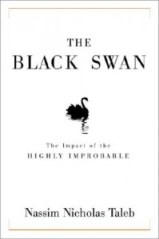
That said, I did enjoy it immensely. One reason is that I once again lucked out and ended up reading it at the same time as another book – Nassim Nicholas Taleb‘s The Black Swan – that despite being on a different topics and written 45 years later, dovetails nicely.

blackswan-199x300Paradigm shifts are black swan events. They can be hard, if not impossible to predict. They can arise because of the appearance of a single unforeseen data point (a black swan in a world where all swans were previously believed to be white) and they overthrow systems that we have become overly, comfortably, complacent and reliant on. Finally, although paradigms shifts are rare, because they force us to see the world in an entirely new way they have a disproportional and possibly even unparalleled, impact.

I often like to refer to Schopenhauer’s three stages of truth: “All truth passes through three stages. First, it is ridiculed. Second, it is violently opposed. Third, it is accepted as being self-evident.”

Both Taleb and Kuhn’s books play on this theme. For Taleb, our problem is that we can’t see or predict the changes in our world. We expect that we can predict them and that they’ll arrive in a nice orderly – or bell curve distributed – manner.

They don’t.

Despite the mental image we have of history (and our lives), history doesn’t crawl. It moves it fits and starts. Oscillating between long steady states and sudden change. We often believe the steady states will last forever, and when change comes we trivialize it and then fight it, until it becomes the new steady state, at which point, we come to believe it was always that way.

This is also Kuhn point. Look at how he sees paradigm shifts as being important for both the science and politics changes:

Political revolutions are inaugurated by a growing sense, often restricted to a segment of the political community, that existing institutions have ceased adequately to meet the problems posed by an environmental that they have in part created. In much the same way, scientific revolutions are inaugurated by growing sense, again restricted to a narrow subdivision of the scientific community, that an existing paradigm has ceased to function adequately in the exploration of an aspect of nature to which that paradigm itself had previously led the way. In both political and scientific development the sense of malfunction that can lead to crisis is prerequisite to revolution…

…The parallel has, however, a second and more profound aspect upon which the significance of the first depends. Political revolutions aim to change political institutions in ways that those institutions themselves prohibit. Their success therefore necessitates the partial relinquishment of one set of institutions in favour of another, and in the interim, society is not fully governed by institutions at all. Initially it is crisis alone that attenuates the role of political institutions as we have already seen it attenuate the role of paradigms. In increasing numbers individuals become increasingly estranged from political life and behave more and more eccentrically within it. Then, as the crisis deepens, many of these individuals commit themselves to some concrete proposal for the reconstruction of society in a new institutional framework. At that point the society is divided into competing camps or parties, one seeking to defend the old institutional constellation, the others seeking to institute some new one. And, once that polarization has occurred, political recourse fails. Because they differ about the institutional matrix with which political change is to be achieved and evaluated, because they acknowledge no supra-institutional framework for the adjudication of revolutionary difference, the parties to a revolutionary conflict must finally resort to the techniques of mass persuasion, often including force. Though revolutions have had a vital role in the evolution of political institutions, that role depends upon their being partially extrapolitical or extrainstitutional events. (Kuhn, Pages 92-93 of the 3rd edition)

If you don’t think the world operates this way, just look as far as the news industry.

When Shirky says revolutions are times when “The old stuff gets broken faster than the new stuff is put in its place” he is paraphrasing Kuhn. Journalism is already dividing into camps, those defending the old, and those seeking to figure out what the “new” will be.

But despite all the discussion, we are still very early on in the debate. How do I know? Because we haven’t even begun to shed the old paradigm? The entire debate about journalism, what it is, how it should be practiced and what makes it good or bad is still being largely being evaluated and adjudicated by the old matrix. When journalism finally gets saved I suspect it will be because it will be, in part, radically redefined – a redefinition affirmed and made possible by the establishment of some new institutions, organizations and/or processes. (That’s what my post on the death of journalist was seeking to do).

So yes, we’ve left the ridiculed phase (that lasted 20 years), but we are still early on in the violently oppose phase. All thos unhappy journalists are angry because they may be the midst of a paradigm shift, and that means much like Newtonian physicists confronting Einstein’s theory of relatively everything, absolutely everything they believed in, fought for, taught and lived. is probably going to get redefined and altered beyond recognition. It will still be there, but it will forever be understood differently.

That’s a scary thought. But it is fun one as well, filled with possibility. Which is why Kuhn and Taleb are fun to read together.

Education: where copyrighters and publishers are the pirates

There has been a lot of buzz around both the guilty verdict and now the judge’s alleged conflict of interest in the trial of the Pirate’s Bay operators.

For those not in the now The Pirate’s Bay is a search engine – like Google – that specialized in indexing “BitTorrents,” a file format often used to download movies, tv shows and large quantities of music. Since many of these files contained copyrighted material like Hollywood movies, there was significant interest in shutting down the site.

What is interesting to me is that the music recording industry – which was the first to fight against online file sharing – has always claimed it was working on behalf of starving artists. Fair enough – I too want to ensure that artists are fed and fairly rewarded for their work.

But this is in part what makes a new challenge to the publishing industry so interesting. Now a group of Swedes are enabling students to use file sharing to share educational materials. According to The Local, The Student Bay makes use of software from Rapid Share and encourages students to scan in and upload pages of course literature into an archive that they can then browse and download from.

I suspect that it is here – in the field of education – where file sharers will find the most fertile ground to transforming how media and copyright works. The movie and recording industries have deep pockets and a strong interest in fighting file sharing. Moreover, they will, for a while at least, be able to claim to speak for artists, even as this is less and less the case.

But the educational book industry? They pay professors virtually nothing for their works. Consequently, since most professors make their money from their salary they don’t rely on books as a revenue stream. Their core interest isn’t to make an extra $300-$4000 from a book that took them months to research and write, it is to know that students everywhere are reading and engaging their ideas.

Moreover, here is an industry that gouges its clients. Physics textbooks hardly need to change from year to year (how much has an intro Physics course really changed over the last 5 years? 10 years?). And yet new books, with new page numbers are created to force students to pay outrageous amounts for work that is – essentially – public domain. Even when educational publishers are trying to serve the greater good and introduce a new textbooks, the cost structure is prohibitive. Because of the short print runs of most textbooks, they tend to be expensive simply because margins have to be that much thicker to justify the investment.

In short, try to imagine the awareness campaign against copyright infringement in the educational sector? What % of the $85 for that physics text book we’ve been printing for 25 years really goes to the author or editor? Movies and music can somewhat justify their prices and copyright protection on the basis of fashion and trends. Educational book publishers don’t have that luxury. This is a mode of production that is broken: it is slow, expensive and primarily serves the interests of publishers, not the authors nor the readers. While the public remains uncertain about how to respond to copyright infringement in the entertainment industry I don’t think they are about to rise up and say: Yes! Let’s protect educational book publishers who pay authors nothing, overcharge students for textbooks and increase the cost of education.

And just in case you think the educational publishing industry won’t try to defend its business model, take a look at this story from Finland. Here, the industry is using legal threats to shut down an attempt to facilitate students lending each other books – in essence, creating a perfectly legal and truly “public” library.

Bookabooka doesn’t host any e-books on its site, but instead allows students to rent their textbooks to their peers. Renting is conducted via traditional “snailmail” (i.e. postal service) and it is mandatory that the textbooks are originals (not xeroxed copies). Bookabooka acts only as an intermediate, connecting the students together and doesn’t handle the shipping or returns of the textbooks.

Maybe file sharers will be forced to temporarily retreat, but here in lies fertile ground for the next battle. A battle where file sharing and the use of creative commons license (or no licenses at all) make the most economic and social sense.

Surviving in a changing, networked world

signpostsI am repeatedly floored by how lucky I am to be alive today. Here, in an era of complete turmoil, where things previously unimaginable are now normal, where old systems are dying and new ones are emerging that enable us to connect and cooperate in fascinating ways. All this, with our planet on the brink — it is all rather heady.

Sometimes, it is important to remind myself of this since there are moments when, confronted by all this turmoil, I slip into feeling frustrated and lost. When I reflect on why, I’m struck by the fact that never in my short lifetime — or, I suspect, in the lifetimes of my parents — have the way points, the path, or even the destinations for our lives been less clear, more uncharted, or simply completely unknown.

For confusing or unknown destinations, I think of my friends who wanted to get into news media, or a close friend who recently confessed that they’d love to sit on the board of the CBC (I can’t think of a better candidate), or colleagues who would like to be a Deputy Minister or even a bank executive. And yet, if you aspired to be the editor of the Globe and Mail when you hit your 40’s or 50’s I’m not sure you should be holding your breath… There may not be a Globe and Mail in 15 years, or a CBC, or even media companies. The role of a deputy minister may be radically altered beyond recognition — and do any of us really want to be bank executives? Worse, still, it’s not even clear what the equivalent of the editor of the Globe will be – it is fine to accept that the job you wanted may not exist, but what do you do when it isn’t even clear how to fulfill the underlying desire or interest?

If your dream was to contribute to national conversations, then the path has rarely been less clear. But it isn’t just the media. No matter what it is you want to do, the steps that were supposed to take you there… the education you are supposed to get, the jobs you were supposed to hold, they are less obvious, occasionally discredited and sometimes not longer in existence. This isn’t to say that newer, different, and I would argue better opportunities are not arising. They are. But they are hidden — hidden among a thousand blind alleys and dead ends. And yes, I even think the career paths of lawyers, doctors and accountants – the safest of professions – could change radically over the next few decades.

And the way points along these thousand paths are also harder to identify. What is progress? How do you know you are moving forward? I struggle with this question constantly: am I doing the right thing with my life? Am I making the world a better place? Am I growing? Developing?

In a bygone era I could have looked at the money I made, or the size of my office, my title, or any number of other things… but I find these metrics less and less helpful or meaningful. We all want to do more, be better, help with the next challenge.

What’s it all this mean? That remains to be seen. But here are two possibilities:

First, when you really don’t know what’s going to happen next you’d better grab that one thing you believe in. Because that value is a guiding light that allows you to keep marching on, even if you don’t know if you are marching forward, backward, up or down. Ultimately it is a leap of faith.

For me, that value is “share.” It’s why I got into negotiating – to enable people (self foremost) to be more effective at playing with others and learn to share ideas, possibilities, resources, anything… more effectively and fairly. It is why I believe in Open Source – that when we share, and build off each others contributions, we build faster, better and more cheaply, to the benefit of all. It’s the value that is at the core of my work in Public Service Sector Renewal – that a government that shares – shares its ideas, its data, in the process – both internally and externally, is a government that will be more responsive, more effective and more efficient.

The second piece is that we need peers. I suspect we are all (me especially) going to fail more than our parents. It is just a simple fact. There are more paths, and the right ones are less clear. So more of us are going to take risks, are going to try the unknown; and many or us, indeed the majority of us, will and should fail at some point. That’s why we need peers. We need friends and colleagues to help us, to pick us up when we fall down, to nurture us intellectually and help us emotionally.

When I look around at my friends I sense that we are blessed and cursed. We live in interesting times. The good news though, is that we are legion. Together, sharing and supporting one another, we are crafting a new world. I don’t know if my contribution is helping. It may all be one big failure – this alley I’m running down may be a dead end. That’s a frustrating, sometimes lonely, and scary reality to face down. But I know if I’m feeling it, someone else out there probably is too, and you should know you are not alone.

Bureaucracies and New Media: How the Airforce deals with blogs

A friend forwarded me this interesting diagram that is allegedly used by the United States Air Force public affairs agency to assess how and if to respond to external blogs and comments that appear upon them.

Airforce Blog Reaction

It’s a fascinating document on many levels – mostly I find it interesting to watch how a command and control driven bureaucracy deals with a networked type environment like the blogosphere.

In the good old days you could funnel all your communications through the public affairs department – mostly because there were so few channels to manage – TV, radio and print media – and really not that many relevant actors in each one. The challenge with new media is that there are both so many new channels emerging (YouTube, twitter, blogs, etc…) that public affairs departments can’t keep up. More importantly, they can’t react in a timely fashion because they often don’t have the relevant knowledge or expertise.

Increasingly, everyone in your organization is going to have to be a public affairs person. Close off your organizations from the world, and you risk becoming irrelevant. Perhaps not a huge problem for the Air Force, but a giant problem for other government ministries (not to mention companies, or the news media – notice how journalists rarely ever respond to comments on their articles…?).

This effort by a bureaucracy to develop a methodology for responding to this new and diverse media environment is an interesting starting point. The effort to separate out legitimate complaints from trolls is probably wise – especially given the sensitive nature of many discussions the Air Force could get drawn into. Of course, it also insulates them from people who are voicing legitimate concerns but will simply be labeled as “a troll.”

Ultimately however, no amount of methodology is going to save an organization from its own people if the underlying values of the organization are problematic. Does your organization encourage people to treat one another with respect, does it empower its employees, does it value and even encourage the raising of differing perspectives, is it at all introspective? Social media is going to expose organizations underlying values to the public, the good, the bad and the ugly. In many instances the picture will not be pretty. Indeed, social media is exposing all of us – as individuals – and revealing just exactly how tolerant and engaging we each are individually. With TV a good methodology could cover that up – with social media, it is less clear that it can. This is one reason why I believe the soft skills are mediation, negotiation and conflict management are so important, and why I feel so lucky to be in that field. Its relevance and important is only just ascending.

Methodologies like that shown above represent interesting first starts. I encourage governments to take a look at it because it is at least saying: pay attention to this stuff, it matters! But figuring out how to engage with the world, and with people, is going to take more than just a decision tree. We are all about to see one another for what we really are – a little introspection, and value check, might be in order…

Journalism in an Open Era (follow up link)

Been getting a number of great comments and emails from people on the post on Journalism in an Open Era.

Another blogger I meant to link to he’s ideas on the future of organizations I find smart, edgy and thoughtful is Umair Haque, the Director of the Havas Media Lab who blogs for the Harvard Business Review.

In a piece entitled How to Build a Next-Generation Business Now, Haque’s concludes that the problem that dragged down wall street is in part, the same one that is killing (or transforming to be nicer) journalism. My journalism in an open era piece is set, in part, on the belief that the gut wrenching changes we are experiencing economically are part of a transition to a new rule-set, one that will favour, and possibility require, more “open” institutions and business models. This will require – in part – a new journalism but also real leadership in the private, public and non-profit sector (the type Henry Mintzberg raged about in his excellent oped in the Globe and Mail).

Here’s Haque (bold and italic text is mine) on the subject:

The first step in building next-generation businesses is to recognize the real problem boardrooms face – that we’ve moved beyond strategy decay. Building next-gen businesses depends on recognizing that they are not about new business models or even new strategies.

The stunningly total meltdown we just witnessed in the investment banking sector – the end of Wall St as we know it – was something far darker and more remarkable. It wasn’t simple business model obsolescence – an old business model being superseded by a more efficient or productive one. The problem the investment banks had wasn’t at the level of business models – it had little to do with revenue streams, customer segmentation, or value propositions.

And neither was it what Gary Hamel has termed “strategy decay” – imitation and commoditization eroding the returns to a once-defensible strategic position, scarce resource, or painstakingly built core competence.

It was something bigger and more vital: institutional decay. Investment banks failed not just as businesses, but as financial institutions that were supposedly built to last. It was ultimately how they were organized and managed as economic institutions – poor incentives, near-total opacity, zero responsibility, absolute myopia – that was the problem. The rot was in their DNA, in their institutional makeup, not in their strategies or business models.

The point is this: the central challenge 21st century boardrooms must face is not reinventing strategies, or business models, but reinventing businesses as institutions.

Old stuff is breaking fast. The rot is in the DNA – we may, in may circumstances, need a new institutional make up. And the new rule sets need to be understood quickly. Are we coming into an Open Era? I don’t know, but I think open and/or transparent organizations are going to have a leg up.

The Death of Journalism? (or journalism in the era of open)

For those that missed them two of my favourite authors – Clay Shirky and Steven Johnson – posted brilliant pieces on the future of the news industry this week. I’ve pulled some of the best lines from both so you can glimpse at why these to writers are models for me. These relevant paragraphs also reveal a further analysis, one I think both authors stop shy of but that both pieces hint at: the Death of Journalism.

…in the long run, we’re going to look back at many facets of old media and realize that we were living in a desert disguised as a rain forest. Local news may be the best example of this. When people talk about the civic damage that a community suffers by losing its newspaper, one of the key things that people point to is the loss of local news coverage… I adore the City section of the New York Times, but every Sunday when I pick it up, there are only three or four stories in the whole section that I find interesting or relevant to my life – out of probably twenty stories total. And yet every week in my neighborhood there are easily twenty stories that I would be interested in reading: a mugging three blocks from my house;

But of course, that’s what the web can do. That’s one of the main reasons we created outside.in, because I found myself waking up in the morning and turning to local Brooklyn bloggers like Brownstoner, who were suddenly covering local news with a granularity that the Times had never attempted. Two years later, there are close to a thousand bloggers writing about Brooklyn: there are multiple blogs devoted to the Atlantic Yards real estate development; dozens following the Brooklyn foodie scene; music blogs, politics blogs, parenting blogs. [A veritable rain forest of information where there was once a desert]

Steven B Johnson

When someone demands to know how we are going to replace newspapers, they are really demanding to be told that we are not living through a revolution. They are demanding to be told that old systems won’t break before new systems are in place. They are demanding to be told that ancient social bargains aren’t in peril, that core institutions will be spared, that new methods of spreading information will improve previous practice rather than upending it. They are demanding to be lied to.

Clay Shirky

Both Shirky and Johnson’s pieces acknowledge that the trends hitting the news industry are hitting every part of society but – because they have written articles and not books – they deal with the changes to the news industry ecosystem in isolation. As a result, their analyses account for the death of the newspaper in its current form. However, both shy away from explicitly looking over that bigger cliff – are we seeing the death of Journalism? I for one, hope so, as it will mean a more profound change may be upon us.

Step back and look at the relationship between news gathering institutions and the organizations they report on. A large piece of “investigative news” has been about one set of opaque institutions – the news organization – covertly gathering information on another set of opaque institutions – government, corporations or non-profits – so as to shine a light on some malfeasance.

What if it isn’t just the business model newspapers and TV news that is faulty. What if it is the underlying structure and values are eroding not only among news institutions but also among the entities they normally cover? What if the belief in objectivity and trust in opaque structures are dying? This would mean that the public’s confidence in products, ideas, services, policies and news created behind a curtain – within any opaque institutions – is slowly crumble. In his Bertha Bassam lecture, this is precisely what David Weinberger brilliantly argues is already taking place:

“Wikipedia is far more credible because it shows us how the sausage is made makes Wikipedia far more credible. Yet this is exactly the stuff that the Britannica wont show us because they think it would make them look amateurish and take away from their credibility. But in fact transparency – which is what this is – is the new objectivity. We are not going to trust objectivity, we are not going to trust objectivity unless we can see the discussion that lead to it.”

Such a transformation, a reshaping of credibility from objectivity to transparency, would have profound implications for every organization – corporate, non-profit and governmental – in our society.

The trends Shirky and Johnson describe as killing newspapers – the fact there are more eyes, able to create more information, that is able to flow faster, and freer than ever before – may be making openness and transparency a strategically salient choice for an increasing number of organizations. Firstly, it is simply becoming harder and harder to keep secrets. More and more organizations may decide that, rather than devote energy to hiding secrets that will inevitable see the light of day, why not devote energy to solving the underlying problems that are creating them? More importantly, by being transparent allows these organizations to access the long tail of analyses an additional powerful incentive to being open. Those who share information and invite criticism and analysis may be better positioned to survive crises and challenges than those who don’t. Many eyes makes the bugs in any institution more likely to be shallow.

As a result we may see an organizational ecosystem emerging that strongly favours transparency. This is not to say that every organization will instantaneously become “open” overnight… but there would be increasing pressure, and more powerfully the adoption of the naked corporation as the default model in the new system.

Such a shift would forever change journalism. The first is that opaque news entities – those that don’t make clear the bargain with their readers, that fail to spell out their editorial decisions and philosophy and allow readers to hold them to account, will themselves be at risk. I suspect this will be true even if some magical financial solution (like the terrible idea of subsidizing news with an internet access tax) were to emerge. The problem would simply shift from being a financial crisis to a credibility crisis. If journalism prides itself on objectivity – then it had better find ways to be transparent. This means news sites had better engage with legitimate critics: and this means doing more than having columnists who ignore commenters that poke large holes in their arguments or electing to publish retractions on the bottom corner of page 8 or on some lost webpage.

More profound however may be that journalism in a transparent ecosystem could look very different than it does today. If investigative journalism has been about uncovering the dirty secrets within opaque institutions – what does it do if an increasing number of institutions have no secrets?

I suspect the ideal of good journalism will shift from being what Gladwell calls puzzle solving to mystery solving. In the former you must find a critical piece of the puzzle – one that is hidden to you – in order to explain an event. This is the Woodward and Bernstein model of journalism – the current ideal. But in a transparent landscape where huge amounts of information about most organizations is being generated and shared the critical role of the journalist will be that of mystery solving – figuring out how to analyze, synthesize and discover the mystery within the vast quantity of information. As Gladwell recounts this was ironically the very type of journalism that brought down Enron (an organization that was open, albeit deeply  flawed). All of the pieces of that lead to the story that “exposed” Enron were freely, voluntarily and happily given to reports by Enron. It’s just a pity it didn’t happen much, much sooner.

I for one would celebrate the rise of this mystery focused style of “journalism.” It has been sorely needed over the past few years. Indeed, the housing crises that lead to the current financial crises is a perfect example of case where we needed mystery solving not puzzle solving, journalism. The fact that sub-prime mortgages were being sold and re-packaged was not a secret, what was lacking was enough people willing to analyze and write about this complex mystery and its dangerous implications.

Interestingly this is precisely what many blogs – alone or as part of an emergent network – already do. They take large complex stories, break them down and, by linking back and forth to one another, create a collective analysis that slowly allows the mystery to be decoded. I hope this post is part of such a mystery solving exercise – I’m trying to build off of, and extend, the brilliant analyses of Johnson and Shirky.

Does this mean the death of journalism? Well, in a world where everybody can be a journalists… is anyone a journalist? I don’t know. I’m sure there will always be some professional journalists, but in a world where people distrust opaque institutions I’m not certain they will reside in organizations that look even remotely like the news institutions of today. Most importantly, in a world of mysteries perhaps citizen journalist and bloggers, and their role in the news ecoysystem, will be less frightening than the one most present day pundits (especially newspaper columnists) would have us believe.

Some of my favourite Vancouverites on Net Neutrality

A couple of Vancouverites can be seen below talking about the danger currently facing the future of the internet here in Canada as our government allows the telco’s to determine who will be the winners and losers of the digital age.

If you haven’t already I’d strongly encourage you to head over to the “SaveourNet.ca” facebook group and become a member.

broadcast artists in a communication world

Just a brief follow up on yesterday’s piece. One reader yesterday pointed out that the CRTC did “get the internet” and that it was the interveners – The Alliance of Canadian Cinema, Television and Radio Artists (ACTRA) that “didn’t get it.” I think there is lots to dive into about the CRTC but part of his point is well taken. Check out this problematic quote from ACTRA:

“The Internet is just another media-distribution platform like any other that we’ve had,” said Stephen Waddell, executive director of the Alliance of Canadian Cinema, Television and Radio Artists. “And in our view, if the CRTC doesn’t give some opportunity to Canadian content to have a place on that platform, we’re going to be immersed in non-Canadian content.”

The number of problems with this statement are almost overwhelming. Building on some of the reasons I discussed yesterday the internet is not like any other distribution platform. Rather than analyze it line by line, I thought I would hand things over to Clay Shirky, who in Here Comes Everybody explains how our  friends at ACTRA are caught in the same dilemma as scribes at the end of the 15th century:

Consider the position of a scribe in the early 1400s. The ability to write, one of the crowning achievements of human inventiveness, was difficult to attain and, as a result, rare. Only a tiny fraction of the populace could actually write… In this environment a small band of scribes performed the essential service of refreshing cultural memory. By hand-copying new editions of existing manuscripts, they performed a task that could be preformed no other way. The scribe was the bulwark against great intellectual loss…

…Now consider the position of the scribe at the end of the 1400s. Johannes Guttenburg’s invention of movable type in the middle of the century created a sudden and massive reduction in the difficulty of reproducing a written work… a scribe, someone who has given his life over to literacy as a cardinal virtue, would be conflicted about the meaning of movable type. After all, if books are good, then surely more books are better. But at the same time the very scarcity of literacy was what gave scribal efforts its primacy, and the scribal way of life was based on this scarcity…

…The spread of literacy after the invention of movable type ensured not the success of the scribal profession but its end. Instead of mass professionalization, the spread of literacy was a process of mass amateurization. The term “scribe” didn’t get extended to everyone who could read and write. Instead it simply disappeared, as it no longer denoted a professional class.

This is what the internet has done to radio, television and cinema professionals. It has radically lowered the barriers for the creation of Canadian content.

So do we lament the loss of scribes? Not at all – we are liberated because today we can all write. Has the acerage quality declined? Possibly, we aren’t all writing Dante’s Inferno. But the best writing is way, way better (and better paying as well).

Will we lament the loss of television, cinema and radio (I doubt they will disappear completely) no. Something new and more interesting will arise to replace it. With the end of scribes we didn’t writers, instead we gained something far more valuable, the growth of contemporary authors! (who in 1350 could have imagined a world of authors, book stores, top 10 best seller lists?)

Now, imagine if there had been a tax on every printing press to pay for scribes to continue copying books… that would have just made books more expensive and less accessible.

We must acknowledge ACTRA fear of the new world. However self-serving, it is rational and genuine. Everything is going to be unpredictable for a while. But the future also the opportunity for something new an amazing – unimaginable ways for new types artists and mediums to describe the human condition and touch our souls. Just because it won’t be the way it has been done – through the broadcast mediums of radio, television, and cinema – doesn’t mean that it won’t be good. Indeed, I predict, that once the dust has settled, there will be more artists, producers, actors, and creatives in general, many of who will continue to get paid well. It’s just that the line between amateur and professional will be more blurred. There may even be a role for a professional association – although I imagine it will look, much, much different. Scary, yes. But also unavoidable.