Today’s blog post appears in the Globe and Mail. You can read it there (please do, also give it a vote).
How Tories could do transparency
Britain’s new Conservative government did something on Friday that Canadians would fine impossible to imagine. After a brief video announcement from Prime Minister David Cameron about the importance of the event, Francis Maude, Minister of the Cabinet Office, and Tim Berners-Lee, inventor of the World Wide Web, announced that henceforth the spending data for every British ministry on anything over £25,000 (about $40,000) would be available for anyone in the world to download. The initial release of information revealed thousands and thousands of lines of data and almost £80-billion (about $129.75-billion) in spending. And starting in January, every ministry must update the data once a month.
For the British Conservative Party, this is a strategic move. Faced with a massive deficit, the government is enlisting the help of all Britons to identify any waste. More importantly, however, they see releasing data as a means by which to control government spending. Indeed, Mr. Maude argues: “When you are forced to account for the money you spend, you spend it more wisely. We believe that publishing this data will lead to better decision-making in government and will ultimately help us save money.” And they might be right. Already, organizations like Timetric, the Guardian newspaper and the Open Knowledge Foundation have visualized, organized and indexed the data so it is easier for ordinary citizens understand and explore how their government spends their money.
These external sites are often more powerful than what the government has. After observing the way these sites handle the data, the minister noted how he wished he’d had access to them while negotiating with some of the government’s largest contractors.
For Canadians, the Conservative-Liberal Democrat coalition government is but a distant example of a world that a truly transparent government could – and should – create. In contrast, Stephen Harper’s Conservatives seem stuck in a trap described by Mr. Maude in his opening sentences: “Opposition parties are always remarkably keen on greater government transparency, but this enthusiasm mysteriously tends to diminish once they actually gain power.” Canada’s Conservatives have been shy about sharing any information with anyone. Afghan detainee files aren’t shared with Parliament; stimulus package accounts were not emailed to the Parliamentary Budget Office, but uselessly handed over in 4,476 printed pages. Even the Auditor-General is denied MP expense data. All this as access-to-information wait times exceed critical levels and Canada, unlike the United States, Britain , Australia and New Zealand, languishes with no open-data policy. Only once has the government pro-actively shared real “data,” when it shared some stimulus data that could be downloaded.
The irony is not only that the Tories ran on an agenda of accountability and transparency, but that – as their British counterparts understand – actually implementing a transparency and open-data policy may be one of the best ways to stamp a conservative legacy on the government’s future. Moreover, it could be a very popular move.
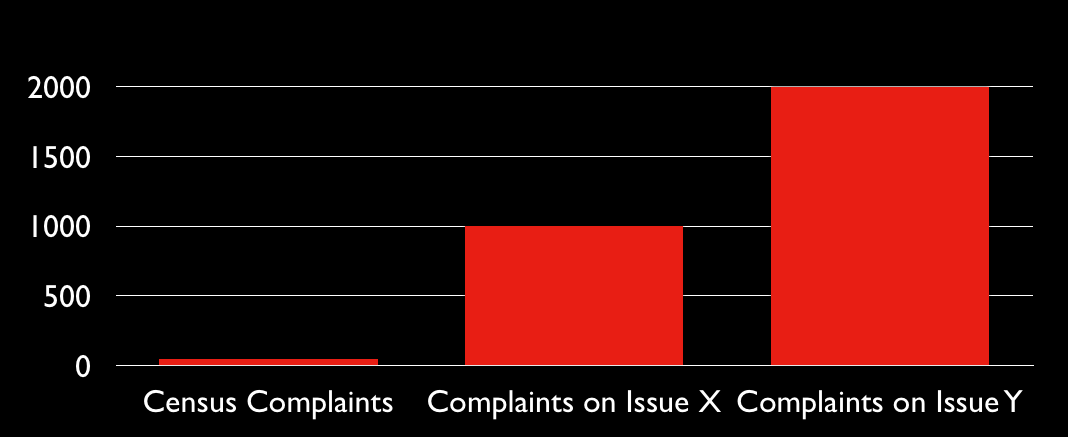
During the digital economy strategy consultations, open data was the second-most popular suggestion. Interestingly, it would appear the Liberals are prepared to explore the opportunity. They are the only party with a formal policy on open data that matches the standards recently set by Britain and, increasingly, in the United States.
Open data will eventually come to Canada. When, however, is unclear. In the meantime it is our colleagues elsewhere that will reap the benefits of savings, improved analysis and better civic engagement. So until Mr. Harper’s team changes its mind, Canadians must look abroad to see what a Conservative government that actually believes in transparency could look like.
David Eaves is a public-policy entrepreneur, open government activist and negotiation expert based in Vancouver
 The Conservatives is by far one of the most networked parties for Canada’s political environment. Why is this? Because of their roots as the Reform party. Because they started from nothing – and were even feared by larger corporate funders who saw them as too radical – they developed and have come to rely on fund raising through individuals. This has two consequences. First, to fund raise successfully in this manner they must be keenly aware of what their network of individual donors think, so they are constantly in tune with their supporters listening to them and engaging them. Second, by relying on a network of grassroots contributors they have never relied on large corporate donors. Thus, when Chretien passed campaign finance reform and essentially eliminated institutional donations (from unions and corporations) he created an election fund raising ecosystem in which the conservative model was well positioned to thrive.
 But probably the party facing the biggest challenge – long term – is the NDP, the one party that can ignore networks and continue to survive. This is largely because the unions – which can no longer donate as much money as they once could – can still deliver boots on the ground to help out. In short the NDP is one party that need not cultivate a network in order to survive. This dependency means it will likely not put in place the infrastructure to enable organic growth. Consequently, growth will require an exogenous event, namely a Liberal collapse – something that while theoretically possible – is hard to imagine. As such, the NDP will continue to sit influence the debate indirectly, a role that satisfies some of its members while infuriating others.
 eaves.ca