North America and the Auto Sector: The Upside of Down

Anyone else notice how circumscribed the debate over the auto sector has been? Some news outlets have occasionally asked “is the bail out fair?” but the discussion has remained fairly limited. Specifically, pieces on the auto-sector bailouts tends to be restricted to the negative consequences in relation to the costs in jobs: the moral hazard the bailout creates, the (unfair) treatment the bailout affords autoworkers, the concerns over the enormous burden the bailouts imposes on taxpayers, the impact on affected communities. Even within this narrow discourse,few commentators have even been outspoken. Maclean’s has probably been the most interesting. It bluntly outlined the gong show the industry has become  with this set of amazing statistics and its columnist Andrew Coyne published has posted piece after piece where he rightly points out the opportunity cost of bailing out the auto industry.

However, none of the commentary on the North American auto-sector’s dramatic decline has touched on how this change will impact the continent’s political and policy landscape. It interesting because, while it isn’t polite to talk about it, the fact is, there are upsides to the decline of the North American auto sector.

Start wit the fact that we will now only have one or two (smaller) American auto companies and their relative importance to the US economy will be dramatically diminished. It is hard to imagine that the political muscle of this sector will not equally diminish. This is no small matter. Huge swaths of American (and thus, in part, Canadian) public policy is explicitly and/or implicitly focused on ensuring that people either need cars, or that cars are never a burden. (Remember, these are companies that, with political and government acquiescence, bought up public transport companies across the US just so they could tear up the tracks their trams ran on to push people into cars or, if they had to, the buses the car companies built.)

So everything from highways, to urban planning, to emission controls, to business hours… almost everything in our society, is shaped by the fact that cars and the auto-sector were a large and integral part of the North American economy and its social fabric.

And so all these decision, all these debates about how North Americans should structure their society, they are all going to open up again as American auto companies cease to exist or decline in importance. The US congress is much more likely to impose tougher emission restrictions if those restrictions most likely impact foreign companies. If more roads don’t create more American jobs and profits then public transport – not the auto-sector – becomes slightly more appealing to subside.

It is true that Americans (and Canadians) love their cars. But this love didn’t come out of nowhere, it was nursed by decades of social policy and economic planning. Now the incentives that created and sustained that process are potentially irrevocably weakened. The consequences are terrible for those who work in the sector, but they may end up being liberating and renewing for society at large. For cities, citizens and communities the implicit legal, political and policy barriers that have prevented alternatives are already beginning to decay.

At that’s a big upside.

10,000 hours and The Coming Online Talent Explosion

About half way through Gladwell’s Outliers: The Story of Success and, if he’s thesis and the research it is based on is valid, I think we are in for some exciting times in the online writing world.

Gladwell talks about how it takes about 10,000 hours to achieve mastery in area, subject or practice. Referencing a study of musicians that sought to determine how many “natural” talents their were, Gladwell notes that:

“The curious thing about Ericsson’s study is that he and his colleagues couldn’t find any “naturals” – musicians who could float effortlessly to the top while practicing a fraction of the time that their peers did. Nor could they find “grinds”, people who worked harder than everyone else and yet just didn’t have what it takes to break into the top ranks. Their research suggested that once you have enough ability to get into a top music school, the thing that distinguishes one performer from another is how hard he or she works. That’s it. What’s more, the people at the very top don’t just work much harder than everyone else. They work much, much harder.”(H/T Tim Finin)

How much harder?

“In those first few years everyone practiced roughly the same amount, about two or three hours a week. But around the age of 8 real difference started to emerge. the sudtents who would end up as the best in their class began to practice more than everyone else. 6 hours a week by age 9, 8 hours a week by age 12, 16 hours a week by age fourteen and up and up until by the age of 20, they were practicing – that is purposefully, and single-mindedly playing their instruments with the intent to get better – well over 30 hours a week. In fact by the age of 20 the elite performers had totalled 10,000 hours  of practice over the course of their lives, by contrast the merely good students had totaled 8000 hours and the future music teachers had totaled just over 400 hours. “

He then cites example after example of this trend. 10,000 hours – usually attained only after about 10 years – is a magic number.

Well, two years ago my friend Taylor and I wrote this piece about the 10th anniversary of blogging. Since the blogosphere is only about 12 years old there are not that many people who’ve been blogging for 10 years – moreover, the scant few who have are most likely to be those who work, or and deeply interested, in Information Technology. If Gladwell is correct it means that virtually all bloggers  (self-included, only 3.5 years) and especially those without an IT background, are likely well short of the 10,000 hour mastery threshold.

This is exciting news. It means that despite the already huge number of great blogs and bloggers we are probably only experiencing a fraction of what is to come. Given bloggings exponential growth I’d wager that the world is about 2-5 years away from an explosion in writing talent. Today all sorts of people who would never have previously written are writing blogs. Many are terrible, some are good, and fewer still are excellent. But what is important is that they are gaining experience and learning. With more people reaching that 10,000 hour mark, more talented people will also reach it – consequently, we should see more gifted writers. Better still, it is possible their talent will be restricted to blogs – but perhaps not. As these writers get more recognized some they will shift to books, or magazines or whatever new medium exists by then.

All in all, the first half of the 21st century could be one of the greatest for writers – and as a result, for readers from thereafter too. The internet’s writing renaissance could be upon us soon.

The Open Cities Blog on the Creative Exchange

Excited to let everyone know that I’ll be blogging at the Creative Exchange on Open Cities. I’ll continue to blog here 4 times a week and the pieces I post there I’ll cross-post here as well.

It’s an opportunity to talk about how openess and transparency can/will change our cities to a wider audience.

Wish me luck. Here was my first post.

Creating Open Cities

Web 2.0 is the network as platform, spanning all connected devices; Web 2.0 applications are those that make the most of the intrinsic advantages of that platform: delivering software as a continually-updated service that gets better the more people use it, consuming and remixing data from multiple sources, including individual users, while providing their own data and services in a form that allows remixing by others, creating network effects through an “architecture of participation,” and going beyond the page metaphor of Web 1.0 to deliver rich user experiences.

Tim O’Reilly

To the popular press “hacker” means someone who breaks into computers. Among programmers it means a good programmer. But the two meanings are connected. To programmers, “hackers” connotes mastery in the most literal sense: someone who can make a computer do what he wants-whether the computer wants to or not.

Paul Graham, Hackers & Painters

Welcome to the Open Cities blog on CCE. My name is David Eaves and I’ve been writing, speaking, and thinking about open, citizen engagement and public policy for a number of years. Most recently, I worked to help push forward the City of Vancouver motion that requires the city to share more data, adopt open standards, and treat open source and proprietary software equally.

Cities have always been platforms – geographic and legal platforms upon which people collaborate to create enterprises, exchange ideas, educate themselves, celebrate their culture, start families, found communities, and raise children. Today the power of information technology is extending this platform, granting us new ways to collaborate and be creative. As Clay Shirky notes in Here Comes Everybody, this new (dis)order is powerful. For the meaning and operation of cities, it will be transformative.

How transformative? The change created by information technology is driving what will perhaps be seen as the greatest citizen-led renewal of urban spaces in our history. Indeed, I believe it may even be creating a new type of city, one whose governance models, economies and notions of citizenship are still emerging, but different from their predecessors. These new cities are Open Cities: cities that, like the network of web 2.0, are architected for participation and so allow individuals to create self-organized solutions and allow governments to tap into the long-tail of public policy.

And just in the nick of time. To succeed in the 21st century, cities will have to simultaneously thrive in a global economy, adapt to climate change, integrate a tsunami of rural and/or foreign migrants, as well as deal with innumerable other challenges and opportunities. These issues go far beyond the capacity and scope of almost any government – not to mention the all-too-often under-resourced City Hall.

Open Cities address this capacity shortfall by drawing on the social capital of their citizens. Online, city dwellers are hacking the virtual manifestation of their city which, in turn, is giving them the power to shape the physical space. Google transit, DIYcity, Apps for Democracy are great urban hacks, they allow cities to work for citizens in ways that were previously impossible. And this is only the beginning.

Still more exciting, hacking is a positive sum game. The more people hack their city – not in the poorly misunderstood popular press meaning of breaking into computers but in (sometimes artful, sometimes amateur) way of making a system (read city) work for their benefit – the more useful data and services they create and remix. Ultimately, Open Cities will be increasingly vibrant and safe because they are hackable. This will allow their citizens to unleash their creativity, foster new services, find conveniences and efficiencies, notice safety problems, and build communities.

In short, the cities that harness the collective ingenuity, creativity, and energy of its citizenry will thrive. Those that don’t – those that remain closed – won’t. And this divide – open vs. closed – could become the new dividing line of our age. And it is through this lens that this blog will look at the challenges and opportunities facing cities, their citizens, and institutions. Let’s see who’s open, how they’re getting open, and what it will all mean.

Open data in local education: broader lessons for government, citizens and NGOs

Last months I remember reading a couple of news stories about a provincial government ministry in Canada that was forced to become less transparent.

Forced?

Yes, this was not a voluntary move. A specific group of people pressured the government, wanting it to remove data it had made public as well as make it harder for the public to repurpose and make use of the data. So what happened? And what lessons should governments, NGOs and citizens take away from this incident?

The story revolves around the Ontario Ministry of Education which earlier this year created a website that mashed up performance data (e.g. literacy and math scores) with demographic information (e.g. percentage of pupils from low-income households and percentage of gifted students). The real problem – according to a group representing teachers, parents and stakeholders – occurred when the Ministry enabled a feature that allowed the website’s users to compare up schools to one another.

The group, called People for Education, protested that the government was encouraging a “shopping-mentality” in the public school system.

Of course, many parents already shop for schools. I remember, as a kid, hearing about how houses on one side a street, but within the catchment area of my high school, were more expensive than houses on the other side of the same street, but within the catchment area of another school. Presently however, this type of shopping is reserved for the wealthy and connected (e.g. the privileged). Preventing people from comparing schools online won’t eliminate or even discourage this activity, it will simply preference those who are able to do it, further reinforcing inequity.

The real problem however, is that the skills and analysis involved in school shopping are the same as those required in accessing and being engaged in, the performance of one’s local school. Parents, and taxpayers in general, have a right to know their childrens school’s performance – especially in comparison to similar schools. If parents don’t have information to analyze and compare, how can they know what systemic issues they should ask their childrens teachers about? More importantly, how can they know what issues to press their local school board about?

Ironically, People for Education states on its “About Us” page that it works towards a vision of a strong public education system by a) doing research; b) providing clear, accessible information to the public and c) engaging people to become actively involved in education issues in their own community.

And yet, asking the government to remove the comparison feature runs counter to all three of its activities. Limiting how the Ministry’s data can be used (and as we’ll see later, suggesting that this data shouldn’t be shared):

  • prevents parents, and other analysts such as professors or politicians, from doing their own research
  • runs counter to the goal of providing clear and accessible information to the public. Indeed, it makes information harder to access.
  • makes it harder for parents to know how they should get involved and what issues they should champion to improve their local school

What is interesting about this story is that it reveals the core values and underlying motivation of different actors. In this case People for Education – which I believe to be a well intentioned a positive contributor to the issue of education – is nonetheless revealed to have a conservative side to it.

It fears a world where citizens and parents are equipped with information and knowledge about schools. On the one hand it may fear the types of behaviours this could foster (such as school shopping). However, it may also fear a weakening of its monopoly as “expert” and advocate on educational issues. If parents can look at the data directly, and form their own analysis and conclusions, they may find that they don’t agree with People for Education. Open data would allow those it represents to self-organize, challenging the hierarchy and authority of the organization.

For whatever reason, we see an NGO bending over backwards to advocate for an outcome that runs directly counter to the very vision and activities it was founded to serve. More ironically, this result in some paradoxical messaging as an organization that champions Ontario’s school system essentially arguing that it doesn’t trust the products of that system – the citizens of Ontario – to use the information and tools provided by the Ministry that was responsible for their education. It is an unsustainable position – particularly for a group that was originally founded as a bottom up, grass-roots organization.

So what lessons are there here?

For government:

A key mistake made by the Ontario Ministry of Education is that it didn’t open up the data enough. While the website allowed users to look at school performance data they could only do this on the Ministry’s website using the Ministry’s tools and interface. Had the data been available as an API or in downloadable format someone else could have taken the data and created the system for comparing schools. People for Education were mostly upset that the Ministry’s website encouraged a “shopping-mentality.” Had the Ministry simply shared the data then People for Education could build their own interface using criteria and tools they though relevant. The Fraser Institute or a multitude of other organizations could build their own as well, and people could have used the tools and websites they found most useful and relevant. Let People for Education go head to head with the Fraser Institute and whoever else. This is not a battle the government need fight.

Lesson: Always provide the data – a goal that is hard to argue against – but sometimes, leave it to others to conduct the analysis. A marketplace of ideas will emerge, and citizens can choose what works best for them.

For NGOs in general

First, understand what open data means for your cause. One of the news articles had this highly disturbing quote from the Executive Director of People for Education:

Among her complaints about the type of information available, Ms. Kidder took issue with the ministry’s contention the Web site merely consolidated information already available to the public. “You can’t walk into your child’s school and say ‘What’s the average income of parents at this school?’ ” she said. “It’s not true at all [that this is public information].”

This is a shocking statement. In actuality, all the data assembled by the Ministry is publically available. It was just that, until now, it had remained scattered and isolated. Just because it was hard to find (and thus reserved for an elite few) or located on the school property (and thus easy for parents to locate) does not mean it didn’t exist or wasn’t public.

Lesson: Transparency is the new objectivity. People increasingly don’t trust anyone – governments, the media, or even NGOs. They want to see the analysis themselves, not take your word for it. Be prepared for this world.

Second, be careful about taking positions that will deny your supporters – and those you represent – tools with which to educate themselves. Organizations that are perceived as trying to constrain the flow of information so as to retain influence and control risk imploding. I won’t repeat this lesson in detail but Clay Shirky’s case study about the Vatican, written up in Here Comes Everybody, is a powerful example.

For educators in particular

In the past, educators have been deeply concerned with ranking systems. This is understandable. Ranking systems are often a blunt tool. Comparing apples to oranges can be foolish – but then, sometimes it is helpful. The question is to know when it is helpful and ensure it is used accordingly.

The fact is, ranking is an outcome of data. The two simply cannot be separated. The moment there is data, there is ranking. A ranking by school size, number of teachers, or amount of gym equipment is not different than a ranking of class sizes, literacy rates, disciplinary trends, or graduation rates. What matters is not the rank, but the conclusions, meaning and significance we apply to these rankings. Here, the role for groups like People for Education could be profound.

This is because we can’t be in favour of transparency and accessible information on the one hand and against ranking on the other. The two come hand in hand. What we can be opposed to are poor ranking systems.

Every profession gets assessed, and teaching should be no different. The challenge is that there is much more to teaching than what gets reflected in the data collected. This means that groups like People for Education shouldn’t be against transparency and open data – they should be trying to complexify and nuance the discussion. Once the data is publicly available anyone can create a ranking system of their own choosing – but this gives us an opportunity to have a public discussion about it. One way to do this is to create one’s own tools for measuring schools. You don’t like the Ministry of Education’s system? Create your own. Use it to talk to parents about the right questions to ask and to promote the qualitative ways to evaluate their childrens’ schools performance. It’s an open world. But that doesn’t mean it needs to be feared – it is rife with opportunity.
PublicVoice Interview on "Open," Government and Citizen Engagement

A couple of weeks ago I was interviewed by Maclean’s columnist Scott Feschuk for PublicVoice.tv on what the rise of “open” systems and the continuing evolution of information technology will mean for the future of both government and citizen engagement.

Cleverly, they’ve kept these videos nice and short – it’s all designed to be short and punchy. There will be five 1-3 minute videos in a all and so far the first two have been posted. You can see them here and here.

Sadly, the lighting isn’t all that flattering… consider yourself warned.

why collaborative skills matter in open source

For the past several years now I’ve been talking about how community management – broadly defined as enhancing a community’s collaborative skills, establishing and modeling behaviour/culture and embedding development tools and communications mediums with prompts that “nudge” us towards collaborative behaviour – is imperative to the success of open source communities. (For those interested in this, my FSOSS 2008 on the subject has been slidecasted here, and is on on google video here.

Re-reading Shirkly’s latest book, Here Comes Everybody, has re-affirmed my thinking. Indeed, it’s made me more aggressive. Why? Consider these two paragraphs:

This ability of the traditional management structure to simplify coordination helps answer one of the most famous questions in all of economics: If markets are such a good idea, why do we have organizations at all? Why can’t all exchanges of value happen in the market? This question originally was posed by Ronald Coase in 1937 in his famous paper “The Nature of the Firm,” wherein he also offered the first coherent explanation of the value of hierarchical organization. Coase realized that workers could simply contract with one another, selling their labor, and buying the labor of others in turn, in a market, without needing any managerial oversight. However, a completely open market for labor, reasoned Coase, would underperform labor in firms because of the transaction costs, and in particular the costs of discovering the options and making and enforcing agreements among the participating parties. The more people are involved in a given task, the more potential agreements need to be negotiated to do anything, and the greater the transaction costs…

And later, Shirky essentially describes the thesis of his book:

But what if transaction costs don’t fall moderately? What if they collapse. This scenario is harder to predict from Coase’s original work, at it used to be purely academic. Now’s it not, because it is happening, or rather it has already happened, and we’re starting to see the results.

My conclusion: the lower the transaction costs, the greater the playing field will favour self-organizations systems like open source communities and the less it will favour large proprietary producers.

This is why open source communities should (and do) work collectively to reduce transaction costs among their members. Enabling the further collapse of transaction costs tilts the landscape in our favour. Sometimes, this can be down in the way we architect the software. Indeed, this is why – in FirefoxAdd-Ons are so powerful. The Add-On functionality dramatically reduces transaction costs by creating a dependable and predictable platform, essentially allowing coders to work in isolation from one another (the difference between collaborative vs. cooperative). This strategy has been among the most successful. It is important and should be pursued, but it cannot help collapse transaction costs for all parts of a project – especially the base code.

But what more can be done? There are likely diminishing returns to re-architecting the software and in finding new, easier ways, to connect developers to one another. The areas I think offer real promise include:

  • fostering cultures within open source communities that reward collaborative (low transaction cost) behaviour,
  • promoting leaders who model collaborative (low transaction cost) behaviour
  • developing tools and communications mediums/methods that prompt participants to improve the noise to signal, minimize misunderstandings, limit unnecessary conflict, and help resolve differences quickly and effectively (the idea being that all of these outcomes lower transactions costs).

This is why I continue to think about how to port over the ideas, theories and tools from the negotiation/collaboration field, into the open source space.

For open source communities, eliminating transaction costs is a source of strategic advantage – one that we should find ways to exploit ruthlessly.

Neo-Progressivism watch: online collectivism as the 3rd way that works

Just finished reading Kevin Kelly’s piece The New Socialism: Global Collectivist Society Is Coming Online in Wired Magazine. It talks about the same themes Taylor and I were trying to surface Progressivism’s End and I suspect we agree with Kelly’s in many regards.

Taylor and I talked about how the left (now old left) killed progressive politics and how progressive politics is re-emerging in new forms (I had wanted to use Mozilla as a mini-case, but came to it too late). Kelly’s piece deals less with the past and focuses exclusively on the nascent politics that is emerging in the online space:

We’re not talking about your grandfather’s socialism. In fact, there is a long list of past movements this new socialism is not. It is not class warfare. It is not anti-American; indeed, digital socialism may be the newest American innovation. While old-school socialism was an arm of the state, digital socialism is socialism without the state. This new brand of socialism currently operates in the realm of culture and economics, rather than government—for now.

When masses of people who own the means of production work toward a common goal and share their products in common, when they contribute labor without wages and enjoy the fruits free of charge, it’s not unreasonable to call that socialism.

Maybe. I think the socialism label takes the argument a bit far. Kelly’s piece portrays open source and collective online projects as disconnected from capitalism. Certainly in the case of open-source, this is a strained argument. While motivations vary, many people who fund and contribute to Firefox do so because having an open browser allows the web – and all the commerce conducted on it – to be open and competitive. Same with Linux, between 75%-90% of contributors are paid by their employers to contribute. As Amanda McPherson, director of marketing at the Linux Foundation notes: “They’re not the guys in the basements, the hobbyists.” Consequently, many open-source projects are about preserving an open platform so that value can shift to another part of the system. It is about allowing for better, more efficient and more open markets – not about ending them.

Still more difficult to believe is Kelly’s assertion that “The more we benefit from such collaboration, the more open we become to socialist institutions in government.” If there is one political philosophy that is emerging among the online coders and hackers it isn’t socialism – it is libertarianism. I see no evidence that socialism is making a comeback – this is where Kelly’s use of the term hurts him the most. If we are seeing anything it is the re-emergence of the values of progressive politics: a desire for meritocracy, openness, transparency, efficiency and equality of opportunity. The means of achieving this is shifting, but not back towards socialism of any form.

One area I strongly agree with Kelly is that neo-progressivism (or as he prefers, the new socialism) is strongly pragmatic:

On the face of it, one might expect a lot of political posturing from folks who are constructing an alternative to capitalism and corporatism. But the coders, hackers, and programmers who design sharing tools don’t think of themselves as revolutionaries. No new political party is being organized in conference rooms—at least, not in the US. (In Sweden, the Pirate Party formed on a platform of file-sharing. It won a paltry 0.63 percent of votes in the 2006 national election.)

Indeed, the leaders of the new socialism are extremely pragmatic. A survey of 2,784 open source developers explored their motivations. The most common was “to learn and develop new skills.” That’s practical. One academic put it this way (paraphrasing): The major reason for working on free stuff is to improve my own damn software. Basically, overt politics is not practical enough.

As we wrote in an early draft of Progressivism’s End:

Having lost, or never gained, hope in either partisan politics or the political institutions that underlie the modern state, much of this generation has tuned out.  Driven by outcomes, neo-progressive’s are tired of the malaise of New Deal institutions. Believing, but with a healthy dose of skepticism, in both the regulatory capacity of the state and the effectiveness of the market economy, they are put off by the absolutism of both the right and left.  And, valuing pragmatism over ideology, they are embarrassed by partisan bickering.

The simple fact is that in a world that moves quickly, it is easier than ever to quickly ascertain what works and what does not. This gives pragamatists a real advantage over theoretically driven ideologues who have a model of the world they want reality to conform to. Kelly may be right that, at some point, this neo-progressive (or new-socialist) movement will get political. But I suspect that will only be the case if a) their modes of production are threatened (hence the copyright was). I suspect they will simple (continue) ignore the political whenever possible – why get them involved if you can achieve results without them?

Cool Job in Open Source, Science and Engagement

My friend Rikia S. sent me the link to this cool job posting on the TED website.

Based on astronomer Jill Tarter’s TED Prize wish — to search for signs of intelligent life on other planets – the SETI Institute is hiring a project manager with the experience, qualifications and energy to run the TED Prize wish project for at least two years.

For those interested in Open Source Software, who love science and astronomy and who can engage a large community of citizen-scientists who are contributing to SETI’s efforts, this is a dream job.

The full job description and contact info is on their website:

This is a unique opportunity to work in both open-source software and social media, on a project whose ramifications are literally beyond global.

We are seeking someone with deep experience in managing open-source software projects and the communities that power them to drive a bold and agenda-setting initiative. The initiative will involve managing a traditional open-source software project, as well as a complex public-facing system that will enlist the general/nontechnical public’s assistance in conducting our search. To succeed, a candidate above all needs a history of success in managing major open-source projects. While it’s not essential that this person be a coding engineer, it is essential that s/he be comfortable enough with C++ code to have technically meaningful interactions with committers and the broader open-source community. It’s also essential that s/he be a strong evangelist — able to speak inspiringly in public, and to energize, recruit and maintain engagement with key influencers in the open source coding world.

The other part of the job will be governing a project that will in many ways resemble Galaxy Zoo (an intriguing “citizen scientist” system). This will involve managing a respected Web development company as it creates the site, and thereafter overseeing/”gardening” a large community of nontechnical contributors. We expect this community to be self-policing and self-monitoring, like Wikipedia’s editorial community. But it will need leadership and a baseline architecture, and our hire will be responsible for delivering this.

This is a unique opportunity to work in both open-source software and social media, on a project whose ramifications are literally beyond global.

This will be a full-time role at the SETI Institute for two years, funded by the money TED has allocated toward granting Jill’s wish. However, because this is a TED Prize wish, one in which many people and individuals are giving a lot to make happen, we do hope to find someone who will do this at a reduced rate. We have a large brainstorm taking place on June 1 and would love to have the right person chosen and at the table for that meeting.

Please send a resume and cover letter to tedprize1@ted.com if you are interested in the position.

And please forward this opportunity on to anyone you believe possess the right skills!

The Myth of the "Wasted" Vote

One of the most disturbing allegations to come out of the electoral reform debate was the notion that people who voted – but whose candidate didn’t win – had their vote “wasted.”

The biggest problem with this analysis is that it casts the meaning and purpose of voting in the narrowest light possible. Defined this way, the purpose of voting is only to elect your representative. Consequently, you either succeed or you fail. Once the vote is over, how you voted takes on no further meaning.

This, of course, is completely false.

Ultimately, governments may win a majority of seats in a legislature, but the margin of their victory does impact the manner and confidence with which they govern. Parties nervous about their future will look to see how they can steal votes from other parties by adopting (stealing) their ideas. In this regard, voting is a powerful signal voters can send, one that communicates quite powerfully to parties, letting them know what they should do if they want to increase their appeal to certain communities.

For a practical example, take a look at the Green Party in British Columbia. Does voting for the BC Green Party constitute a wasted vote? I believe not. I would argue the existence of the Green Party – and the significant vote that it garners – has forced the other parties to react to its agenda. Would we presently have a Liberal Party in BC that is implementing a carbon tax if it weren’t for the Green Party? I suspect not. The pressure this group brought to bear – by making clear that there is a voting constituency interested in Green matters – has been significant, even if it has not won any seats. I would argue that not one of those votes has been “wasted.” Each one has communicated a powerful message.

I can imagine that living in a riding where a specific party is unlikely to win can be frustrating – but calling those votes wasted reveals a misunderstanding of how the system can be influenced and unfairly devalues the voting process. I hope we get over using this language if we end up looking at electoral reform again…

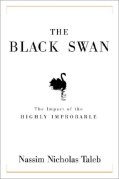
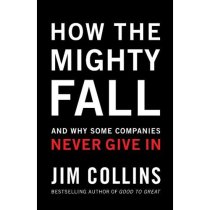
How the Mighty Fall vs. The Black Swan

blackswanI’ve almost finished listening to Nassim Nicholas Taleb’s The Black Swan, a book about how large-impact, hard-to-predict, and rare event beyond the realm of normal expectations. At the same time, Tim O’Reilly caused me to stumble upon this article previewing Jim Collins‘ (author of Good to Great and Built to Last) new book “How the Mighty Fall.”

In some way the two authors’ could not be more different. Taleb writes in a harsh, sarcastic, cutting tone that heaps scorn on many of the worlds finest minds as well as, one senses, the books readers. His harshest barbs are reserved for academics, who if often sees as being to interested in theory to help with real world problems. I’ve never seen Taleb in person or on video, but after listening to The Black Swan I can’t help but see him as an lethal and angry intellectual street fighter, mad at a world that didn’t notice his brilliance earlier.

How the Might FallCollins, in contrast, reads like a classic business academic writer who has gone mainstream. He never offends, and his tone is never harsh – he seems like the archtype westcoast Business school Professor – smart, driven and direct, but slightly geeky in that friendly way and not overly intense (hence westcoast).

But while their styles (and I hypothesize, personalities) are dramatically different, they overlap in some curious and interesting ways. Both are concerned with business issues and both are writing about outliers. Taleb is concerned with the outlying events that can completely alter one’s world. Collins in concerned with outlier companies – those that experience impressive and continuous success. And while I’m sure there are lots of areas where the two will disagree, it is interesting to focus on where the two almost completely overlap.

The first appears where Collins talks about the first symptom of a company going into decline: Hubris Born of Success:

“The best leaders we’ve studied never presume they’ve reached ultimate understanding of all the factors that brought them success. For one thing, they retain a somewhat irrational fear that perhaps their success stems in large part from fortuitous circumstance. Suppose you discount your own success (“We might have been just really lucky/were in the right place at the right time/have been living off momentum/have been operating without serious competition”) and thereby worry incessantly about how to make yourself stronger and better-positioned for the day your good luck runs out. What’s the downside if you’re wrong? Minimal: If you’re wrong, you’ll just be that much stronger by virtue of your disciplined approach. But suppose instead you succumb to hubris and attribute success to your own superior qualities (“We deserve success because we’re so good/so smart/so innovative/so amazing”). What’s the downside if you’re wrong? Significant. You just might find yourself surprised and unprepared when you wake up to discover your vulnerabilities too late.”

This whole paragraph sounds like a friendly version of Taleb. Praising leaders who don’t claim to understand the full complexity of their world, their business or even their own success? Classic Taleb.

More interesting however, is the emphasis on luck. Taleb regularly argues that luck is (at a minimum) underestimated and more often ignored outright, as a factor in a businesses success. No CEO wants to stand up and say, yes, we become $10B dollar company not just because we were good, but because we were lucky – it doesn’t exactly send a positive message to share holders (or does it justify their enormous bonus). But Collins not only agrees that luck is a factor, he argues that good companies admit to themselves that luck was a factor.

In hockey you hear people say you’ve got to be good to be lucky and lucky to be good. The point is, if you work hard, bounces will eventually come your way and you’ve got to be good enough to pounce on them and make those opportunities count. Begin to think you don’t need luck, you stop seeing the opportunities and also begin to believe you are inherently better than anyone. Fact is, you’re not. You’ve got to work. Hard. And hope for some luck. Even then, you probably never become Google.

The second interesting place of overlap is in Collins discussion about how companies begin to deny that they are at risk or in peril.

“Bill Gore, founder of W.L. Gore & Associates, articulated a helpful concept for decision-making and risk-taking, what he called the “waterline” principle. Think of being on a ship, and imagine that any decision gone bad will blow a hole in the side of the ship. If you blow a hole above the waterline (where the ship won’t take on water and possibly sink), you can patch the hole, learn from the experience, and sail on. But if you blow a hole below the waterline, you can find yourself facing gushers of water pouring in, pulling you toward the ocean floor. And if it’s a big enough hole, you might go down really fast, just like some of the financial firm catastrophes of 2008. To be clear, great enterprises do make big bets, but they avoid big bets that could blow holes below the waterline.”

In The Black Swan, Taleb has an entire piece on assessing risk which parallels this quote. He notes that too often business people and – in particular – financial types, focus on predicting the likelihood of an event – even when a prediction model is deeply flawed or essentially meaningless. Since often assessing the likelihood of an event is often impossible Taleb argues it becomes much more important to ascertain the likely magnitude of it’s impact. So avoid doing things or exposing yourself to risks that, if they go wrong, will blow out your hull. Indeed, the Black Swan is essentially a 250 page book on this paragraph.