Tag Archives: opendata

Opendataday & the International Hackathon: What happened. What happens next.

I’m floored.

As many of you know, 5 weeks I had a conversation with a group of open data geeks (like me, likely like you) in Ottawa and Sao Paulo and we agreed to see if we could prompt an international opendata hackathon. At the time we thought there would be our three cities and maybe three of four more. At no point did we think that there would be 1000s of people in over 73 cities on 5 continents who would dedicate the time and energy to helping foster both a local and international community of open data hackers, advocates and citizens. Nor did we know that the wonderful people like those with Random Hacks of Kindness would embrace us and help make this event such a success.

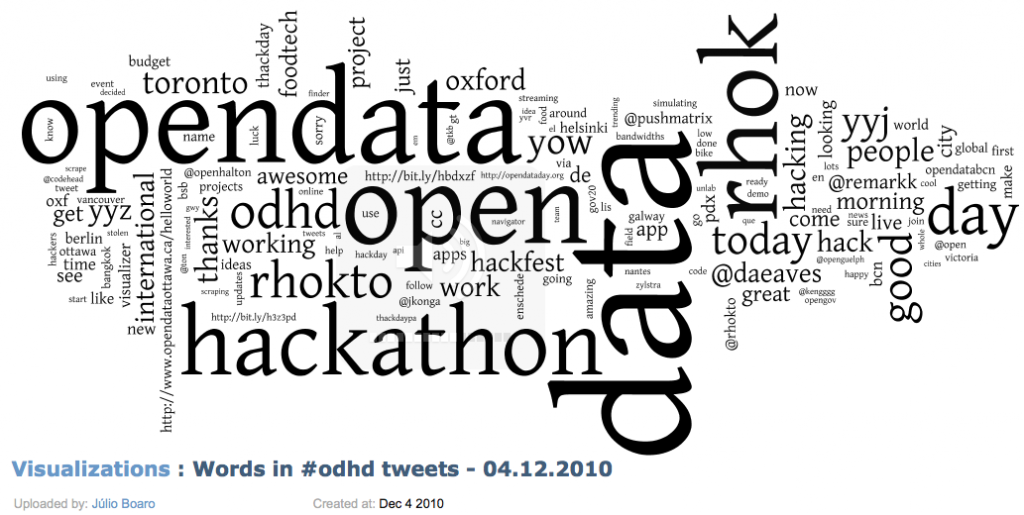
opendataday-1024x515

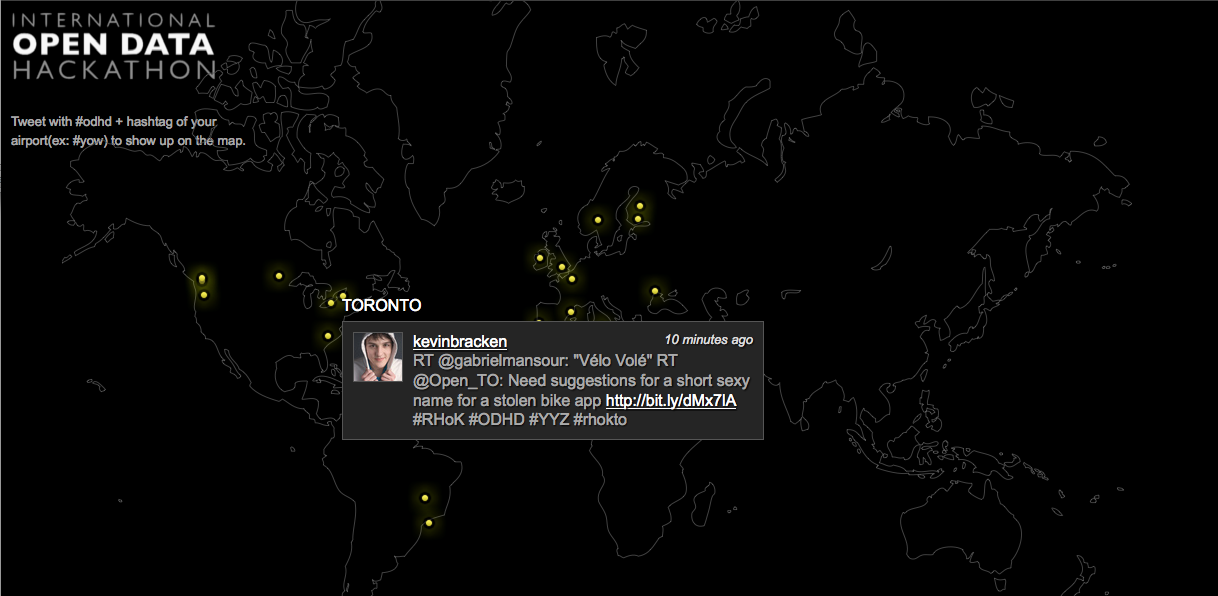
All of this of course was the results of 100s of people in communities all over the world, working on their own, hustling to set things up and to get people engaged. If you participated, as an organizer, and a hacker, as a gardener of the wiki, or as someone who just wanted to help – congratulations. We are amazed. We hope you are amazed.

odhd-map

If you are out there I’ve a few thoughts on what we’d like to do right away:

  1. Congratulate yourself.
  2. People have only just begun to share the cool work they started. I’m hoping that more of you will share it so that everyone can be inspired by your work. I’m also hoping that these projects will continue to evolve.
  3. Let us know who you are (if you are comfortable with that). A number of you have told me you‘d like to do this again. Part of what made Saturday amazing was how much happened without any of us having to connect directly. That is the power of the internet. And keeping these events simple and loosely joined will always be a goal for us, but I know I’d like to thank more of you personally and be able to connect more so as to make communicating easier.
  4. Finally, we are thinking that another event will be fun to do is something like 6 months. But in the meantime we hope that you, like us, will try to keep the flame burning in your city by hosting the occasional local event. I know I will be endeavoring to do so in Vancouver.

Longer term:

5. I hope we can develop tools and resources to enable participants to engage with politicians and public servants on the importance of open data. The projects we hack on are powerful examples of what can be, but we also need to become more effective at explaining why open data matters in a language everyone understands. I’m hoping we’ll have resources to help us with this important task.

In the meantime, we’ll be figuring out what to do next. We’d love your help, to hear your thoughts and frustrations and your ideas. Please reach out.

Dave, Edward, Mary Beth, Daniel, Daniela and Pedro

Some favourite shots:

Screen-shot-2010-12-05-at-11.07.46-PM

Screen-shot-2010-12-05-at-11.08.45-PM


Vancouver International Open Data Hackathon Event Agenda/Invite

Tomorrow is December 4th. The International Open Data Hackathon will be taking place around the world. Here in Vancouver, we’ll be contributing as well.
Here are some details:
Goals/Important points:
  • This is about having fun and working on something that makes you feel good. If, at any point you aren’t feeling that… then start doing something that does or come talk to me. :)
  • Our main goal is to create artifacts that will help strengthen our democracy, be fun to use, or just make life a little better – we want more open data, let’s show the world why it matters.
  • Our other goal is to build community, both here in Vancouver, and around the world, so let’s help one another, both in city, and those elsewhere…
  • Remember, this is not just for programmers. Any project will need a variety of skills.
  • If you don’t think you can do anything helpful, trust me, that is not the case.
Location:
  • W2/Storyeum 151 W. Cordova (map) in Vancouver
  • Phone: 604-689-9896
Schedule:
  • 9:30-10am People can start arriving any time after 9:30am
  • 10:00-10:30am We’ll be starting at 10am. We’ll begin with brief introductions and give those with ideas an opportunity to share them
  • 10:30 Sort into teams. If you haven’t already chosen a project to work on for the day… now is the time.
  • 10:30-12:00pm Hacking. Lots here to do for designers, developers, citizens to get materials organized, write copy or code, etc…
  • 12:00pm Check in. 5 minutes for teams to share progress, challenges, ask for suggestions
  • 12:30-3:30pm More hacking goodness
  • 3:30 project update/presentations

Vancouver Hack Space will be opening its doors after the hackathon for people who want to keep hacking over there. Great people at VHS so it should be good…

What to bring & expect:
  • A laptop.  If you absolutely can’t bring a laptop, please come anyway, there will be things to do.
  • We have a number of ideas that can be worked on. If you have one… great! If you are looking for cool people to work with… you’re coming to the right place.
  • Ideas that no one wants to work on will be removed.
  • We will ask people to vote with their feet, gathering into self forming teams for each project.

Wikileaks and the coming conflict between closed and open

I’ve been thinking about wikileaks ever since the story broke. Most of the stories – like those written by good friends like Taylor Owen and Scott Gilmore are pieces very much worth reading but I think miss the point about wikileaks and/or assess it on their own terms and thus fail to understand what wikileaks is actually about and what it is trying to do. We need to be clear in our understanding, and thus the choices we are about to confront.

However, before you read anything I write there are smarter people out there – two in particular – who have said things that I’m not reading anywhere else. The first is Jay Rosen (key excerpt below) whose 15 minutes Pressthink late night video on the subject is brilliant and the second is by zunguzungu piece Julian Assange and the Computer Conspiracy; “To destroy this invisible government” (key excerpt further below) is a cool and calculated dissection of wikileaks goals and its intentions. I’ve some thoughts below, but these two pieces are, in my mind, the most important things you can read on the subject and strongly inform my own piece (much, much further below). I know that this is all very long, and that many of you won’t have the patience, but I hope that what I’ve written and shared below is compelling enough to hold your attention, I certainly think it is important enough.

Jay Rosen:

While we have what purports to be a “watchdog press” we also have, laid out in front of us, the clear record of the watchdog press’s failure to do what is says it can do, which is to provide a check on power when it tries to conceal its deeds and its purpose. So I think it is a mistake to reckon with Wikileaks without including in the frame the spectacular failures of the watchdog press over the last 10, 20, 40 years, but especially recently. And so, without this legitimacy crisis in mainstream American journalism, the leakers might not be so inclined to trust Julian Assange and a shadowy organization like Wikileaks. When the United States is able to go to war behind a phony case, when something like that happens and the Congress is fooled and a fake case is presented to the United Nations and war follows and 100,000s of people die and the stated rationale turns out to be false, the legitimacy crisis extends from the Bush government itself to the American state as a whole and the American press and the international system because all of them failed at one of the most important things that government by consent can do: which is reason giving. I think these kind of huge cataclysmic events within the legitimacy regime lie in the background of the Wikileaks case, because if wasn’t for those things Wikileaks wouldn’t have the supporters it has, the leakers wouldn’t collaborate the way that they do and the moral force behind exposing what this government is doing just wouldn’t be there.

This is one of the things that makes it hard for our journalists to grapple with Wikileaks. On the one hand they are getting amazing revelations. I mean the diplomatic cables tell stories of what it is like to be inside the government and inside international diplomacy that anyone who tries to understand government would want to know. And so it is easy to understand why the big news organizations like the New York Times and The Guardian are collaborating with Wikileaks. On the other hand they are very nervous about it because it doesn’t obey the laws of the state and it isn’t a creature of a given nation and it is inserting itself in-between the sources and the press. But I think the main reason why Wikileaks causes so much insecurity with our journalists is because they haven’t fully faced the fact that the watchdog press they treasure so much died under George W. Bush. It failed. And instead of rushing to analyze this failure and prevent it from happening ever again – instead of a truth and reconciliation commission-style effort that could look at “how did this happen” – mostly what our journalists did, with a few exceptions, is they moved on to the next story. The watchdog press died. And what we have is Wikileaks instead. Is that good or is that bad? I don’t know, because I’m still trying to understand what it is.

Zunguzungu:

But, to summarize, he (Assange) begins by describing a state like the US as essentially an authoritarian conspiracy, and then reasons that the practical strategy for combating that conspiracy is to degrade its ability to conspire, to hinder its ability to “think” as a conspiratorial mind. The metaphor of a computing network is mostly implicit, but utterly crucial: he seeks to oppose the power of the state by treating it like a computer and tossing sand in its diodes…

…The more secretive or unjust an organization is, the more leaks induce fear and paranoia in its leadership and planning coterie. This must result in minimization of efficient internal communications mechanisms (an increase in cognitive “secrecy tax”) and consequent system-wide cognitive decline resulting in decreased ability to hold onto power as the environment demands adaption. Hence in a world where leaking is easy, secretive or unjust systems are nonlinearly hit relative to open, just systems. Since unjust systems, by their nature induce opponents, and in many places barely have the upper hand, mass leaking leaves them exquisitely vulnerable to those who seek to replace them with more open forms of governance.

– zunguzungu

Almost all the media about wikileaks has, to date, focused on the revelations about what our government actually thinks versus what it states publicly. The bigger the gap between internal truth and external positions, the bigger the story.

This is, of course, interesting stuff. But less discussed and more interesting is our collective reaction to wikileaks. Wikileaks is drawing a line, exposing a fissure in the open community between those who believe in overturning current “system(s)” (government and international) and those who believe that the current system can function but simply needs greater transparency and reform.

This is why placing pieces like Taylor Owen and Scott Gilmore‘s against zunguzungu’s is so interesting. Ultimately both Owen and Gilmore believe in the core of the current system – Scott explicitly so, arguing how secrecy in the current system allows for human right injustices to be tackled. Implicit in this, of course, is the message that this is how they should be tackled. Consequently they both see wikileaks as a failure as they (correctly) argue that its radical transparency will lead to a more closed and ineffective governments. Assange would likely counter that Scott’s effort address systems and not cause and may even reinforce the international structures that help foster hunan rights abuses. Consequently Assange’s core value of transparency, which at a basic level Owen and Gilmore would normally identify with, becomes a problem.

This is interesting. Owen and Scott believe in reform, they want the world to be a better place and fight (hard) to make it so. I love them both for it. But they aren’t up for a complete assault on the world’s core operating rules and structures. In a way this ultimately groups them (and possibly me – this is not a critique of Scott and Taylor whose concerns I think are well founded) on the same side of a dividing line as people like Tom Flanagan (the former adviser to the Canadian Prime Minister who half-jokingly called for Assange to be assassinated) and Joe Liberman (who called on companies that host material related to wikileaks to sever their ties with them). I want to be clear, they do not believe Assange should be assassinated but they (and possibly myself) do seem to agree that his tactics are a direct threat to the functioning of system that I think they are arguing needs to be reformed but preserved – and so see wikileaks as counterproductive.

My point here is that I want to make explicit the choices wikileaks is forcing us to make. Status quo with incremental non-structural reform versus whole hog structural change. Owen and Gilmore can label wikileaks a failure but in accepting that analysis we have to recognize that they view it from a position that believes in incremental reform. This means you believe in some other vehicle. And here, I think we have some tough questions to ask ourselves. What indeed is that vehicle?

This is why I think Jay Rosen’s piece is so damn important. One of the key ingredients for change has been the existence of the “watchdog” press. But, as he puts it (repeated from above):

I think it is a mistake to reckon with Wikileaks without including in the frame the spectacular failures of the watchdog press over the last 10, 20, 40 years, but especially recently. And so, without this legitimacy crisis in mainstream American journalism, the leakers might not be so inclined to trust Julian Assange and a shadowy organization like Wikileaks. When the United States is able to go to war behind a phony case, when something like that happens and the Congress is fooled and a fake case is presented to the United Nations and war follows and 100,000s of people die and the stated rationale turns out to be false, the legitimacy crisis extends from the Bush government itself to the American state as a whole and the American press and the international system because all of them failed at one of the most important things that government by consent can do: which is reason giving.

the logical conclusion of Rosen’s thesis is a direct challenge to those of us who are privileged enough to benefit from the current system. As ugly and imperfect as the current system may be Liberman, Flanagan, Owen and Gilmore and, to be explicit, myself, benefit from that system. We benefit from the status quo. Significantly. Dismantling the world we know carries with it significant risks, both for global stability, but also personally. So if we believe that Assange has the wrong strategy and tactics we need to make the case, both to ourselves, to his supporters, to those who leak to wiki leaks and to those on the short end of the stick in the international system about how it is the reform will work and how it is that secrecy and power will be managed for the public good.

In this regard the release of wikileak documents is not a terrorist event, but it is as much an attack on the international system as 9/11 was. It is a clear effort to destabilize and paralyze the international system. It also comes at a time when confidence in our institutions is sliding – indeed Rosen argues that this eroding confidence feeds wikileaks.

So what matters is how we react. To carry forward (the dangerous) 9/11 analogy, we cannot repeat the mistakes of the Bush administration. Then our response corrupted the very system we sought to defend, further eroded the confidence in institutions that needed support and enhanced our enemies – we attacked human rights, civil liberties, freedom of speech and prosecuted a war that killed 100,000s of innocent lives on the premise of manufactured evidence.

Consequently, our response to the current crises can’t be to close up governments and increase secrecy. This will strengthen the hands of those who run wikileaks and cause more public servants and citizens to fear the institutions wikileaks and look for alternatives… many of whoe will side with wikileaks and help imped the capacity of the most important institution in our society to respond to everyday challenges.

As a believer in open government and open data the only working option to us to do the opposite. To continue to open up these institutions as the only acceptable and viable path to making them more credible. This is not to say that ALL information should be made open. Any institution needs some private place to debate ideas and test unpopular theses. But at the moment our governments – more through design and evolution than conspiracy – enjoy far more privacy and secrecy than the need. Having a real and meaningful debate about how to change that is our best response. In my country, I don’t see that debate happening. In the United States, I see it moving forward, but now it has more urgency. Needless to say, I think all of this gives new weigh to my own testimony I’ll be making before the parliamentary Standing Committee on Access to Information, Privacy and Ethics.

I still hope the emerging conflict between open and closed can be won without having to resort to the types of tactics adopted by wikileaks. But for those of use who believe it, we had better start making the case persuasively. The responses of people like Flanagan and Liberman remind me of Bush after 9/11 “you are either with us, or with the terrorists.” Whether intentionally or unintentionally, an analogous response will create a world in which power and information are further removed from the public and will lead to the type of destabilizing change Assange wants.

I’m bound to write more on this – especially around wikileaks, open data and transparency that I think some authors unhelpfully conflate but this post is already long enough and I’m sure most people haven’t even reached a place where they’ll be reading this.
Sunlight Foundation and the International OpenData Hackathon

Building on the post from earlier today…

For those running or participating in the International Open Data hackathon this weekend who are still looking for ideas to hack on the Sunlight Foundation have a number of applications that are open source and could be “localized” to meet local needs.

The always awesome Eric Mill shared some of this promising candidate:

The “Congress” app for Android

The “Congress” app for Android has been very successful (>350K downloads) and, of course, is open source, so the code can be found here.

What’s required to “localize it”

a) Some translating (something non-developers could do)

b) identifying local data sources (something non-developers could do)

c) likely some restructuring to deal with that particular countries’ legislative structure.

Eric posted some information about it on the Sunlight Foundation’s blog here and the source code is open at Github. There is no documentation yet (although this could be another project for Saturday), but Eric is keen to work with any groups who want to work on it.

Two other projects include:

TransparencyData.com to which the source code can be found on Github here.

InfluenceExplorer.com not sure if the source code is available, but a good amount of interesting information can be found on the about page. My sense is that this project will be much more challenging…

Hope these inspire some good thoughts.

International Open Data Hackathon – IRC Channel and project ideas

Okay, going to be blogging a lot more about the international open data hackathon over the next few days. Last count had us at 63 other cities in 25 countries on over 5 continents.

So first and foremost, here are three thoughts/ideas/actions I’m taking right now:

1. Communicating via IRC

First, for those who have been wondering… yes, there will be an IRC channel on Dec 4th (and as of now) that I will try to be on most of the day.

irc.oftc.net #odhd

This could be a great place for people with ideas or open sourced projects to share them with others or for cities that would like to present some of the work they’ve done on the day with others to find an audience. If, by chance, work on a specific project becomes quite intense on the IRC channel, it may be polite for those working on it to start a project specific channel, but we’ll cross the bridge on the day.

Two additional thoughts:

2. Sharing ideas

Second, some interesting projects brainstorms have been cropping up on the wiki. Others have been blogging about them, like say these ideas from Karen Fung in Vancouver.

Some advice to people who have ideas (which is great).

a) describe who the user(s) would be and what the application will it do, why would someone use it, and what value would they derive from it.

b) even if you aren’t a coder (like me) lay out what data sets the application or project will need to draw upon

c) use powerpoint or keynote to create a visual of what you think the end product should look like!

d) keep it simple. Simple things get done and can always get more complicated. Complicated things don’t get done (and no matter how simple you think it is… it’s probably more complicated than you think

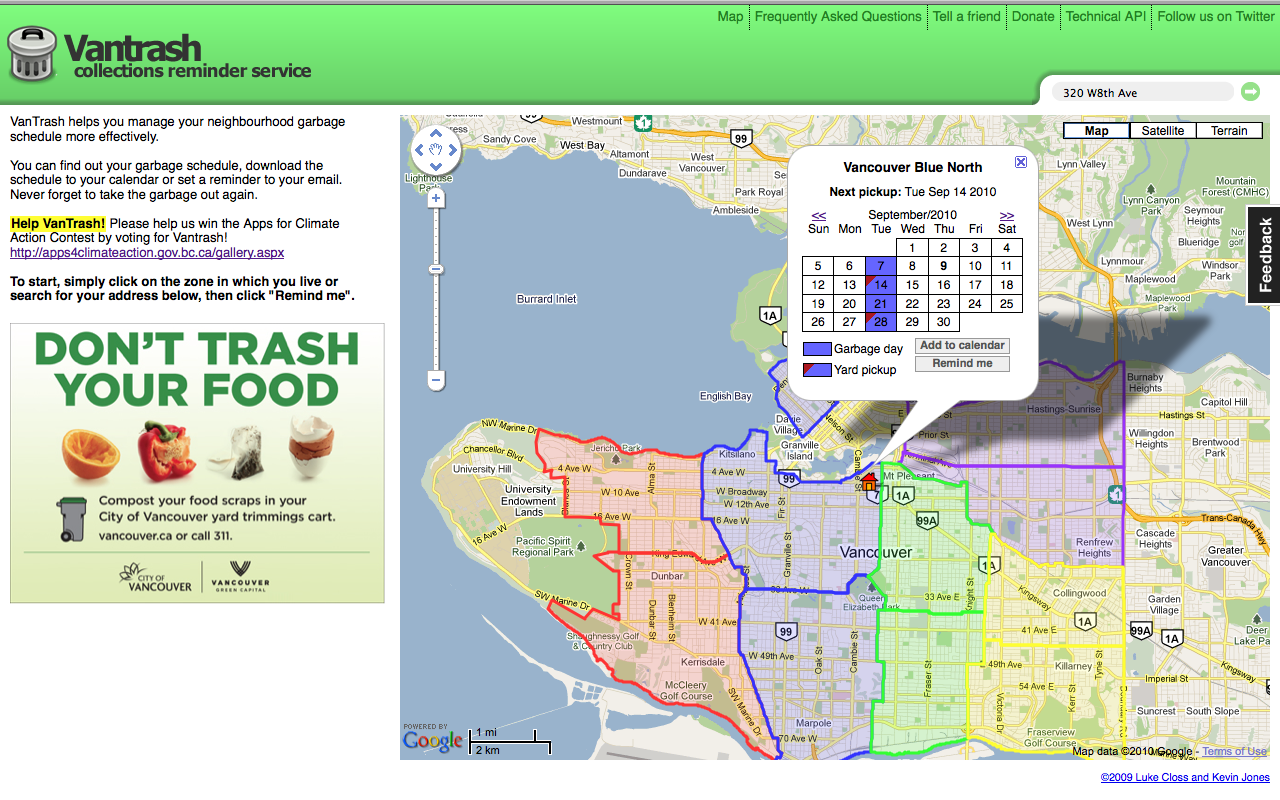
These were the basic principles I adhered when laying out the ideas behind what eventually became Vantrash and Emitter.ca.

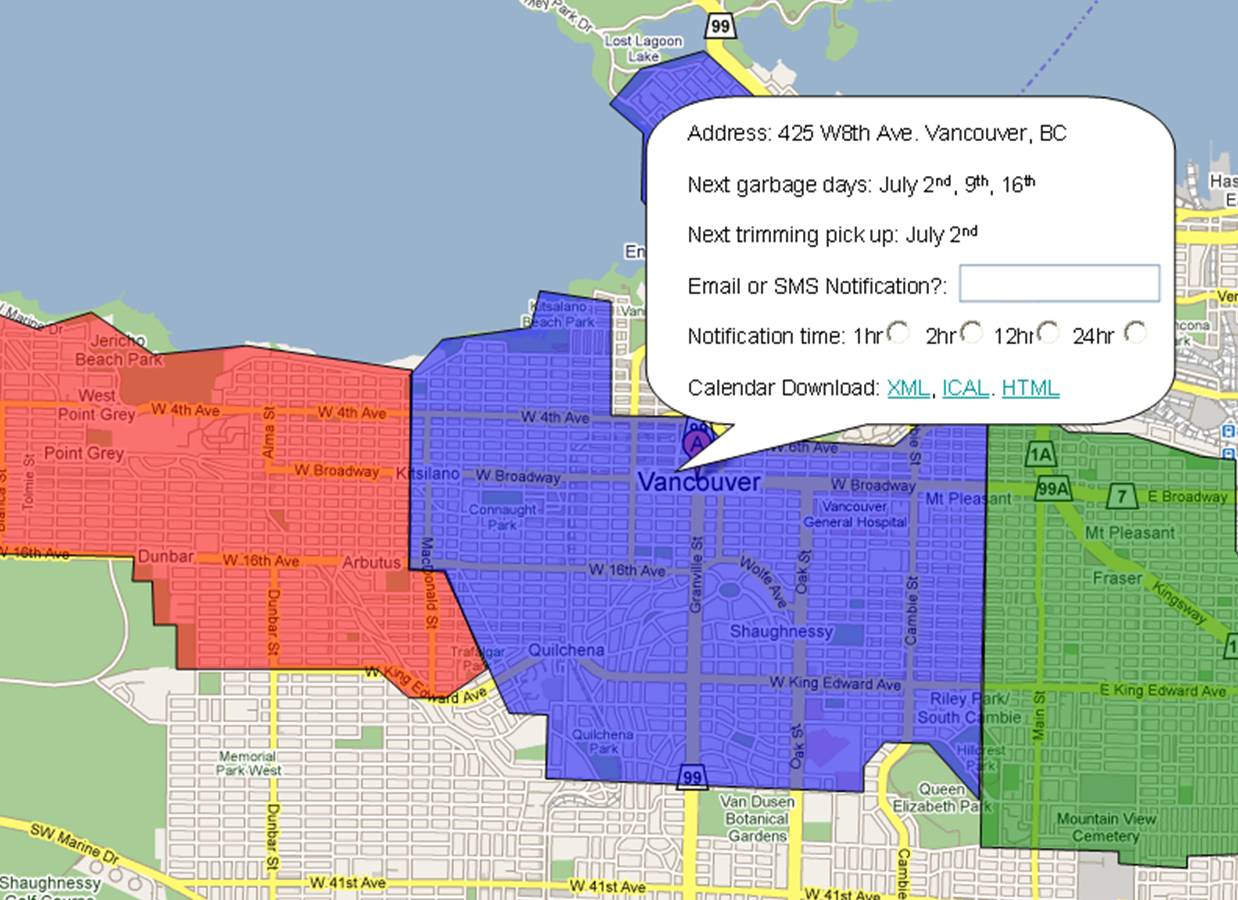
Look at the original post where I described what I think a garbage reminder service could look like. Look how closely the draft visual resembles what became the final product… it was way easier for Kevin and Luke (who I’d never met at the time) to model vantrash after an image than just a description.

Garbage%20App

Mockup

Vantrash screen shot

3. Some possible projects to localize:

A number of projects have been put forward as initatives that could be localized. I wanted to highlight a few here:

a) WhereDoesMyMoneyGo?

People could create new instances of the site for a number of different countries. If you are interested, please either ping wdmmg-discuss or wdmmg (at) okfn.org.

Things non-developers could do:

  1. locate the relevant spending data on their government’s websites
  2. right up materials explaining the different budget areas
  3. help with designing the localized site.

b) OpenParliament.ca
If you live in a country with a parliamentary system (or not, and you just want to adapt it) here is a great project to localize. The code’s at github.com/rhymeswithcycle.

Things non-developers can do:

  1. locate all the contact information, twitter handles, websites, etc… of all the elected members
  2. help with design and testing

c) How’d They Vote
This is just a wonderful example of a site that creates more data that others can use. The API’s coming out of this site save others a ton of work and essentially “create” open data…

d) Eatsure
This app tracks health inspection data of restaurants done by local health authorities. Very handy. Would love to see someone create a widget or API that companies like Yelp could use to insert this data into the restaurant review… that would be a truly powerful use of open data.

The code is here:  https://github.com/rtraction/Eat-Sure
Do you have a project you’d like to share with other hackers on Opendataday? Let me know! I know this list is pretty North American specific so would love to share some ideas from elsewhere.

International Open Data Hackathon – 63 cities, 25 countries, 5 continents

and counting. Never could any of us have imagined that there would be so many stepping forward to organize an event in their cities.

The clear implication is that Open Data matters. To a lot of people.

To a lot of us.

If you are in the media, a politician or the civil service: pay attention. There are a growing number of people – not just computer programmers and hackers, but ordinary citizens – who’ve come to love and want to help build sites and applications like fixmystreet, wheredoesmymoneygo, emitter.ca or datamasher.

If you are planning to participate in a hackathon – I hope you’ll read the next part (and help continue grow the wiki).

I think, for the day – December 4th – we all really have three shared goals.

1. Have fun

2. Help foster local supportive and diverse communities of people who advocate for open data

3. Help raise awareness of open data, why it matters, by building sites and applications

I’m confident that the first two will happen, but as I said in an earlier post… it is important that we have artifacts at the end of the day to share with the world.

In pursuit of that goal, I continue to believe that one of the easiest things we can do is localize cool projects that have happened in other jursidictions. For example, a team in Bangalore, India as well as a team in Vancouver & Victoria, Canada are contemplating porting openparliament.ca to their respective jurisdictions. It’s a great way to get a huge win and a new, useful, site up and running in a (relatively) short period of time.

I write this because I’m thinking there must be tons of interesting and engaging open data applications out there. If you run such an application… (I’m especially looking at you Sunlight Foundation, Open Knowledge Foundation, MySociety & others…) and you think people in other jurisdictions might want to localize them for their country, state or city… then I’d like you to consider doing the following:

Post to the Apps page of the wiki:

  • the project name,
  • link to the source code repository,
  • any documentation,
  • the various tasks you think will be involved in localizing it
  • things that non-coders can do to advance the project (like research, documentation, graphics, copy text for websites, etc…)
  • and some (very) rough senses of scope and timelines

(Note, I’m hoping to throw a template up shortly, but sadly, right now, I’m hoping on a red-eye flight so can’t do it… with luck tomorrow sometime I’ll delete this text and have added an example like openparliament.ca. For now Victoria and Vancouver have the beginnings of what I’m thinking of on their wiki pages)

Nothing would be cooler than having open data apps ported around world, helping spread citizen engagement, democratic accountability and fun with them.

I know there are some emails flying around about connecting cities for demos as suggested on the opendata hackathon website. Hope to have more on that soon as well.

Also, if you do think that media or local officials will attend and you’d like to brief them on opendata, I have some people at the world bank who’ve been helping launch and expand their open data portal who might be willing to help engage and explain why it is important to such people. Could be nice to have the additional help. Up to you. But feel free to let me know if there is interest.

Finally, if you are running a hackathon, please reach out and say hi. I’d love to hear from you.

Excited.

Very, very excited.

Open Data: If British Conservatives get it right, the French…

This is a pretty stunning press release from Access Info Europe concerning the French government’s response to the open data movement. Statist government’s were always going to struggle with the internet and open data… but this shows just how bad things can get.

Press Release

For immediate publication

France proposes police controls on who uses public information

Madrid/Paris, 23 November 2010 – A law to be discussed in the French parliament before the end of 2010 will result in the police carrying out “behaviour” checks on members of the public and organisations wanting to reuse information obtained from public bodies. The likely effect is to severely limit access to information and freedom of expression.

The draft law currently before the French National Assembly amends the 1995 Police Security Act and will extend the scope of police “behaviour” checks from legitimate purposes such as checking on those to have access to dangerous substances and high security zones to those who want to reuse information obtained from public bodies. The criteria for the background checks are not specified in the law.

The information affected could include, for example, databases on public spending, copies of laws, or electoral results. Much data held by local authorities which is of great interest to the public such as schedules and real-time locations of trains and buses, information about recycling schemes, and construction works permits would also fall under these new controls.

The associations Access Info Europe and Regards Citoyens today expressed concerns that the law, if adopted, will significantly complicate and slow access to information in France.

“This is an extremely dangerous law which would seriously limit freedom of expression in France,” said Helen Darbishire, Executive Director of Access Info Europe.

“Subjecting those who wish to access and reuse public datasets to vaguely-defined morality controls runs counter to the basic principles of the freedom of expression and information enshrined in the French Constitution, and is a violation of European Court of Human Rights jurisprudence and EU law,” added Darbishire.

Access Info Europe notes that in 2010 many leading democracies such as the US and the UK, Norway and Spain, Australia and New Zealand, are posting on line large volumes of public data making them free for anyone in the world to use. They do this out of recognition of the societal and economic benefits that flow from the reuse of public sector information.

“If this provision were to be adopted, France would be closing down public access to information rather than opening it up,” concluded Benjamin Ooghe-Tabanou, co-founder of Regards Citoyens.

Notes for Editors:

1. Access Info Europe is a human rights organisation head-quartered in Madrid which promote the right of access to information and open government data in Europe. Access Info Europe believes that more public information means better participation in and greater accountability of public bodies.

2. Regards Citoyens is a civic association which promotes the opening of public data to secure greater transparency of democratic institutions in France.

3. The proposed reform is to 1995 Security Law (Loi n°95-73 du 21 janvier 1995 d’orientation et de programmation relative à la sécurité).

4. The amendment would impact on the right of access to public information granted under the 1978 Access to Administrative Documents Law as modified by European Union Directive 2003/98/EC of the European Parliament and of the Council of 17 November 2003 on the re-use of public sector information. The EU Directive requires that governments to create “fair, proportionate and non-discriminatory conditions for the re-use of [public sector] information.” The European Commission is currently reviewing this Directive. This case and the broader impact of this Directive on the fundamental right of access to information should be carefully reviewed by the Commission.

5. The Council of Europe Convention on Access to Official Documents from 2009, not yet signed by France, requires that all requesters be treated equally and without discrimination. It is illegitimate under this and other international standards to ask why someone wants information or what they will do with it.

6. The European Court of Human Rights has ruled that access to information held by public bodies when these are monopolies is an inherent part of the right to freedom of expression: information is needed to participate in democratic public debate. See, inter alia Társaság a Szabadságjogokért v. Hungary (App no 37374/05), ECHR, 14 April 2009.

7. Examples of online portals for accessing public data include www.data.gov, www.data.gov.uk, www.data.gov.au, www.data.gov.nz.

For more information – in English or French – please contact:

Victoria Anderica, Access Info Europe, victoria@access-info.org

Office phone: +34 91 366 5344

Mobile: +34 606 592 976

Helen Darbishire, Access Info Europe (www.access-info.org)

helen@access-info.org, mobile: +34 667 685 319

How Tories could do transparency – Globe and Mail

Today’s blog post appears in the Globe and Mail. You can read it there (please do, also give it a vote).

How Tories could do transparency

Britain’s new Conservative government did something on Friday that Canadians would fine impossible to imagine. After a brief video announcement from Prime Minister David Cameron about the importance of the event, Francis Maude, Minister of the Cabinet Office, and Tim Berners-Lee, inventor of the World Wide Web, announced that henceforth the spending data for every British ministry on anything over £25,000 (about $40,000) would be available for anyone in the world to download. The initial release of information revealed thousands and thousands of lines of data and almost £80-billion (about $129.75-billion) in spending. And starting in January, every ministry must update the data once a month.

For the British Conservative Party, this is a strategic move. Faced with a massive deficit, the government is enlisting the help of all Britons to identify any waste. More importantly, however, they see releasing data as a means by which to control government spending. Indeed, Mr. Maude argues: “When you are forced to account for the money you spend, you spend it more wisely. We believe that publishing this data will lead to better decision-making in government and will ultimately help us save money.” And they might be right. Already, organizations like Timetric, the Guardian newspaper and the Open Knowledge Foundation have visualized, organized and indexed the data so it is easier for ordinary citizens understand and explore how their government spends their money.

These external sites are often more powerful than what the government has. After observing the way these sites handle the data, the minister noted how he wished he’d had access to them while negotiating with some of the government’s largest contractors.

For Canadians, the Conservative-Liberal Democrat coalition government is but a distant example of a world that a truly transparent government could – and should – create. In contrast, Stephen Harper’s Conservatives seem stuck in a trap described by Mr. Maude in his opening sentences: “Opposition parties are always remarkably keen on greater government transparency, but this enthusiasm mysteriously tends to diminish once they actually gain power.” Canada’s Conservatives have been shy about sharing any information with anyone. Afghan detainee files aren’t shared with Parliament; stimulus package accounts were not emailed to the Parliamentary Budget Office, but uselessly handed over in 4,476 printed pages. Even the Auditor-General is denied MP expense data. All this as access-to-information wait times exceed critical levels and Canada, unlike the United States, Britain , Australia and New Zealand, languishes with no open-data policy. Only once has the government pro-actively shared real “data,” when it shared some stimulus data that could be downloaded.

The irony is not only that the Tories ran on an agenda of accountability and transparency, but that – as their British counterparts understand – actually implementing a transparency and open-data policy may be one of the best ways to stamp a conservative legacy on the government’s future. Moreover, it could be a very popular move.

During the digital economy strategy consultations, open data was the second-most popular suggestion. Interestingly, it would appear the Liberals are prepared to explore the opportunity. They are the only party with a formal policy on open data that matches the standards recently set by Britain and, increasingly, in the United States.

Open data will eventually come to Canada. When, however, is unclear. In the meantime it is our colleagues elsewhere that will reap the benefits of savings, improved analysis and better civic engagement. So until Mr. Harper’s team changes its mind, Canadians must look abroad to see what a Conservative government that actually believes in transparency could look like.

David Eaves is a public-policy entrepreneur, open government activist and negotiation expert based in Vancouver

Patch Culture, Government and why Small Government Advocates are expensive

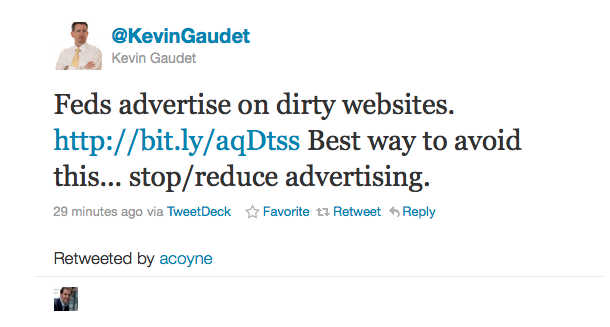
So earlier today I saw this post by Kevin Gaudet, Federal Director of the Canadian Taxpayers Federation and retweeted by Andrew Coyne (one of the country’s best commentators).

It pretty much sums up why Governments (incorrectly) fear open data and open government:

Screen-shot-2010-11-17-at-6.57.05-AM

The link is to a story on The Sun’s website: Government agencies caught advertising on sex sites!!!! (okay, the exclamation marks are mine).

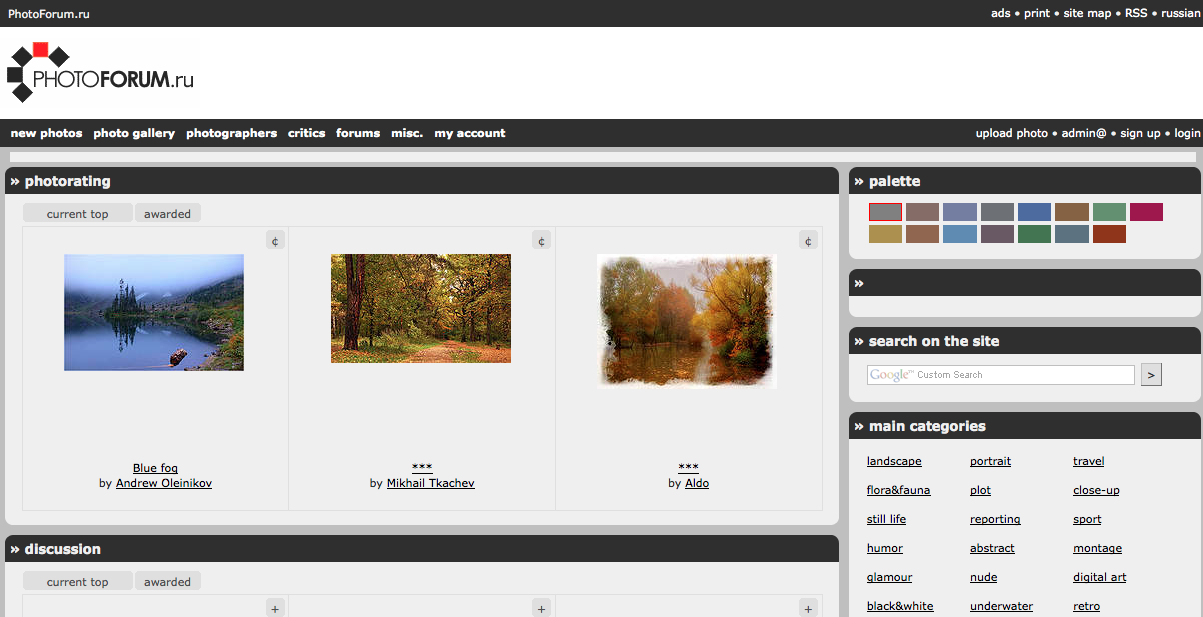
This is exactly the type of headline every public servant and politician is terrified of. The details, of course, aren’t nearly as salacious. A screenshot Photoforum.ru reveals its a stock photo website (which probably does violate all sorts of copyrights) and, I am sure, there are some photos, somewhere on the site, of nude women, much like there are on say Flickr or Facebook.

Screen-shot-2010-11-17-at-7.09.04-AM1


Three interesting things here:

1. The challenge: Non-stories suck time and energy. The government, of course, didn’t choose to advertise on Photoforum.ru. It hired an agency, Cossette, that placed the ads through Google AdSense. (this is actually the good part of the story – great to hear that the government is using Google AdSense which is a cheap and effective way to advertise). But today, I assure you that dozens of public servants, at least one member of the Heritage Minister’s political staff and a few Canada Post employees are spending the next few days running around like chickens with their heads cut off trying to find out how an ad in a $5000 contract ended up on a relatively harmless site. The total cost of all that investigative work and the reports they will generate to address this “scandal” will probably cost taxpayers $10,000s, if not $100,000s in staff time and energy. No wonder governments fear disclosure. The distraction and cost in time and energy needed to fix a non-story is enormous.

2. The diagnosis: The accountability systems trap: What’s interesting of course, is everybody is acting rationally. The Sun (while stretching the truth) is reporting on the misuse (however minor) of taxpayer dollars. Same with the Canadian Taxpayers Federation (CTF). But the solutions are terrible. The CTF demand that the government eliminate all advertising is nonsensical. We can debate whether every ad is needed, but a flat out ban is silly. There are lots of things governments need to inform citizens about. So we can talk about reducing the government’s ad budget, but this news story doesn’t advance that aim either. Indeed, the Canadian Taxpayers and the Sun have, indirectly, helped inflate the cost of government. As noted, the government, acting rationally, now has dozens of people spending their time solving a crisis around a some minor ad campaigns.

So we have a system where everyone is behaving rationally. But the outcome are terrible. This is the scandal. Indeed, if one were really concerned about the effective spending of taxpayer dollars what one would quickly realize that what’s actually broken here isn’t government advertising, it’s the process by which governments react to and address problems.

3. One Approach: Patch-Culture and Open Data. So it is understandable that government types fear disclosure as, presently, they often seeing it leading to the above situtation.

But what’s interesting is that we could handle it differently.

This same story, in the software world, would have been quite different. The Sun article would have simple been understand as someone pointing out a (minor) bug. The software developers (in the case the public servants) would have patched it (which they did, ending the ads deployment to these sites) and the whole thing would have been a non-event. But at least, for minimal cost and effort, the software (ad program) would be better making both the developers (public servants/politicians) and users (taxpayers) happy. So why is it so different with government?

Two reasons.

First. Government’s pretend that everything they do is perfect. They live with an industrial worldview where you had to get something perfect before launching it since you were going to stamp out 100,000 copies of the things and any bug would get replicated that many times. Of course, very little of government is like this, much more of it is like software where you can make fixes along the way. What makes software so great (although sometimes frustrating too) is that they acknowledge this and so patch it on the fly. Patch-culture – as my friend David Humphrey likes to call it – where people help software get better by point out flaws, and even offering solutions, is exactly what our government needs to learn.

Second. People jump to the worst conclusions because governments appear secretive. Because they don’t proactively disclose (and because Access to Information process is sooooo slow) they always look like they are hiding something. Consequently, when people find mistakes they presume people have been hiding it, trying to cover it up and/or that it was made with some malicious intent. In an open source community, when people find a bug, they often assume it was a (dumb) mistake – not a nefarious plot to do achieve some dubious ends. Open data makes a patch culture easier to create because when you share what you are doing it is hard to believe you have some evil intent. Yes, people may just assume you are dumb – but that is actually better than evil (especially for powerful institutions like government).

Open data is about changing the culture everywhere, both inside and outside government. It won’t do it over night and it won’t do it perfectly but it can help. And it’s a shift we need to make.

Conclusion

I could easily have imagined the above story playing differently in world where patch culture has taken shape within government. Someone discovers the ads on photoforum.ru, thinks it is an error (someone made a dumb choice), submits a bug to the government, the ads are removed, the bug is patched, everybody is happy and… no wasteful non-story about government spending.

Indeed, we could have instead allocated all that wasted time and energy to have the debate the CTF actually wants to have: how much of the budget should go towards advertising.

What we need to be thinking about is what is the system we are in, what are the incentives it creates for the various actors and then think of the system we’d like, and figure out how to get from here to there. I think Open Data is an important (but not exclusive) part of the puzzle for changing the relationship between the government, the press and citizens. It may even create some new problems, but I think they will be better, less costly and more interesting problems then the ones we have now, we are frankly destroying budgets and the institutions we need to serve us.

Open Data planning session at BarCamp Vancouver

With the International Open Data Hackathon a little more the 2 weeks away a lot has happened.

On the organizing wiki people in over 50 cities in 21 countries and 4 continents have offered to organize local events. Open data sets that people can use have been posted to a specially created page, a few nascent app ideas have been shared, as has advice on how to run a hackathon. (on twitter, the event hashtag is #odhd)

In Vancouver, the local BarCamp will be taking place this weekend. I’m not in town, however, Aaron Gladders, local hacker with a ton of experience working with and opening up data sets, contacted me to let me know he’d like to do a planning session for the hackathon at Barcamp. If you’re in Vancouver I hope you can attend.

Why? Because this is a great opportunity. And it has lessons for the hackathons around the world.

I love it because it means people can share ideas and projects they would like to hack on, recruit others, as well as hear feedback about challenges, obstacles, alternative approaches, and think about all of this  for two weeks before the hackathon. A planning session also has  has an even bigger benefit. It means more people are likely to arrive on the day with something specific ready to work on. I want the hackathons to be social. But they can’t be exclusively so. It is important that we actually try to create some real products that are useful to us and/or our fellow citizens.

For those elsewhere in the world who are also thinking about December 4th I hope that some of us will start reaching out to one another and thinking about how we will spend the day. A few thoughts on this:

1. Take a look at the data sets that are out there before Dec 4th. People have been putting together a pretty good list here.

2. Localization. I think some of the best wins will be around localizing successful apps from other places. For example, I’ve been encouraging the team in Bangalore to consider localizing Michael Mulley’s OpenParliament.ca application (the source code for which is here). If you have an application you think others might want to localize, add it to the application page on the wiki. If there is an app out there you’d like to localize, write its author/developer team. Ask them if they might be willing to share the code.

3. Get together with 2-3 friends and come up with a plan. What do you want to accomplish on the 4th?

4. If you are looking for a project, let people know on the wiki, leave a twitter handle or some way for people with idea to contact you before the 4th.

Okay, that’s it for now. I’m really excited about how much progress we’ve made in a few short weeks. Ideally at the end of the 4th I’d love for some cities to be able to showcase some apps to the world that they’ve created. We have an opportunity to show the media, politicians, public servants, our fellow citizens, but most importantly, each other, just want is possible with open data.