Category Archives: cool links

开放数据的三个定律

[The following is a Chinese Translation of this post – I’m doing a different language each day this week.]

开放数据的三个定律:158px-Flag_of_the_People's_Republic_of_China.svg在过去的三年中,笔者逐步深入参与到政府部门的政务公开领域—更准确的说是开放数据领域,将政府部门收集和生成的数据向普通用户免费开放,并根据各自需求进行分析,加工和使用。笔者在这方面的兴趣主要来自于之前对“技术, 开放系统及其更新换代是如何对政务工作产生影响的”课题的工作及写作经历。今年早些时候我开始向温哥华市长及议会提供咨询服务,帮助他们通过政务公开的动议(政府职员称之为“open3”),并建立开放数据门户,使之成为加拿大史上第一个市政开放数据门户。近期,澳大利亚政府也邀请我加入其政务2.0工程的国际咨询专家组。

显而易见,政务公开涉及面广,但最近的工作促使笔者尝试揭开其中开放数据方面的本质。归根结底,我们到底需要什么,而又要求得到什么?因此,当笔者出席一个由加拿大政府信息委员会办公室组织的为期一周面向议会成员,主题为“数字时代知情权的透明度”的交流活动中,与在座人士分享了这方面工作的最新进展:政务数据开放的三个定律。

政务数据开放的三个定律:
1,如果数据不能被链接或索引,数据就是不存在的
2,如果数据不是开放并且由机器可读的格式,数据就是不可使用的
3,如果一个合法平台不允许改变数据用途,数据就是未授权使用的

更详细的说,定律一指:数据能否被用户找到?如果用谷歌(或是其他搜索引擎)不能检索到,该数据对绝大多数普通用户在本质上就是不存在的。因此,数据提供方必须优化系统,以使数据能被各类的搜索引擎检索到。

当用户取得数据后,定律二强调要让数据变得有用, 用户必须能操作该数据。因而,用户需要能够提取数据或下载为一个实用的格式(例如:一个应用程序编程接口,订阅数据或是资料文件)。用户需要获取特定格式的数据以使他们能将之与谷歌地图或其他数据合成呈现,用Open Office阅读分析数据,或是进一步转换为其他应用程序能够接受的格式。如果在数据交流过程中用户不能使用并操作信息,该用户将在此过程中被边缘化。

最后,当用户能够获取并使用数据后,定律三强调用户需要一个合法的平台使之能够共享自己的成果,并发动其他的用户,提供新的服务或是呈现相关主题数据。这就意味着信息和数据的授权应当允许最大限度的自由,或是更加理想化的,无需授权。最好的政务信息和数据是无需进行版权保护的。带有授权信息并有意阻止用户间共享的数据缺乏效用,无法传播且备受诟病。

获取,使用数据,并共享成果。这是广大用户的需求。

当然,浏览互联网读者还能够发现其他相关的研究成果。颇为出众的一篇题为政务数据开放的8个原则,其中讨论了更多细节,更适合信息主管及其下属阅读。但如果对象是政治人物(分管总理,内阁部长或是执行主管),我发现前文三个定律更加简单实用,也更容易引起听众共鸣。

This Chinese translation was made possible thanks to the generous volunteer work of WeiWie Ding at the Space-Time Research company in Australia. The team there was amazing in providing a number of translations – I am very much in their debt.

Die drei Gesetze der offenen Daten

[The following is a German Translation of this post – I’ll be publishing a different language each day this week.]

175px-Flag_of_Germany.svgIn den vergangenen drei Jahren habe ich mich zunehmend in der Bewegung für eine offene Regierung engagiert – und insbesondere offene Daten befürwortet; die freie Weitergabe der durch die Regierung gesammelten oder erstellten Informationen zur Analyse, Wiederverwertung und Nutzung durch die Bürger. Mein Interesse auf diesem Gebiet kommt vom Schreiben und anderer Arbeit darüber, wie Technik, offene Systeme und Generationswechsel die Regierung verändern werden. Früher in diesem Jahr begann ich damit, den Bürgermeister und den Rat der Stadt Vancouver zu beraten und war behilflich, “Open Motion” zu erlassen (von den Angestellten Open3 genannt) und Vancouvers “Open Data Pool” zu schaffen, das erste kommunale offene Datenportal in Kanada. Kürzlich wurde ich seitens der Australischen Regierung gebeten, der Internationalen Referenzgruppe für die dortige Government 2.0 Taskforce beizusitzen.

Offensichtlich ist die Bewegung für offene Regierung sehr gross, jedoch hat mich meine jüngste Arbeit dazu bewogen, den Versuch zu unternehmen, das Wesen des Teils der Bewegung, der sich mit offenen Daten beschäftigt, zusammenzufassen. Was brauchen wir letztlich, und was fordern wir. Während meines Vortrags für eine Podiumsdiskussion auf der Konferenz für Parlamentarier: “Tranzparenz in der Digitalen Ära” im Rahmen der “Right to Know” Woche, organisiert durch das kanadische Regierungsbüro des Informationsbeauftragten, habe ich folglich meine bisher grösste Bemühung um eine Zusammenfassung präsentiert: Drei Gesetze für offene Regierungsdaten.

Die drei Gesetze für offene Regierungsdaten:

  1. Wenn sie nicht maschinell erfasst oder katalogisiert werden können, existieren sie nicht
  2. Wenn sie nicht in offenem und maschinenlesbarem Format verfügbar sind, können sie nicht beteiligend wirken
  3. Wenn rechtliche Umstände eine Wiederverwertung nicht zulassen, können sie nicht befähigen

Zur Erklärung: (1) bedeutet im Wesentlichen: Kann ich sie finden? Wenn Google (und/oder andere Suchmaschinen) sie nicht finden können, existieren sie für die meisten Bürger praktisch nicht. Ihr solltet sicherstellen, daß es von allen Arten Crawlern der Suchmaschinen optimal gefunden werden kann.

Wenn sie gefunden wurden, stellt (2) fest, dass, um nützlich zu sein, muss ich die Daten benutzen (oder damit spielen) können. Folglich muss ich sie in einem brauchbaren Format herunterladen können (z.B. API, elektronisches Abo oder als dokumentierte Datei). Bürger benötigen die Daten in einer Form, die sich mit Google Maps oder anderen Datensätzen verbinden lässt, mit Open Office analysierbar ist oder in einen Standard ihrer Wahl zur Verwendung mit einem Programm ihrer Wahl umwandeln lässt. Bürger, die Informationen nicht benutzen oder damit spielen können, sind Bürger, die von der Diskussion ausgegrenzt oder ausgeklinkt sind.

Schließlich, sogar wenn ich sie finden und benutzen kann, hebt (3) hervor, dass es einen rechtlichen Rahmen geben muss, der mir erlaubt, das von mir Geschaffene zu verbreiten, andere Bürger zu mobilisieren, eine neue Dienstleistung anzubieten oder auch nur auf eine interessante Tatsache hinzuweisen. Das bedeutet, dass Informationen und Daten freigegeben sein müssen, um die grösstmögliche freie Nutzung zu ermöglichen oder besser noch, keinen Auflagen unterliegen sollten. Die besten Daten und Informationen der Regierung sind solche, die nicht mit einem Copyright versehen werden können. Datensätze, die einer Berechtigung bedürfen, die die Bürger am Ende davon abhält, ihre Arbeit miteinander auszutauschen, verleihen keine Macht, sie bringen zum Schweigen und zensieren.

Finden, Nutzen und Austauschen. Das ist, was wir wollen.

Natürlich hat eine kurze Suche im Internet ergeben, dass andere auch über dieses Thema nachgedacht haben. Es gibt die hervorragenden 8 Prinzipien der offenen Regierungsdaten, die detaillierter und vielleicht besser für die Konversation auf CIO Ebene und darunter geeignet sind. Um aber mit Politikern zu sprechen (oder Deputierten, Kabinettsekretären oder CEOs) empfinde ich die Einfachheit dieser drei weitaus nachhaltiger; sie sind eine einfachere Liste, an die sich die Betreffenden erinnern und die sie einfordern können.

This German Translation was made possible due to the generous work of Sielke Voss at One on One German. Eva Höll of Space-Time Research was also very generous in reviewing the translation.

Three Laws of Open Data (International Edition)

When I published the Three Laws of Open Data post back on September 30, 2009 I was pleasantly surprised by how much traffic it garnered. In addition, a number of people emailed me positive feedback about the post (including some who read a revised version on the Australian Governments Web 2.0 Taskforce blog).

All this got me thinking – there must be a number of people out there for whom the three laws are hard to understand not because they are technical, but because I only ever blog in English. Just once I thought it would be cool to have a blog post be translated – and this post felt popular and important enough to be worthwhile. So I put out a twitter request asking if anyone might “localize” the three laws. After much positive feedback and generous help, I’ll be publishing the text below in several different major languages, one – and sometimes two – a day. If you’ve got friends or colleagues overseas who you think might be interested please send them the appropriate link!

You can read the post below in:

The Three Laws of Open Data:

Over the past few years I have become increasingly involved in the movement for open government – and more specifically advocating for Open Data, the sharing of information government collects and generates freely towards citizens such that they can analyze it, re-purpose and use it themselves. My interest in this space comes out of writing and work I’ve down around how technology, open systems and generational change will transform government. Earlier this year I began advising the Mayor and Council of the City of Vancouver helping them pass the Open Motion (referred to by staff as Open3) and create Vancouver’s Open Data Portal, the first municipal open data portal in Canada. More recently, the Australian Government’s has asked me to sit on the International Reference Group for it’s Government 2.0 Taskforce.

Obviously the open government movement is quite broad, but my recent work has pushed me to try to distill out the essence of the Open Data piece of this movement. What, ultimately, do we need and are we asking for. Consequently, while presenting for a panel discussion on Conference for Parliamentarians: Transparency in the Digital Era fro Right to Know Week organized by the Canadian Government’s Office of the Information Commissioner I shared my best effort to date of this distillation: Three laws for Open Government Data.

The Three Laws of Open Government Data:

  1. If it can’t be spidered or indexed, it doesn’t exist
  2. If it isn’t available in open and machine readable format, it can’t engage
  3. If a legal framework doesn’t allow it to be repurposed, it doesn’t empower

To explain, (1) basically means: Can I find it? If Google (and/or other search engines) can’t find it, it essentially doesn’t exist for most citizens. So you’d better ensure that you are optimized to be crawled by all sorts of search engine spiders.

After I’ve found it, (2) notes that, to be useful, I need to be able to use (or play with) the data. Consequently, I need to be able to pull or download it in a useful format (e.g. an API, subscription feed, or a documented file). Citizens need data in a form that lets them mash it up with Google Maps or other data sets, analyze in Open Office or convert to a standard of their choosing and use in any program they would like. Citizens who can’t use and play with information are citizens who are disengaged/marginalized from the discussion.

Finally, even if I can find it and use it, (3) highlights that I need a legal framework that allows me to share what I’ve created, to be able to mobilize other citizens, provide a new services or just point out an interesting fact. This means information and data needs to be licensed to allow the freest possible use or, ideally, have no licensing at all. The best government data and information is that which cannot be copyright protected. Data sets that are licensed in a manner that effectively prevent citizens from sharing their work with one another do not empower, it silences and censures.

Find, Use and Share. That’s want we want.

Of course, a brief scan of the internet has revealed that others have also been thinking about this as well. There is this excellent 8 Principle of Open Government Data that are more detailed and perhaps better suited for a CIO level and lower conversation. But for talking to politicians (or Deputy Ministers, Cabinet Secretaries or CEOs) I found the simplicity of these three resonates more strongly; it is a simpler list they can remember and demand.

Articles I'm Digesting 16-11-2009

BC Budget Visualizations – DIY Transparency & Local Government by Jer (via David Ascher)

When I think of Open Data many ideas come to mind. Applications like Vantrash were an early success, but what Jer has done with the BC Government’s Budget is another piece I hope will emerge: data that is transformed into educative and compelling graphics that border on art. On the CBC Power & Politics last week (1:50:36) I made this my “blog of the week.” And as I said on the show, if the Globe and Mail wants to compete with the New York Times and its cool multimedia work (like this piece on the Berlin Wall), get a guy like Jer on contract,

The Bitch is Back by Andrew Corsello (via David Hume)

A scathing piece in GQ magazine (have I ever read a GQ magazine article before?) about Ayn Rand. It pretty much sums up everything you’ve ever thought about Ayn Rand but were too polite to say. Bonus points go to this piece for the great Hitchens quote:

“as a fiction writer, she’s absurd,” says author and Vanity Fair columnist Christopher Hitchens, who is arguably the most opinionated Homo sapiens since Rand herself. “But if you’re young and not particularly wanted and not particularly brilliant, reading Atlas Shrugged provides all the feelings of compensation one might need for any period of terrifying inadequacy.”

Oh, and just in case those on the left are starting to feel smug about the Right’s tautological hero and her prescribes a path to superiority, I caution you to pause. It is still early days but I’m beginning to feel like Ken Wilbur is the Left’s emerging Ayn Rand and Integral Theory is its Objectivism. The material cannot be tested or proven, its lengthy and inaccessible, its definitely uncompromising, and for more extreme adherents, both theories lay out a theory of hierarchical development that I fear allow those at the “top” to be, at best, paternalistic and at worst, contemptuous, to those below.

Can D.I.Y. Supplant the First-Person Shooter? by Joshuah Bearman (via Lauren Bacon)

For those who believe video games could be art. More interestingly, it hints at how the future of entertainment may either be flatter than we thought, or the long tail of the market could be richer than many supposed. Either way, the video game is going to play a bigger role in our fragmented culture. Bonus points in this one for money quotes, insights and positive role contributed to the discussion by local boy and video game superstar Clint Hocking.

It’s Time to Rethink Forest Management: More Subsidies Will Not Succeed by Susanne Ivey-Cook

I’m a policy wonk. And this piece is bang on. It’s long past due that rethink how we allocate and use our forests. These are public owned goods and we need to ensure that they get used in a way that maximizes their value to tax payers and meet our ecological/sustainability goals. Definitely worth the quick read.

Stem Cell Charter Sign & Share Rally Begins!

Why did I sign The Stem Cell Charter?

Yes, I’ve been really impressed with the launch and the associated campaign. Yes, my parents are cancer researchers and I (literally) grew up in lab. Yes, the website and videos are beautifully done. Yes, the Charter is well crafted, balancing both the opportunities created, and the rigor demanded, by science with the ethics that should guide all human endeavors. And yes, I believe in both the potential of stem cell research to create new cures and medical treatments and improvements to the quality of our lives this will foster.

But I signed the charter because at my core, I believe science to be one of the simplest, noblest, and purest pursuits available to humanity. It is the one endeavor in which, I believe, we come closest to understanding the unknowable truth about who we are, where we are, and how we got here. Stem cell research is an important part of that endeavor. The choice isn’t between banning it or not. The choice is do we conduct this research the way we should all science: openly, ethically, and in pursuit of the truth. This is what the Charter says to me.

But then, that’s just my reason. I hope you’ll have your own. If you do, I also hope be part of The Stem Cell Charter Sign & Share Rally that is running from now until Saturday. So check out the site and sign the charter! (copied below).

If you are really keen you can also:

  • Learn more about the Stem Cell Charter and stem cell research. (The side has some pretty cool content including 12 mini-videos by clicking on “Renew the World”. Trust me – the scientists are real, not actors.)
  • Digg the site
  • Post links on facebook (and become a fan of The Stem Cell Charter)
  • Tweet using the hashtag #stemcellcharter (and follow @stemcellcharter)
  • Blog about why you’ve signed the Charter and why you think others should (like I have)

The Charter:

The Stem Cell Charter maintains that stem cell science has the potential to revolutionize the practice of medicine, develop treatments for diseases and create unprecedented hope for humanity.

The Stem Cell Charter affirms that, “[e]njoyment of the highest attainable state of health is one of the fundamental rights of every human being without distinction of race, religion, political belief, economic or social condition.” – WHO, Constitution (1946)

To that end, the Stem Cell Charter upholds the following principles:

  • Responsibility to maintain the highest level of scientific quality, safety and ethical probity
  • Protection of citizens from harm and the safeguarding of the public trust and values
  • Intellectual Freedom to exchange ideas in the spirit of international collaboration
  • Transparency through the disclosure of results and of possible conflicts of interest
  • Integrity in the promotion and advancement of stem cell research and therapy for the betterment of the welfare of all human beings

Endorsing the Stem Cell Charter is a collective call to action. By signing the Charter, we commit as individuals and organizations:

  • To affirm the importance of stem cell science for humanity
  • To advance stem cell science and the principles articulated in the Charter
  • To disseminate the Stem Cell Charter
  • To lend our voice, time or other resources to advancing stem cell science as part of the Stem Cell Charter community, the Foundation or other related stem cell organizations or groups
  • Upcoming talk: Toronto Innovation Showcase

    Just a little FYI to let people know I’m going to be in Toronto on Monday, November 2nd for the City of Toronto’s Innovation Showcase.

    I’ll be doing a panel Open Government with Maryantonett Flumian (President of the Institute On Governance, I remember meeting her when she was Deputy Minister of Service Canada), Nick Vitalari (Executive Vice President at nGenera), and Peter Corbett (CEO of iStrategyLabs – which runs the Apps for Democracy Competitions for Washington DC).

    The Showcase will be running November 2nd and 3rd and our panel will be on Monday the 2nd from 10:15am until noon in the City Council chambers. Registration is free for those who’d like to come and for those interested but not in Toronto, you will be able to watch a live webcast of the event online from their website. You’ll also be able to follow the event on twitter hashtags #TOshowcase and #opendataTO

    The goal of the showcase is to provide:

    “a venue for you to come and meet with your colleagues to discuss these questions, hear their success stories, share experiences about opportunities and challenges in the public sector using social media, propose suggestions, exchange information on IT and trends, create connections, knowledge, tools and policies that address the increased demand by citizens for better public service, transparency, civic engagement and democratic empowerment.”

    Should be fun – hope to catch you there and to have something fun to blog about after it’s over.

    Spark Interview on VanTrash – The Open Source Garbage Reminder Service

    A couple of weeks ago I was interviewed by the CBC’s Nora Young for her show Spark:  a weekly audio blog of smart and unexpected trendwatching about the way technology affects our lives and world.

    The interview (which was fun!) dives a little deeper into some of the cool ways citizens – in working to make their lives better – can make cool things happen (and improve their community) when government’s make their data freely available. The interview focuses mostly on VanTrash, the free garbage reminder service created by Luke Closs and Kevin Jones based on a blog post I wrote. It’s been getting a lot of positive feedback and is helping make the lives of Vancouverites just a little less hectic.

    You can read more about the episode here and listen to it on CBC radio at 1:05 local time in most parts of Canada and 4:05 on the west coast.

    You can download a podcast of the Spark episode here or listen to it on the web here.

    If you live in Vancouver – check out VanTrash.ca and sign up! (or sign your parents or neighbour up!) Never forget to take the garbage out again. It works a whole lot better than this approach my friends mom uses for her:

    Van trash reminder

    Articles I'm Digesting 10/09/2009

    Here’s a few articles I’ve been reading that I’ve found particularly compelling.

    Big Food vs. Big Insurance

    by Michael Pollan  (via David B.)

    This great piece talks about the secondary impact of health care reform – namely that if US Health Insurance companies have to insure every American they will suddenly care a great deal more about what Americans eat, as this is a major driver of healthcare costs. Money quote (the one David B sent me that got me reading):

    “But these rules may well be about to change — and, when it comes to reforming the American diet and food system, that step alone could be a game changer. Even under the weaker versions of health care reform now on offer, health insurers would be required to take everyone at the same rates, provide a standard level of coverage and keep people on their rolls regardless of their health. Terms like “pre-existing conditions” and “underwriting” would vanish from the health insurance rulebook — and, when they do, the relationship between the health insurance industry and the food industry will undergo a sea change… Suddenly, every can of soda or Happy Meal or chicken nugget on a school lunch menu will look like a threat to future profits.”

    Here’s a great example of a leverage point, Pollan shows how healthcare reform will shift policy alliances, power and money in Washington and could allow for a long awaited (and needed) reform of food policy. It’s a fascinating analysis and it shows how strategically the Obama administration is thinking. They know that if they can win this battle – even with an imperfect bill – they will be gaining powerful allies for the next few battles. Brilliant.

    Twitter: “pointless babble” or peripheral awareness + social grooming?

    by Danah Boyd

    A few weeks ago the Globe continued its war on social media by publishing this piece about how 40.55% of tweets are babble. It’s the kind of analysis that is so poorly constructed one doesn’t even know where to start in rebutting it. I’d been thinking for a while to write some coherent rebuttal, but fortunately Danah Boyd has already written it.

    Open Government Data Principles

    This is one of the best and simplest distillations of guiding principles around how governments should treat data that I have seen to date. Simple, concise, short yet comprehensive, these principles should hang on the CIO’s office wall in every government department or ministry around the world. As per their request I’m trying to think of ways to improve it, if I come upon any, I’ll blog about it.

    Brand new old idea: The GoC Public Servant as Knowledge Worker

    By Douglas Bastien

    I remember when I had a contract with the Privy Council Office looking at young people in the Public Service and how they might network together, I took out a book that talked about managing knowledge workers in government and thinking how curious it was that few people in government saw themselves as Knowledge Workers. And yet, how government sees and manages its employees doesn’t always align with how knowledge workers would expect to be managed.

    Doublas Bastien piece is bang on in its description of the problem. It is also a deeply depressing read. Depressing because one is forced to confront that so many of the challenges the knowledge economy, technology and social change would pose to government were identified a decades ago. Our government can predict and HR challenges, but when it comes to managing one… that’s a different story. But we shouldn’t be surprised, we don’t promote managers in government,  we promote policy wonks, and so we don’t manage the problems, we issue policies to deal with it. Definitely read Douglas’ piece, and if you like it, consider going back into my archives and reading one of the post on Public Service Sector Renewal I’m most proud of.

    The Day my Universe Changed

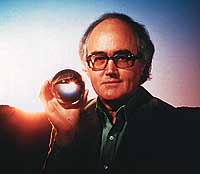
    burke-universeLast night I re-watched the first episode of James Burke’s 1985 history/science series, The Day the Universe Changed. If you’ve never had a had a chance to watch it, find it in your local library or watch it on Youtube (thank you Gary C for the link) you won’t regret it.

    James Burke is a personal hero of mine. I fell in love with his work in Grade 9 when I stumbled across his shows on The Learning Channel. I even emailed with him in my second year of undergrad in the hopes of securing a summer job (I wasn’t successful).

    There are so many things I learnt from Burke that have stayed with me over the past 2 decades but three things really stuck out as I re-watched the first episode.

    First, I’ve always admired his ability to take incredibly complex ideas and make them not only easy to understand, but fun and engaging. Part of it is his passion: Here is a man with a sharp mind, a glint in his eye, and a heart in love with his chosen subject. But watching the episode, it is obvious that the script is meticulously planned. So as Burke hops around the world, every word, every scene, every prop, helps advance the idea and narrative he is conveying. Had TED talks been available over the internet in 1985, I think James Burke would have been the master TED talk presenter (and more of a household name today). I spend a good part of my life trying to convey ideas, and it’s fun to go back and see a master at work.

    Second, James Burke is the first person who made me consciously comfortable with complexity. I always loved history (I ultimately majored in it) but until I met Burke history was always conveyed in a nice neat linear fashion. Burke tore that notion up. He weaves together complicated tapestries (which in the medium of television is no small feat) of not just science, history and social change, but also of luck, chance and misfortune to help paint a picture of how we ended up being both who we are, and where we are. Reflecting on my most recent talk on the future of government and on a recent blog post, I’ve frequently talked about how:

    The biggest problem in predicting the future isn’t envisaging what technologies will emerge – it is forecasting how individuals and communities will respond to these technologies. In other words I often find people treat technology as a variable, but social values as a constant.

    Watching Burke yesterday, I realized that 20 years ago he shared this idea with me first. If I’m comfortable with the complexity of this type of thinking today, it’s because he’s given me two decades to first get comfortable, and then mature intellectually, with it.

    So if you are interested, go find a copy of The Day the Universe Changed. It is a wonderful defense of curiosity and asking questions, no matter what powers or issues that puts you at odds with. It’s that curiosity that Burke made me aware of in myself, and that today fuels and motivates me.

    Thank you James.

    How bad design led to a lost decade

    First, I’m away on vacation (hence the scarce number of posts) and am consumed writing a few chapters for a couple of books that I’m contributing to – more on those in the near future I hope.

    In the interim, I became profoundly depressed this morning after reading the passage below. I’m certain that history will look back at the Bush presidency as a “lost decade” when not only did the economy go off the rails and America’s standing in the world plummeted, but hundreds of thousands of lives were lost and billions were wasted in Iraq, human rights were hurled decades backwards and the benefits and progress of work in the humanities and sciences were put on hold (and in many cases, simply wasted).

    Thinking these thoughts can itself be depressing. But this excerpt made it worse:

    If you’re still unconvinced that design can have consequences beyond the carport and cutting board, point your memory back to the 2000 U.S. presidential elections and the thirty-six-day snarl over whether Al Gore or George W. Bush won the most votes in Florida. That election and its aftermath may seem like a bad dream today. But buried in that brouhaha was an important, and mostly ignored, lesson…

    …According to an exhaustive examination of all of Florida’s ballots that several newspapers and academics conducted a year after the election-and whose findings were largely lost amid the coverage of the September 11th, 2001, terrorist attacks and utterly forgotten after Bush’s 2004 reelection-what determined who won the U.S. presidency was the infamous butterfly ballot that voters in Palm Beach county used to mark their choice for President. In Palm Beach County – a heavily Democratic enclave populated by tens of thousands of elderly Jewish voters – ultraconservative fringe candidate Pat Buchanan recieved 3,407 votes, three times as many votes as he did in any other county in the state. (According to one statistical analysis, if the voting pattern of the state’s other sixty-six counties had held in Palm Beach, Buchanan would have won only 603 votes.) What’s more, 5,237 Palm Beach County voters marked ballots for both Al Gore and Pat Buchanan, and therefore had their ballots invalidated. Bush carried the entire state by 537 votes.

    Less well known is the ballot in Duval County in which the presidential ballot showed five candidates on one page and another five candidates on the next page, along with instructions to “vote every page.” In that county, 7,162 Gore ballots were tossed out because voters selected two candidates for President. Had the instructions been clearer, Duval County, too, would have provided Gore the margin of victory.

    A Whole New Mind: Why Right-Brainers Will Rule the Future, Daniel H. Pink

    Design does matter. In this case, poor design costs America (and much of the world) a decade of progress and, possibly, countless billions (if not trillions).