Tag Archives: cool links

Upcoming talk: Toronto Innovation Showcase

Just a little FYI to let people know I’m going to be in Toronto on Monday, November 2nd for the City of Toronto’s Innovation Showcase.

I’ll be doing a panel Open Government with Maryantonett Flumian (President of the Institute On Governance, I remember meeting her when she was Deputy Minister of Service Canada), Nick Vitalari (Executive Vice President at nGenera), and Peter Corbett (CEO of iStrategyLabs – which runs the Apps for Democracy Competitions for Washington DC).

The Showcase will be running November 2nd and 3rd and our panel will be on Monday the 2nd from 10:15am until noon in the City Council chambers. Registration is free for those who’d like to come and for those interested but not in Toronto, you will be able to watch a live webcast of the event online from their website. You’ll also be able to follow the event on twitter hashtags #TOshowcase and #opendataTO

The goal of the showcase is to provide:

“a venue for you to come and meet with your colleagues to discuss these questions, hear their success stories, share experiences about opportunities and challenges in the public sector using social media, propose suggestions, exchange information on IT and trends, create connections, knowledge, tools and policies that address the increased demand by citizens for better public service, transparency, civic engagement and democratic empowerment.”

Should be fun – hope to catch you there and to have something fun to blog about after it’s over.

Spark Interview on VanTrash – The Open Source Garbage Reminder Service

A couple of weeks ago I was interviewed by the CBC’s Nora Young for her show Spark:  a weekly audio blog of smart and unexpected trendwatching about the way technology affects our lives and world.

The interview (which was fun!) dives a little deeper into some of the cool ways citizens – in working to make their lives better – can make cool things happen (and improve their community) when government’s make their data freely available. The interview focuses mostly on VanTrash, the free garbage reminder service created by Luke Closs and Kevin Jones based on a blog post I wrote. It’s been getting a lot of positive feedback and is helping make the lives of Vancouverites just a little less hectic.

You can read more about the episode here and listen to it on CBC radio at 1:05 local time in most parts of Canada and 4:05 on the west coast.

You can download a podcast of the Spark episode here or listen to it on the web here.

If you live in Vancouver – check out VanTrash.ca and sign up! (or sign your parents or neighbour up!) Never forget to take the garbage out again. It works a whole lot better than this approach my friends mom uses for her:

Van trash reminder

Articles I'm Digesting 10/09/2009

Here’s a few articles I’ve been reading that I’ve found particularly compelling.

Big Food vs. Big Insurance

by Michael Pollan  (via David B.)

This great piece talks about the secondary impact of health care reform – namely that if US Health Insurance companies have to insure every American they will suddenly care a great deal more about what Americans eat, as this is a major driver of healthcare costs. Money quote (the one David B sent me that got me reading):

“But these rules may well be about to change — and, when it comes to reforming the American diet and food system, that step alone could be a game changer. Even under the weaker versions of health care reform now on offer, health insurers would be required to take everyone at the same rates, provide a standard level of coverage and keep people on their rolls regardless of their health. Terms like “pre-existing conditions” and “underwriting” would vanish from the health insurance rulebook — and, when they do, the relationship between the health insurance industry and the food industry will undergo a sea change… Suddenly, every can of soda or Happy Meal or chicken nugget on a school lunch menu will look like a threat to future profits.”

Here’s a great example of a leverage point, Pollan shows how healthcare reform will shift policy alliances, power and money in Washington and could allow for a long awaited (and needed) reform of food policy. It’s a fascinating analysis and it shows how strategically the Obama administration is thinking. They know that if they can win this battle – even with an imperfect bill – they will be gaining powerful allies for the next few battles. Brilliant.

Twitter: “pointless babble” or peripheral awareness + social grooming?

by Danah Boyd

A few weeks ago the Globe continued its war on social media by publishing this piece about how 40.55% of tweets are babble. It’s the kind of analysis that is so poorly constructed one doesn’t even know where to start in rebutting it. I’d been thinking for a while to write some coherent rebuttal, but fortunately Danah Boyd has already written it.

Open Government Data Principles

This is one of the best and simplest distillations of guiding principles around how governments should treat data that I have seen to date. Simple, concise, short yet comprehensive, these principles should hang on the CIO’s office wall in every government department or ministry around the world. As per their request I’m trying to think of ways to improve it, if I come upon any, I’ll blog about it.

Brand new old idea: The GoC Public Servant as Knowledge Worker

By Douglas Bastien

I remember when I had a contract with the Privy Council Office looking at young people in the Public Service and how they might network together, I took out a book that talked about managing knowledge workers in government and thinking how curious it was that few people in government saw themselves as Knowledge Workers. And yet, how government sees and manages its employees doesn’t always align with how knowledge workers would expect to be managed.

Doublas Bastien piece is bang on in its description of the problem. It is also a deeply depressing read. Depressing because one is forced to confront that so many of the challenges the knowledge economy, technology and social change would pose to government were identified a decades ago. Our government can predict and HR challenges, but when it comes to managing one… that’s a different story. But we shouldn’t be surprised, we don’t promote managers in government,  we promote policy wonks, and so we don’t manage the problems, we issue policies to deal with it. Definitely read Douglas’ piece, and if you like it, consider going back into my archives and reading one of the post on Public Service Sector Renewal I’m most proud of.

eaves.ca Around the Web

In the past couple of weeks I’ve done a few interviews and been cited in a few articles. Don’t want to dwell on these so thought I’d just bundle them into one quick post.

First up, eaves.ca held its position as the 5th highest ranked political blog in Canada. While the methodology of the ranking system is probably not perfect and I doubt that I generate the 5th most web traffic in the country it is still nice to be ranked so well.

On August 3rd Michael Geist published ‘Crowdsourcing’ puts many extra hands to work in his regular column. In it he cites my work in Vancouver around open data and the upcoming release of a garbage reminder service I blogged about as examples (more on the Garbage reminder service soon).

Speaking of open data, on August 2nd Cloud of Data podcaster Paul Miller released an interview with me on Vancouver’s Open Motion and the future of open data in government. (Also available here.)

More locally, Jeffrey Simpson ran a piece on August 6th entitled Open Web advocates say social media needs reform in the Georgia Straight where Zak Greant, Mark Surman and I comment on privacy and data ownership in social networks.

Finally, Steve Anderson, the man running the saveournet.ca campaign to preserve internet neutrality in Canada penned these important pieces on the current CRTC hearings and process around the future of the internet regulation in Canada.

Also, a number of my posts have been ending up in themarknews.com a website I recommend checking out…

Articles I'm digesting 24/7/2009

Been a while since I’ve done one of these and I’ve got a lot of great pieces I’ve been reading. So let’s get to it.

Designs on Policy by Allison Arieff (via David B.) and TED Talk: Are we in Control of our own Decisions? by Dan Ariely

I keep hearing about the interaction between policy and design (most flatteringly an architecture professor said I had a designer’s mind” the other day) and so over the past few years I try (with some success) to read as much as I can about design. David B sent me the Arieff piece which, of course, weds my passion for public policy with design. One thing I like is the way the piece doesn’t try to boil the ocean – it doesn’t claim (like in other places) that good design will solve every problem – just that it will help mitigate against it. Most intriguing for me is this line:

“It feels weird to have to defend design’s importance, yet also completely necessary. The United Kingdom has had a policy in place since 1949; Japan since 1956. In countries like Finland, Sweden, South Korea and the Netherlands, design is a no-brainer, reflected by the impeccable elegance, usability and readability of everything in those countries from currency to airport signage.”

A design policy? How civilized. That’s something I could get behind – especially after listening to Dan Ariely’s TED talk which is downright frightening at moments given how susceptible our decisions are (and most disconcerting the decisions of our doctors, dates and who knows whose) to the layout/perception of the choice.

Lost in the Cloud by John Zittrain

A few months ago I was in Ottawa and – surprisingly and unplanned – ended up at a pub with Richard Stallman. I asked him what he thought of Cloud Computing (a term he believes is too vague to be helpful) but was nonetheless viscerally opposed to it. Many of the reasons he cites are covered by Zittrain in this thoughtful piece. The fact is, Cloud Computing (or whatever term you may wish to use) is very convenient and it carries with it huge privacy, security and access challenges. This is potentially the next big challenge for those of us who support and Open Internet – the possibility of the internet being segmented into a series of walled gardens controlled by those who run the cloud servers is real and must be thought through. If you care about public policy and/or are a geek, read this.

Is it Time to Get Rid of the Foreign Service Designation?

Am I reading my own articles? No. I am, however, absorbed by the fascinating and constructive conversation taking place – mostly involving public servants – in the comments section underneath. Here are just some snippets:

  • “For 8 years I worked at DFAIT, observing and participating in the culture within the walls of a building named after a diplomat that Wikipedia states “is generally considered among the most influential Canadians of the 20th century.” Sadly, the elitism (whether earned or not) is only the cause of a bigger problem; lack of desire to collaborate, and almost no desire to change in an era where the only constant is change.”
  • “…as I left the issue of the FS classification was quietly but passionately part of the watercooler discussion. From my perspective, in spite of a nasty AG report on the dismal state of affairs of HR at DFAIT, the department has more pressing problems, such as credibility with central agencies, a coherent sense of mission and talent attraction and retention.”
  • “I am also a bit puzzled by people who saw your piece as an attack on DFAIT – you’re advocating for human resource reform to improve the department, after all. I’m still not sure why you think DFAIT is required though, or why Canadian foreign policy suffers when departments forumulate it without involving DFAIT.”
  • “It’s good to see that even Craig Weichel, President of PAFSO, is open to your suggestion that it might be good to have more foreign service officers circulate through other government departments…”

Putting the Cart Before the Horse by Peter Cowan

A great blog post about the lessons from implementing social media in a government agency. Peter Cowan – an Open Everything alum – is part of the team at Natural Resources Canada team that has been doing amazing work (NRCan is one of the most forward looking ministries in the world in this regard). Peter’s piece focuses on misunderstanding the “business case” for social media and how it often trips up large government bureaucracies. This abbreviated but extended quote on why traditional IT business cases don’t work or aren’t necessary is filled with great thoughts and comments:

“They (Social Media tools) are simple and viral and they cost very little to implement so the traditional requirements for upfront business needs definition to control risk and guide investment are not as important. In fact it would take more time to write a proposal and business case than to just put something out there and see what happens.

More importantly though social media are fundamentally new technologies and the best way to understand their business value is to get them into the hands of the users and have them tell you. To a large degree this is what has happened with the NRCan Wiki. Most of the innovative uses of the wiki came from the employees experimenting. They have not come from a clearly articulated business needs analysis or business case done in advance.

In fact, determining business needs in advance of having a tool in hand may actually lead to status quo approaches and tools. There is the famous Henry Ford… quote goes something like “if I had asked people what they wanted in a car they would have said faster horses”. We social media folks usually deploy this quote to highlight the weakness of focusing too much on responding to people’s perceptions of their existing business needs as a determinant of technology solution since people invariably define their needs in terms of improving the way they are already doing things, not how things could be done in a fundamentally new way.

Genius.

Google’s Microsoft Moment by Anil Dash

A fantastic piece about how Google’s self-perception is causing it to make strategically unsound choices at the same time as its public perception may be radically shifting (from cute fuzzy Gizmo in to mean nasty Stripe). A thoughtful critique and a great read on how the growth and maturation of a company’s culture needs to match its economic growth. I’ve added Anil Dash to by must read blogs – he’s got lots of great content.

Cool Job in Open Source, Science and Engagement

My friend Rikia S. sent me the link to this cool job posting on the TED website.

Based on astronomer Jill Tarter’s TED Prize wish — to search for signs of intelligent life on other planets – the SETI Institute is hiring a project manager with the experience, qualifications and energy to run the TED Prize wish project for at least two years.

For those interested in Open Source Software, who love science and astronomy and who can engage a large community of citizen-scientists who are contributing to SETI’s efforts, this is a dream job.

The full job description and contact info is on their website:

This is a unique opportunity to work in both open-source software and social media, on a project whose ramifications are literally beyond global.

We are seeking someone with deep experience in managing open-source software projects and the communities that power them to drive a bold and agenda-setting initiative. The initiative will involve managing a traditional open-source software project, as well as a complex public-facing system that will enlist the general/nontechnical public’s assistance in conducting our search. To succeed, a candidate above all needs a history of success in managing major open-source projects. While it’s not essential that this person be a coding engineer, it is essential that s/he be comfortable enough with C++ code to have technically meaningful interactions with committers and the broader open-source community. It’s also essential that s/he be a strong evangelist — able to speak inspiringly in public, and to energize, recruit and maintain engagement with key influencers in the open source coding world.

The other part of the job will be governing a project that will in many ways resemble Galaxy Zoo (an intriguing “citizen scientist” system). This will involve managing a respected Web development company as it creates the site, and thereafter overseeing/”gardening” a large community of nontechnical contributors. We expect this community to be self-policing and self-monitoring, like Wikipedia’s editorial community. But it will need leadership and a baseline architecture, and our hire will be responsible for delivering this.

This is a unique opportunity to work in both open-source software and social media, on a project whose ramifications are literally beyond global.

This will be a full-time role at the SETI Institute for two years, funded by the money TED has allocated toward granting Jill’s wish. However, because this is a TED Prize wish, one in which many people and individuals are giving a lot to make happen, we do hope to find someone who will do this at a reduced rate. We have a large brainstorm taking place on June 1 and would love to have the right person chosen and at the table for that meeting.

Please send a resume and cover letter to tedprize1@ted.com if you are interested in the position.

And please forward this opportunity on to anyone you believe possess the right skills!

How the Mighty Fall vs. The Black Swan

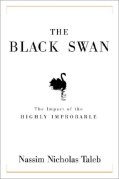
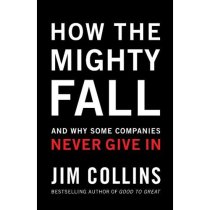
blackswanI’ve almost finished listening to Nassim Nicholas Taleb’s The Black Swan, a book about how large-impact, hard-to-predict, and rare event beyond the realm of normal expectations. At the same time, Tim O’Reilly caused me to stumble upon this article previewing Jim Collins‘ (author of Good to Great and Built to Last) new book “How the Mighty Fall.”

In some way the two authors’ could not be more different. Taleb writes in a harsh, sarcastic, cutting tone that heaps scorn on many of the worlds finest minds as well as, one senses, the books readers. His harshest barbs are reserved for academics, who if often sees as being to interested in theory to help with real world problems. I’ve never seen Taleb in person or on video, but after listening to The Black Swan I can’t help but see him as an lethal and angry intellectual street fighter, mad at a world that didn’t notice his brilliance earlier.

How the Might FallCollins, in contrast, reads like a classic business academic writer who has gone mainstream. He never offends, and his tone is never harsh – he seems like the archtype westcoast Business school Professor – smart, driven and direct, but slightly geeky in that friendly way and not overly intense (hence westcoast).

But while their styles (and I hypothesize, personalities) are dramatically different, they overlap in some curious and interesting ways. Both are concerned with business issues and both are writing about outliers. Taleb is concerned with the outlying events that can completely alter one’s world. Collins in concerned with outlier companies – those that experience impressive and continuous success. And while I’m sure there are lots of areas where the two will disagree, it is interesting to focus on where the two almost completely overlap.

The first appears where Collins talks about the first symptom of a company going into decline: Hubris Born of Success:

“The best leaders we’ve studied never presume they’ve reached ultimate understanding of all the factors that brought them success. For one thing, they retain a somewhat irrational fear that perhaps their success stems in large part from fortuitous circumstance. Suppose you discount your own success (“We might have been just really lucky/were in the right place at the right time/have been living off momentum/have been operating without serious competition”) and thereby worry incessantly about how to make yourself stronger and better-positioned for the day your good luck runs out. What’s the downside if you’re wrong? Minimal: If you’re wrong, you’ll just be that much stronger by virtue of your disciplined approach. But suppose instead you succumb to hubris and attribute success to your own superior qualities (“We deserve success because we’re so good/so smart/so innovative/so amazing”). What’s the downside if you’re wrong? Significant. You just might find yourself surprised and unprepared when you wake up to discover your vulnerabilities too late.”

This whole paragraph sounds like a friendly version of Taleb. Praising leaders who don’t claim to understand the full complexity of their world, their business or even their own success? Classic Taleb.

More interesting however, is the emphasis on luck. Taleb regularly argues that luck is (at a minimum) underestimated and more often ignored outright, as a factor in a businesses success. No CEO wants to stand up and say, yes, we become $10B dollar company not just because we were good, but because we were lucky – it doesn’t exactly send a positive message to share holders (or does it justify their enormous bonus). But Collins not only agrees that luck is a factor, he argues that good companies admit to themselves that luck was a factor.

In hockey you hear people say you’ve got to be good to be lucky and lucky to be good. The point is, if you work hard, bounces will eventually come your way and you’ve got to be good enough to pounce on them and make those opportunities count. Begin to think you don’t need luck, you stop seeing the opportunities and also begin to believe you are inherently better than anyone. Fact is, you’re not. You’ve got to work. Hard. And hope for some luck. Even then, you probably never become Google.

The second interesting place of overlap is in Collins discussion about how companies begin to deny that they are at risk or in peril.

“Bill Gore, founder of W.L. Gore & Associates, articulated a helpful concept for decision-making and risk-taking, what he called the “waterline” principle. Think of being on a ship, and imagine that any decision gone bad will blow a hole in the side of the ship. If you blow a hole above the waterline (where the ship won’t take on water and possibly sink), you can patch the hole, learn from the experience, and sail on. But if you blow a hole below the waterline, you can find yourself facing gushers of water pouring in, pulling you toward the ocean floor. And if it’s a big enough hole, you might go down really fast, just like some of the financial firm catastrophes of 2008. To be clear, great enterprises do make big bets, but they avoid big bets that could blow holes below the waterline.”

In The Black Swan, Taleb has an entire piece on assessing risk which parallels this quote. He notes that too often business people and – in particular – financial types, focus on predicting the likelihood of an event – even when a prediction model is deeply flawed or essentially meaningless. Since often assessing the likelihood of an event is often impossible Taleb argues it becomes much more important to ascertain the likely magnitude of it’s impact. So avoid doing things or exposing yourself to risks that, if they go wrong, will blow out your hull. Indeed, the Black Swan is essentially a 250 page book on this paragraph.

Surviving in a changing, networked world (part 2)

Two weeks ago I wrote this post, about how it is getting harder and harder to know what are the right paths, the right way points or even the right destinations in life…

Here’s a video that reminded me why it is all so exciting and scary at the same time.

Long live the third curse for we live in interesting times! (Remind me again why I seem to be pursuing curse one and two?)

Reforming Government on the Globe & Mail's Wiki

A few months ago John Ibbitson – the Globe and Mail columnist who used to cover Ottawa and now covers Washington, DC – asked me if I’d help edit the 3rd chapter of his new book, Open & Shut.

The chapter, entitled Yes, Mr. President; No, Prime Minister asks why is it that after 8 years of President Bush, President Obama is able to quickly change the direction of government whereas in Canada, newly elected parties often struggle to implement their agenda.

Last week the book was released. As part of the launch process the Globe and Mail created a wiki dedicated to the book’s themes where readers can critic or expand on its ideas and analysis. More interestingly, as readers post to the wiki John will respond to their  ideas, critics and thoughts on a blog hosted by the Globe.

To kick off the wiki on Open Government, John asked me if I would write a short essay answering the following the question:

Federal politicians, and federal public servants, seem increasingly remote and disconnected from the lives of Canadians. Open and Shut maintains that this is because the public service remains closed to outsiders, and because Ottawa has ceded so much power to the provinces. Do we want our federal government to matter more in our lives, and if so, what should we do to give it meaning?

You can see my response, and what I hope will eventually become a growing number of comments on the future of the public service, here.

As an aside, two other sections have been created. One is on Open Politics, which is teed up by John Duffy (political strategist). The other is on Canada/US integration, which is kicked off by Scotty Greenwood (executive Director of the Canadian-American Business Council).

Treating the web as an archive – or finding the financial crisis' ground zero online

Most often when people think of the web they think of it as a place to get new information. Companies are told they must constantly update their website while customers and citizens look for the latest updates. But because the web is relatively new, it is strongly biased towards digitally displaying and archiving “new” information.

What happens when the web gets older?

One possibility… it could change how we study history. Again, nothing is different per se – the same old research methods will be used – but what if it is 10 times easier to do, a 100 times faster and contains with a million time the quantity of information? With the archives of newspapers, blogs and other websites readily available to be searched the types of research once reserved for only the most diligent and patient might be more broadly accessible.

Consider this piece in the New York Times published on November 5th 1999. It essentially defines ground zero of the financial crisis:

Congress approved landmark legislation today that opens the door for a new era on Wall Street in which commercial banks, securities houses and insurers will find it easier and cheaper to enter one anothers businesses.

The measure, considered by many the most important banking legislation in 66 years, was approved in the Senate by a vote of 90 to 8 and in the House tonight by 362 to 57. The bill will now be sent to the president, who is expected to sign it, aides said. It would become one of the most significant achievements this year by the White House and the Republicans leading the 106th Congress.

”Today Congress voted to update the rules that have governed financial services since the Great Depression and replace them with a system for the 21st century,” Treasury Secretary Lawrence H. Summers said. ”This historic legislation will better enable American companies to compete in the new economy.”

Here is what may be the defining starting point of the financial crisis. The moment when the tiny little snowball was gently pushed down the hill. It would take 10 years to gather the mass and momentum to destroy our economy, but it had a starting point. I sometimes wish that the New York Times had run this article again in the last few months, just so we could get reacquainted with the individuals – like Larry Summers – and political parties – both – that got Americans into this mess.

Indeed, as an aside, it’s worth noting the degree by which the legislation passed. 90 votes to 8 in the senate. 362 votes to 57 in the House. There was clearly a political price to pay to vote against this bill. Indeed, it fits in nicely with the thesis Simon Johnson outlined in his dark, but important, piece The Quiet Coup:

“…these various policies—lightweight regulation, cheap money, the unwritten Chinese-American economic alliance, the promotion of homeownership—had something in common. Even though some are traditionally associated with Democrats and some with Republicans, they all benefited the financial sector”

Still more fascinating is how accurately the legislation’s detractors predicted it’s dire consequences. Check out Senator Dorgan’s comments at the time:

”I think we will look back in 10 years’ time and say we should not have done this but we did because we forgot the lessons of the past, and that that which is true in the 1930’s is true in 2010,” said Senator Byron L. Dorgan, Democrat of North Dakota. ”I wasn’t around during the 1930’s or the debate over Glass-Steagall. But I was here in the early 1980’s when it was decided to allow the expansion of savings and loans. We have now decided in the name of modernization to forget the lessons of the past, of safety and of soundness.”

Or Senator Wellstone’s:

‘Scores of banks failed in the Great Depression as a result of unsound banking practices, and their failure only deepened the crisis,” Mr. Wellstone said. ”Glass-Steagall was intended to protect our financial system by insulating commercial banking from other forms of risk. It was one of several stabilizers designed to keep a similar tragedy from recurring. Now Congress is about to repeal that economic stabilizer without putting any comparable safeguard in its place.”

And of course, it worth remembering what the legislation’s supporters said in response:

Supporters of the legislation rejected those arguments. They responded that historians and economists have concluded that the Glass-Steagall Act was not the correct response to the banking crisis because it was the failure of the Federal Reserve in carrying out monetary policy, not speculation in the stock market, that caused the collapse of 11,000 banks. If anything, the supporters said, the new law will give financial companies the ability to diversify and therefore reduce their risks. The new law, they said, will also give regulators new tools to supervise shaky institutions.

”The concerns that we will have a meltdown like 1929 are dramatically overblown,” said Senator Bob Kerrey, Democrat of Nebraska.”

What is most fascinating about this piece is that it shows us how the financial crisis wasn’t impossible to predict, that it didn’t come out of nowhere and that it could have been eminently preventable. We simply chose not to.

It also goes back to the type of journalism that I believe we are missing today and that I wrote about in my post on the Death of Journalism. Here is a slow moving crisis, one that is highly complex, but not impossible to see. And yet we chose not to “see it.”

This, I believe, has to do with the fact that today, much of our journalism is gotcha journalism (or what Gladwell refers to as mysteries). It looks to finding the insider or the smoking gun that will bust open the story. I suspect that in a networked world – one of increased complexity and interconnectedness – finding the smoking gun is irrelevant. For an increasing number of stories there simple is no smoking gun. There are whole series of cascading action that are what Galdwell calls open secrets. Our job is to “see them” and painstakingly connect the dots to show how our decisions are allowing for the scary and unpredictable event – the black swan event – to become a near certainty.

What the above article shows me is that while the very tools and forces that make these scary events more likely – the internet, globalization our interconnectedness – they may also make the the open secrets easier to identify.