Category Archives: open data

Open Data: If British Conservatives get it right, the French…

This is a pretty stunning press release from Access Info Europe concerning the French government’s response to the open data movement. Statist government’s were always going to struggle with the internet and open data… but this shows just how bad things can get.

Press Release

For immediate publication

France proposes police controls on who uses public information

Madrid/Paris, 23 November 2010 – A law to be discussed in the French parliament before the end of 2010 will result in the police carrying out “behaviour” checks on members of the public and organisations wanting to reuse information obtained from public bodies. The likely effect is to severely limit access to information and freedom of expression.

The draft law currently before the French National Assembly amends the 1995 Police Security Act and will extend the scope of police “behaviour” checks from legitimate purposes such as checking on those to have access to dangerous substances and high security zones to those who want to reuse information obtained from public bodies. The criteria for the background checks are not specified in the law.

The information affected could include, for example, databases on public spending, copies of laws, or electoral results. Much data held by local authorities which is of great interest to the public such as schedules and real-time locations of trains and buses, information about recycling schemes, and construction works permits would also fall under these new controls.

The associations Access Info Europe and Regards Citoyens today expressed concerns that the law, if adopted, will significantly complicate and slow access to information in France.

“This is an extremely dangerous law which would seriously limit freedom of expression in France,” said Helen Darbishire, Executive Director of Access Info Europe.

“Subjecting those who wish to access and reuse public datasets to vaguely-defined morality controls runs counter to the basic principles of the freedom of expression and information enshrined in the French Constitution, and is a violation of European Court of Human Rights jurisprudence and EU law,” added Darbishire.

Access Info Europe notes that in 2010 many leading democracies such as the US and the UK, Norway and Spain, Australia and New Zealand, are posting on line large volumes of public data making them free for anyone in the world to use. They do this out of recognition of the societal and economic benefits that flow from the reuse of public sector information.

“If this provision were to be adopted, France would be closing down public access to information rather than opening it up,” concluded Benjamin Ooghe-Tabanou, co-founder of Regards Citoyens.

Notes for Editors:

1. Access Info Europe is a human rights organisation head-quartered in Madrid which promote the right of access to information and open government data in Europe. Access Info Europe believes that more public information means better participation in and greater accountability of public bodies.

2. Regards Citoyens is a civic association which promotes the opening of public data to secure greater transparency of democratic institutions in France.

3. The proposed reform is to 1995 Security Law (Loi n°95-73 du 21 janvier 1995 d’orientation et de programmation relative à la sécurité).

4. The amendment would impact on the right of access to public information granted under the 1978 Access to Administrative Documents Law as modified by European Union Directive 2003/98/EC of the European Parliament and of the Council of 17 November 2003 on the re-use of public sector information. The EU Directive requires that governments to create “fair, proportionate and non-discriminatory conditions for the re-use of [public sector] information.” The European Commission is currently reviewing this Directive. This case and the broader impact of this Directive on the fundamental right of access to information should be carefully reviewed by the Commission.

5. The Council of Europe Convention on Access to Official Documents from 2009, not yet signed by France, requires that all requesters be treated equally and without discrimination. It is illegitimate under this and other international standards to ask why someone wants information or what they will do with it.

6. The European Court of Human Rights has ruled that access to information held by public bodies when these are monopolies is an inherent part of the right to freedom of expression: information is needed to participate in democratic public debate. See, inter alia Társaság a Szabadságjogokért v. Hungary (App no 37374/05), ECHR, 14 April 2009.

7. Examples of online portals for accessing public data include www.data.gov, www.data.gov.uk, www.data.gov.au, www.data.gov.nz.

For more information – in English or French – please contact:

Victoria Anderica, Access Info Europe, victoria@access-info.org

Office phone: +34 91 366 5344

Mobile: +34 606 592 976

Helen Darbishire, Access Info Europe (www.access-info.org)

helen@access-info.org, mobile: +34 667 685 319
How Tories could do transparency – Globe and Mail

Today’s blog post appears in the Globe and Mail. You can read it there (please do, also give it a vote).

How Tories could do transparency

Britain’s new Conservative government did something on Friday that Canadians would fine impossible to imagine. After a brief video announcement from Prime Minister David Cameron about the importance of the event, Francis Maude, Minister of the Cabinet Office, and Tim Berners-Lee, inventor of the World Wide Web, announced that henceforth the spending data for every British ministry on anything over £25,000 (about $40,000) would be available for anyone in the world to download. The initial release of information revealed thousands and thousands of lines of data and almost £80-billion (about $129.75-billion) in spending. And starting in January, every ministry must update the data once a month.

For the British Conservative Party, this is a strategic move. Faced with a massive deficit, the government is enlisting the help of all Britons to identify any waste. More importantly, however, they see releasing data as a means by which to control government spending. Indeed, Mr. Maude argues: “When you are forced to account for the money you spend, you spend it more wisely. We believe that publishing this data will lead to better decision-making in government and will ultimately help us save money.” And they might be right. Already, organizations like Timetric, the Guardian newspaper and the Open Knowledge Foundation have visualized, organized and indexed the data so it is easier for ordinary citizens understand and explore how their government spends their money.

These external sites are often more powerful than what the government has. After observing the way these sites handle the data, the minister noted how he wished he’d had access to them while negotiating with some of the government’s largest contractors.

For Canadians, the Conservative-Liberal Democrat coalition government is but a distant example of a world that a truly transparent government could – and should – create. In contrast, Stephen Harper’s Conservatives seem stuck in a trap described by Mr. Maude in his opening sentences: “Opposition parties are always remarkably keen on greater government transparency, but this enthusiasm mysteriously tends to diminish once they actually gain power.” Canada’s Conservatives have been shy about sharing any information with anyone. Afghan detainee files aren’t shared with Parliament; stimulus package accounts were not emailed to the Parliamentary Budget Office, but uselessly handed over in 4,476 printed pages. Even the Auditor-General is denied MP expense data. All this as access-to-information wait times exceed critical levels and Canada, unlike the United States, Britain , Australia and New Zealand, languishes with no open-data policy. Only once has the government pro-actively shared real “data,” when it shared some stimulus data that could be downloaded.

The irony is not only that the Tories ran on an agenda of accountability and transparency, but that – as their British counterparts understand – actually implementing a transparency and open-data policy may be one of the best ways to stamp a conservative legacy on the government’s future. Moreover, it could be a very popular move.

During the digital economy strategy consultations, open data was the second-most popular suggestion. Interestingly, it would appear the Liberals are prepared to explore the opportunity. They are the only party with a formal policy on open data that matches the standards recently set by Britain and, increasingly, in the United States.

Open data will eventually come to Canada. When, however, is unclear. In the meantime it is our colleagues elsewhere that will reap the benefits of savings, improved analysis and better civic engagement. So until Mr. Harper’s team changes its mind, Canadians must look abroad to see what a Conservative government that actually believes in transparency could look like.

David Eaves is a public-policy entrepreneur, open government activist and negotiation expert based in Vancouver

Patch Culture, Government and why Small Government Advocates are expensive

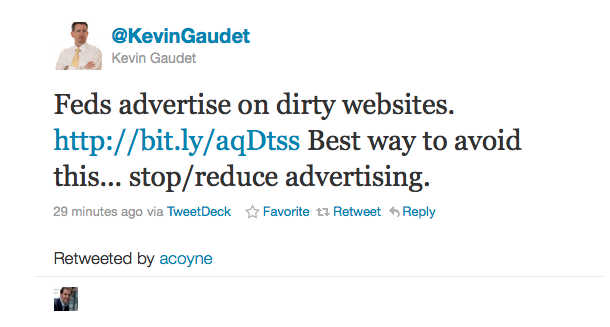
So earlier today I saw this post by Kevin Gaudet, Federal Director of the Canadian Taxpayers Federation and retweeted by Andrew Coyne (one of the country’s best commentators).

It pretty much sums up why Governments (incorrectly) fear open data and open government:

Screen-shot-2010-11-17-at-6.57.05-AM

The link is to a story on The Sun’s website: Government agencies caught advertising on sex sites!!!! (okay, the exclamation marks are mine).

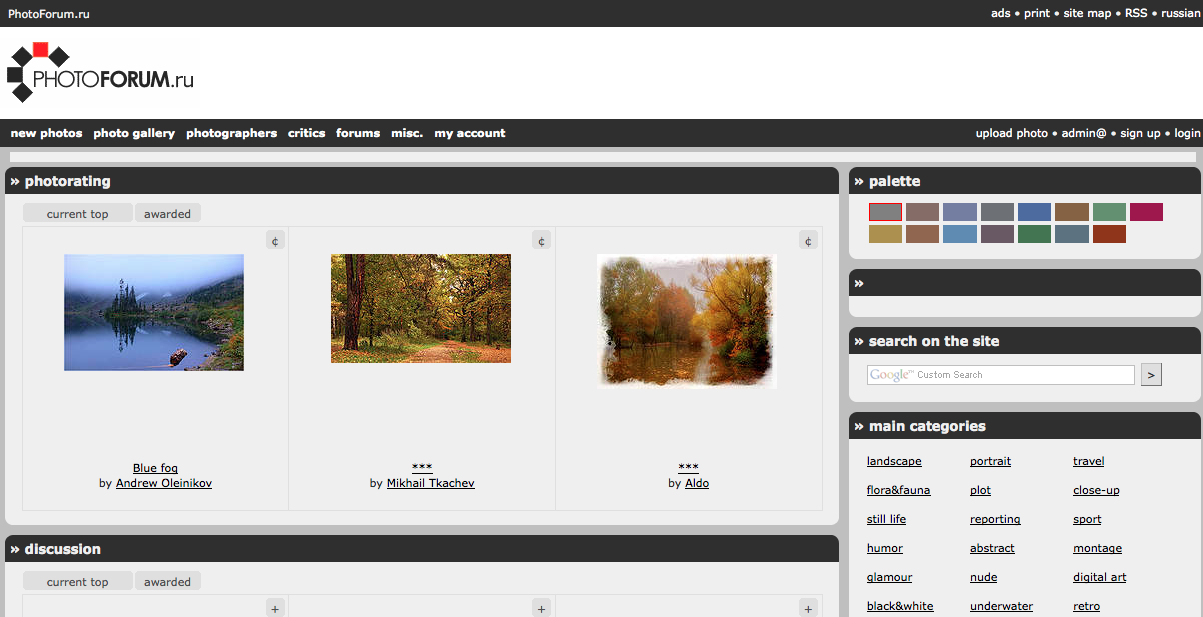
This is exactly the type of headline every public servant and politician is terrified of. The details, of course, aren’t nearly as salacious. A screenshot Photoforum.ru reveals its a stock photo website (which probably does violate all sorts of copyrights) and, I am sure, there are some photos, somewhere on the site, of nude women, much like there are on say Flickr or Facebook.

Screen-shot-2010-11-17-at-7.09.04-AM1


Three interesting things here:

1. The challenge: Non-stories suck time and energy. The government, of course, didn’t choose to advertise on Photoforum.ru. It hired an agency, Cossette, that placed the ads through Google AdSense. (this is actually the good part of the story – great to hear that the government is using Google AdSense which is a cheap and effective way to advertise). But today, I assure you that dozens of public servants, at least one member of the Heritage Minister’s political staff and a few Canada Post employees are spending the next few days running around like chickens with their heads cut off trying to find out how an ad in a $5000 contract ended up on a relatively harmless site. The total cost of all that investigative work and the reports they will generate to address this “scandal” will probably cost taxpayers $10,000s, if not $100,000s in staff time and energy. No wonder governments fear disclosure. The distraction and cost in time and energy needed to fix a non-story is enormous.

2. The diagnosis: The accountability systems trap: What’s interesting of course, is everybody is acting rationally. The Sun (while stretching the truth) is reporting on the misuse (however minor) of taxpayer dollars. Same with the Canadian Taxpayers Federation (CTF). But the solutions are terrible. The CTF demand that the government eliminate all advertising is nonsensical. We can debate whether every ad is needed, but a flat out ban is silly. There are lots of things governments need to inform citizens about. So we can talk about reducing the government’s ad budget, but this news story doesn’t advance that aim either. Indeed, the Canadian Taxpayers and the Sun have, indirectly, helped inflate the cost of government. As noted, the government, acting rationally, now has dozens of people spending their time solving a crisis around a some minor ad campaigns.

So we have a system where everyone is behaving rationally. But the outcome are terrible. This is the scandal. Indeed, if one were really concerned about the effective spending of taxpayer dollars what one would quickly realize that what’s actually broken here isn’t government advertising, it’s the process by which governments react to and address problems.

3. One Approach: Patch-Culture and Open Data. So it is understandable that government types fear disclosure as, presently, they often seeing it leading to the above situtation.

But what’s interesting is that we could handle it differently.

This same story, in the software world, would have been quite different. The Sun article would have simple been understand as someone pointing out a (minor) bug. The software developers (in the case the public servants) would have patched it (which they did, ending the ads deployment to these sites) and the whole thing would have been a non-event. But at least, for minimal cost and effort, the software (ad program) would be better making both the developers (public servants/politicians) and users (taxpayers) happy. So why is it so different with government?

Two reasons.

First. Government’s pretend that everything they do is perfect. They live with an industrial worldview where you had to get something perfect before launching it since you were going to stamp out 100,000 copies of the things and any bug would get replicated that many times. Of course, very little of government is like this, much more of it is like software where you can make fixes along the way. What makes software so great (although sometimes frustrating too) is that they acknowledge this and so patch it on the fly. Patch-culture – as my friend David Humphrey likes to call it – where people help software get better by point out flaws, and even offering solutions, is exactly what our government needs to learn.

Second. People jump to the worst conclusions because governments appear secretive. Because they don’t proactively disclose (and because Access to Information process is sooooo slow) they always look like they are hiding something. Consequently, when people find mistakes they presume people have been hiding it, trying to cover it up and/or that it was made with some malicious intent. In an open source community, when people find a bug, they often assume it was a (dumb) mistake – not a nefarious plot to do achieve some dubious ends. Open data makes a patch culture easier to create because when you share what you are doing it is hard to believe you have some evil intent. Yes, people may just assume you are dumb – but that is actually better than evil (especially for powerful institutions like government).

Open data is about changing the culture everywhere, both inside and outside government. It won’t do it over night and it won’t do it perfectly but it can help. And it’s a shift we need to make.

Conclusion

I could easily have imagined the above story playing differently in world where patch culture has taken shape within government. Someone discovers the ads on photoforum.ru, thinks it is an error (someone made a dumb choice), submits a bug to the government, the ads are removed, the bug is patched, everybody is happy and… no wasteful non-story about government spending.

Indeed, we could have instead allocated all that wasted time and energy to have the debate the CTF actually wants to have: how much of the budget should go towards advertising.

What we need to be thinking about is what is the system we are in, what are the incentives it creates for the various actors and then think of the system we’d like, and figure out how to get from here to there. I think Open Data is an important (but not exclusive) part of the puzzle for changing the relationship between the government, the press and citizens. It may even create some new problems, but I think they will be better, less costly and more interesting problems then the ones we have now, we are frankly destroying budgets and the institutions we need to serve us.

Open Data planning session at BarCamp Vancouver

With the International Open Data Hackathon a little more the 2 weeks away a lot has happened.

On the organizing wiki people in over 50 cities in 21 countries and 4 continents have offered to organize local events. Open data sets that people can use have been posted to a specially created page, a few nascent app ideas have been shared, as has advice on how to run a hackathon. (on twitter, the event hashtag is #odhd)

In Vancouver, the local BarCamp will be taking place this weekend. I’m not in town, however, Aaron Gladders, local hacker with a ton of experience working with and opening up data sets, contacted me to let me know he’d like to do a planning session for the hackathon at Barcamp. If you’re in Vancouver I hope you can attend.

Why? Because this is a great opportunity. And it has lessons for the hackathons around the world.

I love it because it means people can share ideas and projects they would like to hack on, recruit others, as well as hear feedback about challenges, obstacles, alternative approaches, and think about all of this  for two weeks before the hackathon. A planning session also has  has an even bigger benefit. It means more people are likely to arrive on the day with something specific ready to work on. I want the hackathons to be social. But they can’t be exclusively so. It is important that we actually try to create some real products that are useful to us and/or our fellow citizens.

For those elsewhere in the world who are also thinking about December 4th I hope that some of us will start reaching out to one another and thinking about how we will spend the day. A few thoughts on this:

1. Take a look at the data sets that are out there before Dec 4th. People have been putting together a pretty good list here.

2. Localization. I think some of the best wins will be around localizing successful apps from other places. For example, I’ve been encouraging the team in Bangalore to consider localizing Michael Mulley’s OpenParliament.ca application (the source code for which is here). If you have an application you think others might want to localize, add it to the application page on the wiki. If there is an app out there you’d like to localize, write its author/developer team. Ask them if they might be willing to share the code.

3. Get together with 2-3 friends and come up with a plan. What do you want to accomplish on the 4th?

4. If you are looking for a project, let people know on the wiki, leave a twitter handle or some way for people with idea to contact you before the 4th.

Okay, that’s it for now. I’m really excited about how much progress we’ve made in a few short weeks. Ideally at the end of the 4th I’d love for some cities to be able to showcase some apps to the world that they’ve created. We have an opportunity to show the media, politicians, public servants, our fellow citizens, but most importantly, each other, just want is possible with open data.


Launching Emitter.ca: Open Data, Pollution and Your Community

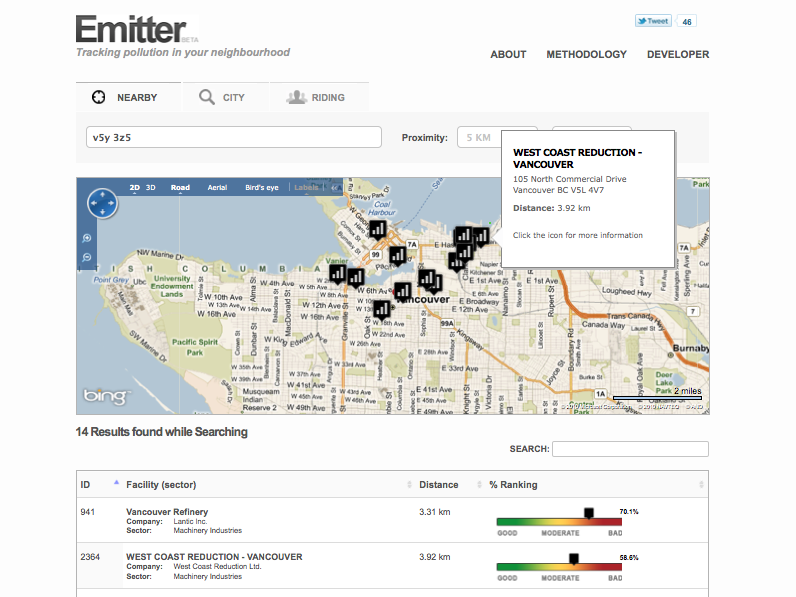
This week, I’m pleased to announce the beta launch of Emitter.ca – a website for locating, exploring and assessing pollution in your community.

Why Emitter?

A few weeks ago, Nik Garkusha, Microsoft’s Open Source Strategy Lead and an open data advocate asked me: “are there any cool apps you could imagine developing using Canadian federal government open data?”

Having looked over the slim pickings of open federal data sets – most of which I saw while linking to them datadotgc.ca – I remembered one: Environment Canada’s National Pollutant Release Inventory (NPRI) that had real potential.

Emitter-screen-shot

With NPRI I felt we could build an application that allowed people and communities to more clearly see who is polluting, and how much, in their communities could be quite powerful. A 220 chemicals that NPRI tracks isn’t, on its own, a helpful or useful to most Canadians.

We agreed to do something and set for ourselves three goals:

  1. Create a powerful demonstration of how Canadian Federal open data can be used
  2. Develop an application that makes data accessible and engaging to everyday Canadians and provides communities with a tool to better  understand their immediate region or city
  3. Be open

With the help of a crew of volunteers with knew and who joined us along the way – Matthew Dance (Edmonton), Aaron McGowan (London, ON), Barranger Ridler (Toronto) and Mark Arteaga (Oakville) – Emitter began to come together.

Why a Beta?

For a few reasons.

  1. There are still bugs, we’d love to hear about them. Let us know.
  2. We’d like to refine our methodology. It would be great to have a methodology that was more sensitive to chemical types, combinations and other factors… Indeed, I know Matt would love to work with ENGOs or academics who might be able to help provide us with better score cards that can helps Canadians understand what the pollution near them means.
  3. More features – I’d love to be able to include more datasets… like data on where tumours or asthama rates or even employment rates.
  4. I’d LOVE to do mobile, to be able to show pollution data on a mobile app and even in using augmented reality.
  5. Trends… once we get 2009 and/or earlier data we could begin to show trends in pollution rates by facility
  6. plus much, much more…

Build on our work

Finally, we have made everything we’ve done open, our methodology is transparent, and anyone can access the data we used through an API that we share. Also, you can learn more about Emitter and how it came to be reading blog posts by the various developers involved.

Thank yous

Obviously the amazing group of people who made Emitter possible deserve an enormous thank you. I’d also like to thank the Open Lab at Microsoft Canada for contributing the resources that made this possible. We should also thank those who allowed us to build on their work, including Cory Horner’s Howdtheyvote.ca API for Electoral District boundaries we were able to use (why Elections Canada doesn’t offer this is beyond me and, frankly, is an embarrassment). Finally, it is important to acknowledge and thank the good people at Environment Canada who not only collected this data, but have the foresight and wisdom to share make it open. I hope we’ll see more of this.

In Sum

Will Emitter change the world? It’s hard to imagine. But hopefully it is a powerful example of what can happen when governments make their data open. That people will take that data and make it accessible in new and engaging ways.

I hope you’ll give it a spin and I look forward to sharing new features as they come out.

Update!

Since Yesterday Emitter.ca has picked up some media. Here are some of the links so far…

Hanneke Brooymans of the Edmonton Journal wrote this piece which was in turn picked up by the Ottawa Citizen, Calgary Herald, Canada.com, Leader Post, The Province, Times Columnist and Windsor Star.

Nestor Arellano of ITBusiness.ca wrote this piece

Burke Campbell, a freelance writer, wrote this piece on his site.

Kate Dubinski of the London Free Press writes a piece titled It’s Easy to Dig up Dirt Online about emitter.ca

Launching datadotgc.ca 2.0 – bigger, better and in the clouds

Back in April of this year we launched datadotgc.ca – an unofficial open data portal for federal government data.

At a time when only a handful of cities had open data portals and the words “open data” were not being even talked about in Ottawa, we saw the site as a way to change the conversation and demonstrate the opportunity in front of us. Our goal was to:

  • Be an innovative platform that demonstrates how government should share data.
  • Create an incentive for government to share more data by showing ministers, public servants and the public which ministries are sharing data, and which are not.
  • Provide a useful service to citizens interested in open data by bringing it all the government data together into one place to both make it easier to find.

In every way we have achieved this goal. Today the conversation about open data in Ottawa is very different. I’ve demoed datadotgc.ca to the CIO’s of the federal government’s ministries and numerous other stakeholders and an increasing number of people understand that, in many important ways, the policy infrastructure for doing open data already exists since datadotgc.ca show the government is already doing open data. More importantly, a growing number of people recognize it is the right thing to do.

Today, I’m pleased to share that thanks to our friends at Microsoft & Raised Eyebrow Web Studio and some key volunteers, we are taking our project to the next level and launching Datadotgc.ca 2.0.

So what is new?

In short, rather than just pointing to the 300 or so data sets that exist on federal government websites members may now upload datasets to datadotg.ca where we can both host them and offer custom APIs. This is made possible since we have integrated Microsoft’s Azure cloud-based Open Government Data Initiative into the website.

So what does this mean? It means people can add government data sets, or even mash up government data sets with their own data to create interest visualization, apps or websites. Already some of our core users have started to experiment with this feature. London Ontario’s transit data can be found on Datadotgc.ca making it easier to build mobile apps, and a group of us have taken Environment Canada’s facility pollution data, uploaded it and are using the API to create an interesting app we’ll be launching shortly.

So we are excited. We still have work to do around documentation and tracking some more federal data sets we know are out there but, we’ve gone live since nothing helps us develop like having users and people telling us what is, and isn’t working.

But more importantly, we want to go live to show Canadians and our governments, what is possible. Again, our goal remains the same – to push the government’s thinking about what is possible around open data by modeling what should be done. I believe we’ve already shifted the conversation – with luck, datadotgc.ca v2 will help shift it further and faster.

Finally, I can never thank our partners and volunteers enough for helping make this happen.

International Open Data Hackathon Website and Wiki is up

So when I first wrote Let’s Do an International Open Data Hackathon I thought… maybe they’ll be 5 or 6 cities that will want to do one.

That may still be the case, but given the number of visits the blog post experienced and the number of people who registered interest on the etherpad, we may end up with a few more – which would be exciting.

To date people in 33 different cities spanning 16 countries four continents (some really nice guys from India emailed me saying they want to do one, but haven’t connected to the wiki yet) have said they are interested in organizing a hackathon in their home town. Will all of these happen? Who knows. But it is great to see that there is so much interest in an issue that represent an important opportunity.

Exciting.

So, to celebrate the growing interest we’ve launched a website and a wiki to help inform people about the open data hackathon and give them a place to register their interest and organize.

Please, check them out! Feel free to create wiki pages for your cities, to share best practices and ideas on running hackathons, or even just translate materials and content into a parallel page.

Articles I'm Digesting 1/11/2010

Here’s a few articles I recently digested:

Enabling Access and Reuse of Public Sector Information in Canada: Crown Commons Licenses, Copyright, and Public Sector Information by Elizabeth F. Judge

This piece (which you can download as a PDF) is actually a chapter in a book titled: From “Radical Extremism” to “Balanced Copyright” : Canadian Copyright and the Digital Agenda.

This piece provides a fantastic overview on both the how and why Crown Copyright impedes the remixing and repurposing of government information. The only thing confusing to me about the article is that it focuses a great deal on data which, by the author’s own admission, is not covered by Crown Copyright:

With respect to data, Crown copyright does not protect raw data (unprocessed data, such as numbers entered into a database), but it does protect an original expres- sion of the data (for example, an original map is a copyrightable artistic work based on geospatial data) and compilations (including compilations of data), providing that there is an original selection or arrangement of the data (that is, there has been human intervention where skill and judg- ment has been exercised).

Given I often have to explain to government types that data is not covered by Crown Copyright (this is in part why it often has – more restrictive still – licenses attached to it) my only concern about the paper is that because of its strong focus on data it will inadvertently muddy the waters. However, still a good piece and I suspect many who read it will wander away hoping that some change to Crown Copyright legislation will be forthcoming.

The Global Debt Clock by The Economist Intelligence Unit

Few outside of Canada understand how much Canadian politics was dominated by the issue of “the debt” in the 1990s. When Bill Clinton made his first visit to Canada the headlines were more concerned with Canada’s bond rating being downgraded than the visit of the new US president.

The belief, however, that Canada has tamed its debt may be a myth. The challenge may be that it people are starting to wise up to all that downgrading. That the debt has simple shifted from the national (which people historically looked at) to the provincial level (which is rarely calculated into “national” debt). The Economist chart puts things into sharp (and dim?) perspective:

Canada’s public debt: $1,257,953,424,658 or $37,042.44 per person or 82.3% of GDP

America’s public debt: $9,117,200,547,945 or $29,491.12 per person or 62.0% of GDP

Of course Canada’s debt includes health care expenditures which in the United States are (more) born by private citizens, so the debt burden per individual once you factor in private debt may not be closer. But then household debt in Canada is about to overtake that in America so again…

This all said, pretty much every country in the developed world looks ugly in terms of debt… this may, sadly, be the boomers biggest legacy.

Disconnect: Why our politics is so out of touch and what it means for our future by Richard Florida and Jeremy D. Mayer

Written back in 2007 this article deserves a revisit:

“In our view, American politics today is distinguished by one feature: instability. In place of an enduring political force such as post-1896 Republican dominance or the Democrats after Roosevelt in 1932, American politics in recent years has see-sawed back and forth. Twelve years of Reagan-Bush were followed by 8 of Bill Clinton, and then Bush and Rove, now this. And, only 6 of those years saw one party with simultaneous control of the presidency and Congress.

This instability, in our view, stems from one primary source: Our economic system has undergone a tectonic shift, to which the political system is still trying to adapt. Just as our politics was recast a century ago by the forces of the Industrial Revolution, so to is it being reshaped today by the rise of the technology, innovation and creativity as economic forces. The rise of this innovative, knowledge-based Creative Economy is even more significant and more challenging to politics as the Industrial Economy. Today, this sector accounts roughly a third of the American workforce — or roughly 40 million workers – nearly three times the industrial sector and blue-collar working class. What’s more, these creative occupations account for the lion’s share of all wealth generation, accounting for nearly half of all wages and salaries paid in the United States. That’s nearly $2 trillion, or as much as the manufacturing and service sectors combined.

But the creative economy doesn’t just generate phenomenal wealth. It also sorts people across new economic and geographical boundaries and generates inequality between and within states and regions as great as that of the early Industrial Revolution. As a result, we’re living through a period of tumultuous political adjustment.”

and speaking of revisits…

American Backlash by Michael Adams

Offers an alternative explanation regarding the challenges faced by incumbent parties in the US. I remembered this as I was recently reading Wente’s piece about Palin and the Tea Party, where she cites pollster Scott Rasmussen:

“who argues that the major division in the country now is not between the Republicans and Democrats, but between the mainstream public and the political class – the small proportion of the population, perhaps 10 per cent, (including most people who work in mainstream media) that still believes that government tries to serve the public interest, rather than colluding with big business against ordinary people.”

This was, of course, the thesis of Adams book back in 2006. Nice to be ahead of the curve.

Open Data Hackathon page by Volunteers around the world

Hope that there will be a dedicated site for this up this week – have a few people stepping forward on that front. In the interim, please do consider adding you name if you are interested in helping organize one in your city.

Let's do an International Open Data Hackathon

Let’s do it.

Last summer, I met Pedro Markun and Daniela Silva at the Mozilla Summit. During the conversation – feeling the drumbeat vibe of the conference – we agreed it would be fun to do an international event. Something that could draw attention to open data.

A few weeks before I’d met Edward Ocampo-Gooding, Mary Beth Baker and Daniel Beauchamp at GovCamp Ottawa. Fresh from the success of getting the City of Ottawa to see the wisdom of open data and hosting a huge open data hackathon at city hall they were thinking “let’s do something international.” Yesterday, I tested the idea on the Open Knowledge Foundation’s listserve and a number of great people from around the world wrote back right away and said… “We’re interested.”

This idea has lots of owners, from Brazil to Europe to Canada, and so my gut check tells me, there is interest. So let’s take the next step. Let’s do it.

Why.

Here’s my take on three great reasons now is a good time for a global open data hackathon:

1) Build on Success: There are a growing number of places that now have open data. My sense is we need to keep innovating with open data – to show governments and the public why it’s serious, why it’s fun, why it makes life better, and above all, why it’s important. Let’s get some great people together with a common passion and see what we can do.

2) Spread the Word: There are many places without open data. Some places have developed communities of open data activists and hackers, others have nascent communities. In either case these communities should know they are not alone, that there is an international community of developers, hackers and advocates who want to show them material and emotional support. They also need to demonstrate, to their governments and the public, why open data matters. I think an global open data hackathon can’t hurt, and can make help a whole lot. Let’s see.

3) Make a Better World: Finally, there is a growing amount of global open data thanks to the World Bank’s open data catalog and its Apps for Development competition. The Bank is asking for developers to build apps that, using this data (plus any other data you want) will contribute to reaching the Millennium Development Goals by 2015. No matter who, or where, you are in the world this is a cause I believe we can all support. In addition, for communities with little available open data, the bank has a catalog that might provide at least some that is of interest.

So with that all said, I think we should propose hosting a global open data hackathon that is simple and decentralized: locally organized, but globally connected.

How.

The basic premises for the event would be simple, relying on 5 basic principles.

1. It will happen on Saturday, Dec 4th. (after a fair bit of canvassing of colleagues around the world this seems to be a date a number can make work). It can be as big or as small, as long or as short, as you’d like it.

2. It should be open. Daniel, Mary Beth and Edward have done an amazing job in Ottawa attracting a diverse crowd of people to hackathons, even having whole families come out. Chris Thorpe in the UK has done similarly amazing work getting young and diverse group hacking. I love Nat Torkington’s words on the subject. Our movement is stronger when it is broader.

3. Anyone can organize a local event. If you are keen help organize one in your city and/or just participate add your name to the relevant city on this wiki page. Where ever possible, try to keep it to one per city, let’s build some community and get new people together. Which city or cities you share with is up to you as it how you do it. But let’s share.

4. You can hack on anything that involves open data. Could be a local app, or a global apps for development submission, scrape data from a government website and make it available in a useful format for others or create your own data catalog of government data.

5. Let’s share ideas across cities on the day. Each city’s hackathon should do at least one demo, brainstorm, proposal, or anything that it shares in an interactive way with at members of a hackathon in at least one other city. This could be via video stream, skype, by chat… anything but let’s get to know one another and share the cool projects or ideas we are hacking on. There are some significant challenges to making this work: timezones, languages, culture, technology… but who cares, we are problem solvers, let’s figure out a way to make it work.

Again, let’s not try to boil the ocean. Let’s have a bunch of events, where people care enough to organize them, and try to link them together with a simple short connection/presentation.Above all let’s raise some awareness, build something and have some fun.

What’s next?

1. If you are interested, sign up on the wiki. We’ll move to something more substantive once we have the numbers.

2. Reach out and connect with others in your city on the wiki. Start thinking about the logistics. And be inclusive. Someone new shows up, let them help too.

3. Share with me your thoughts. What’s got you excited about it? If you love this idea, let me know, and blog/tweet/status update about it. Conversely, tell me what’s wrong with any or all of the above. What’s got you worried? I want to feel positive about this, but I also want to know how we can make it better.

4. If there is interest let’s get a simple website up with some basic logo that anyone can use to show they are part of this. Something like the OpenDataOttawa website comes to mind, but likely simpler still, just laying out the ground rules and providing links to where events are taking place. Might even just be a wiki. I’ve registered opendataday.org, not wedded to it, but it felt like a good start. If anyone wants to help set that up, please let me know. Would love the help.

5. Localization. If there is bandwidth locally, I’d love for people to translate this blog post and repost it locally. (let me know as I’ll try cross posting it here, or at least link to it). It is important that this not be an english language only event.

6. If people want a place to chat with other about this, feel free to post comments below. Also the Open Knowledge Foundation’s Open Government mailing list is probably a good resource.

Okay, hopefully this sounds fun to a few committed people. Let me know what you think.

The Open Data Debate Arrives in Ottawa

The Liberals are promising to create an open data portal – opendata.gc.ca – much like President Obama has done in the United States and both Gordon Brown and David Cameron have done in the United Kingdom.

It’s a savvy move.

In May 2010 when it launched a public consultation on the Digital Economy, the government invited the public to submit proposals and vote on them. Two of the top three most voted ideas involved asking the government to open up access to government collected data. Three months after the submissions have closed it appears the opposition has decided to act on Canadians wishes and release a 21st century open government strategy that reflects these popular demands.

Today, at 1pm EST, I’ve discovered the Liberals will announce that, if elected, they will adopt a government-wide directive in which “the default position for all departments and agencies will be for the release of information to the public, both proactively and responsively, after privacy and other legal requirements are met.”

There is much that both ordinary citizens and advocates of greater government transparency will like in the proposal. Not only have the Liberals mirrored the most aggressive parts of President Obama’s transparency initiatives they are also promising some specific and aggressive policies of their own. In addition to promising to launching opendata.gc.ca to share government data the document proposes the creation of accesstoinformation.gc.ca where citizens could search past and current access to information requests as well as see response times. A third website, entitled accountablespending.gc.ca is also proposed. It would allow government grants, contributions and contracts to be searched.

The announcement brings to the Canadian political debate an exciting issue that first gained broad notoriety in early 2009 when Tim Berners-Lee, the inventor of the world wide web, called on the world’s governments to share their data. By May of that year the United States launched data.gov and in September of 2009 the British Government launched data.gov.uk both of which garnered significant domestic attention. In addition, dozens of cities around the world – including Vancouver, Edmonton and, most recently, Ottawa – have launched websites where they shared information that local charities, non-profits, businesses and ordinary citizens might find useful.

Today, citizens in these jurisdictions enjoy improved access to government information about the economy, government spending, access to information requests, and statistical data. In the United States developers have created websites that empower citizens by enabling them to analyze government data or see what government data exists about their community while a British program alerts citizens to restaurant’s health inspections scores.  The benefit however, not limited to improved transparency and accountability. An independent British estimated that open data could contribute as much as £6 billion to British economy. Canada’s computer developers, journalists and entrepreneurs have been left wondering, when will their government give them access to the data their tax dollars paid to collect?

One obvious intent of the Liberals is to reposition themselves at the forefront of a debate around government transparency and accountability. This is ground that has traditionally been Conservative, but with the cancellation of the long form census, the single source jet fighter contract and, more recently, allegations that construction contracts were awarded to conservative party donors, is once again contestable.

What will be interesting to see is the Conservative response. It’s been rumored the government has explored an open data portal but to date there has been no announcement. Open data is one area where, often, support exists across the political spectrum. In the United Kingdom Gordon Brown’s Labour government launched data.gov.uk but David Cameron’s Conservative government has pursued the project more aggressively still, forcing the release of additional and higher value data to the public. A failure to adopt open data would be tragedy – it would cause Canada to lag in an important space that is beginning to reshape how governments work together and how they serve and interact with citizens. But perhaps most obviously, open data and open government shouldn’t be a partisan issue.